
“In nature, there's no blemish but the mind.”
Why it's great
The line moves deformity from the body to the mind, a compact defence of anyone judged by looks.
Register
literary
Use it yourself
In nature there is no blemish but the mind that mocks it.
Chapter 20 of 25 · 3'05"
Antonio is seized in the street and pleads for the youth he saved, unaware he is defending Sebastian in disguise. Viola hears her brother's name and dares to hope: "Prove true, imagination." Meanwhile Sir Andrew, called a coward, swears he will go and beat the boy.
❝ Monologue · 5 lines Antonio Defends the Youth He Saved
Viola Hopes Sebastian Is Alive
Antonio is arrested and, still loyal, argues that the youth he rescued is honorable — though he is really defending Sebastian, not the disguised Viola. Overhearing the name Sebastian, Viola privately hopes her brother is alive: "Prove true, imagination." The scene also includes Sir Andrew, mocked as a coward, deciding to challenge the boy after all.
The scene quietly stacks two kinds of confusion. Antonio mistakes Viola for Sebastian, so his loyalty lands on the wrong twin — yet his words are true, and Viola hears them: 'In nature, there's no blemish but the mind.' For her, the error becomes hope. When he names Sebastian, she lets herself believe her brother lives, and the famous line follows — 'Prove true, imagination.' The play lets identity be both a trap and a gift: the same resemblance that gets Antonio arrested also gives Viola back a brother. The rest of the scene plays the mix for comedy, as the cowardly Sir Andrew is mocked as 'more a coward than a hare,' and Viola brushes off the man who cannot tell her from her twin.
A1–C2 is the CEFR scale. Cards above the level you pick fade, and playback will not auto-pause on them.
“In nature, there's no blemish but the mind.”
The line moves deformity from the body to the mind, a compact defence of anyone judged by looks.
literary
“Oh if it prove, tempests are kind and salt waves fresh in love.”
If the hope comes true, even storms turn gentle, because love remakes the whole weather.
literary
“Nothing that is so is so.”
By piling up is, the line denies that the obvious reading of anything is the true one.
literary
“None can be called deformed but the unkind.”
Ugliness relocated from body to character: a maxim that flips the standard.
literary
“I do not know you, nor I am not sent to you by my lady to bid you come speak with her.”
Stacked negations pile up denial, and the tangle betrays the panic.
Informal
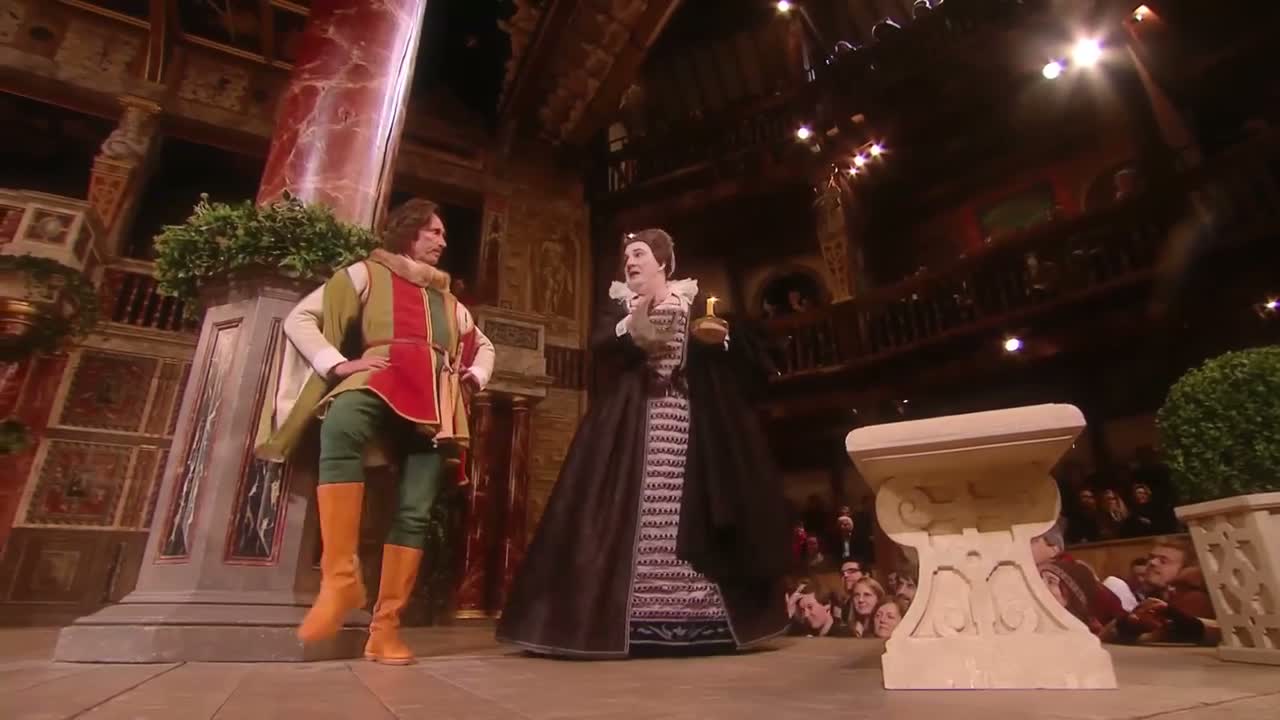
But, oh, how vile an idol proves this god. Thou hast, Sebastian, done good feature shame. In nature, there's no blemish but the mind. None can be called deformed but the unkind. Virtue is beauty, but the beauty beauteous evil are empty trunks o'erflourished by the devil.
 Up next · 21be well rid ofThe scene: Feste Torments Malvolio in the Dark
He is seized in the street because he once fought against the Duke's galleys at sea, so he has enemies in the city. He walks in danger, as he warned Sebastian.
He thinks Cesario is Sebastian, the youth he saved from the sea. Loyal and mistaken, he argues that the young man is honorable and begs the officers to spare him.
Antonio names Sebastian, so Viola realizes her twin may still be alive. She says 'Prove true, imagination' and reasons that her brother's likeness is why she can pass as a man.
It means the threat of death, pictured as a gaping mouth. Antonio says he snatched the youth 'one half out of the jaws of death' during the shipwreck.
He talks about fighting but never follows through. The others call him 'a very dishonest paltry boy and more a coward than a hare,' and joke he is religious in his cowardice.