00:00 / 03:33
00:00 / 03:33

Malvolio Scolds Sir Toby's Party, Explained

Twelfth Night · 2012

Chapter 9 of 25 · 3'33"

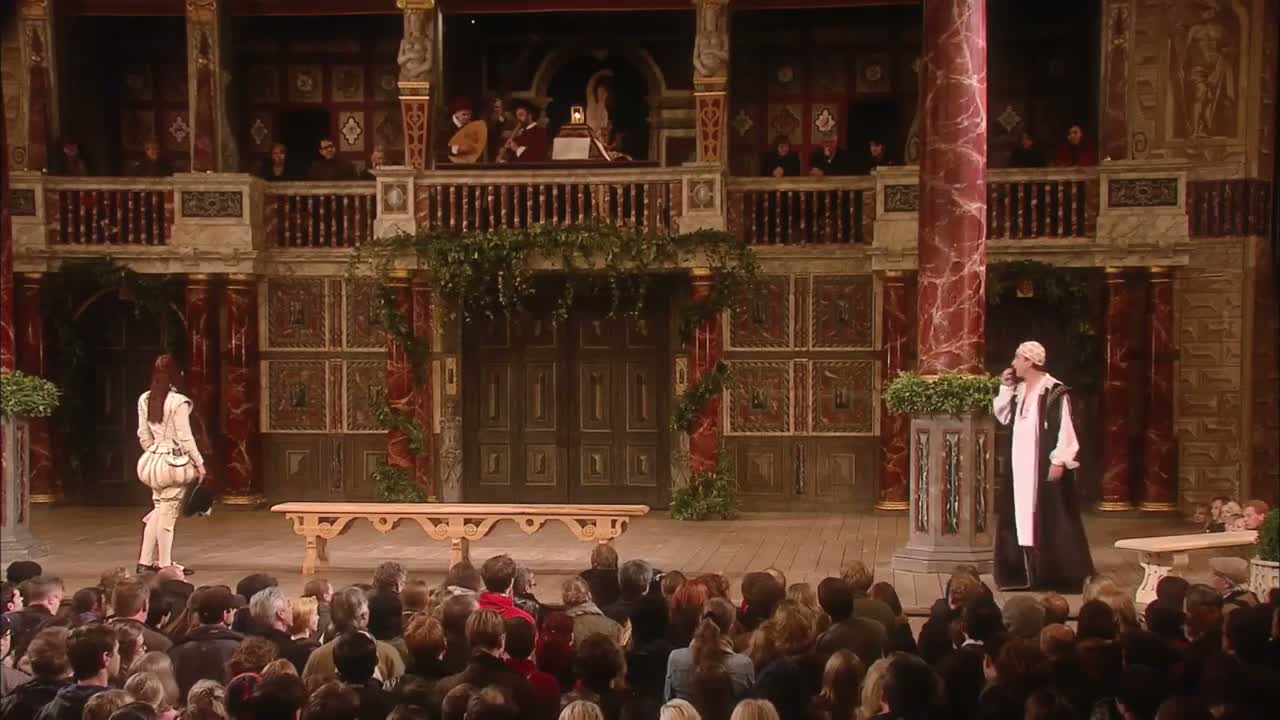
Malvolio breaks up the party and gets a famous answer. "Dost thou think, because thou art virtuous, there shall be no more cakes and ale?" Sir Toby mocks him as a mere steward and a would-be Puritan, and Maria promises to gull him for everyone's amusement.

PartiesArgumentsComplainingTeasingRivalsC2slowbritishClean

Key moments

Start here, then watch the full scene
  1. ❝ Monologue · 4 lines Malvolio Breaks Up the Party

    0:02–1:18
    76s
  2. Toby's 'Cakes and Ale' Retort

    1:46–2:20
    34s
  3. ❝ Monologue · 5 lines Maria plots her revenge

    She calms the knight, then swears the scheme will work or she has no wit at all.

    2:45–3:10
    25s
  1. ❝ MonologueThe steward's ultimatum4 linesPractice page ↗
  2. ❝ MonologueMaria plots her revenge5 linesPractice page ↗

Malvolio Scolds Sir Toby's Party, explained

What happens

Malvolio barges into Sir Toby's late-night drinking and demands to know why there is no 'respect of place, persons, nor time.' Toby answers with his famous line about cakes and ale, and belittles Malvolio as no more than a steward. When Malvolio threatens to tell Olivia, Maria promises to gull him and make him a public joke.

What's really going on

The quarrel is about who gets to decide what fun is allowed. Malvolio speaks for order and self-control, asking whether there is any 'respect of place, persons, nor time' left, and threatening to report the party to Olivia. Sir Toby's reply is the play's most quoted line: 'Dost thou think, because thou art virtuous, there shall be no more cakes and ale?' It is both a defense of pleasure and a put-down, because it treats Malvolio's virtue as mere vanity. Toby presses the insult by reducing him to 'a steward,' a servant giving orders above his rank. And the scene's real turn is Maria's: instead of just arguing, she starts writing a plot. Offering to 'gull him into a nayword,' she turns resentment into a scheme, and the comedy shifts from bickering to conspiracy.

Key lines & what they mean

“Dost thou think, because thou art virtuous, there shall be no more cakes and ale?”
Toby's famous retort: Malvolio's self-righteousness doesn't give him the right to ban everyone else's pleasures.
“This is much credit to you.”
A sarcastic line: the speaker means the opposite, that the behavior being discussed brings no credit at all.
“But I will never die.”
A joking boast from the drinking song, refusing the song's claim that the singer's days are almost done.
“Is there no respect of place, persons, nor time in you?”
Malvolio's scolding question: the party ignores where it is, whom it disturbs, and how late it is.
“Farewell, dear heart, since I must needs be gone.”
A line from the song the revellers are singing, a farewell full of mock sorrow.

Theme

  • Satire — Toby's 'cakes and ale' line mocks Malvolio's puritan virtue and the people who police everyone's pleasure.
  • Class — Toby deflates Malvolio by reminding him he is only a steward, a servant giving orders above his rank.

What this chapter teaches

Teaching points

Review right after watching
My level0/7

A1–C2 is the CEFR scale. Cards above the level you pick fade, and playback will not auto-pause on them.

Twelfth Night: your progress

Chapter 9 of 25 · about 53 min to go

← Previous
Up next · 10sweet pangsThe scene: Orsino Muses on Love

Takeaways

What you walk away with
  1. Cakes and ale stands for innocent good cheer.
  2. Rank is no argument: 'Art any more than a steward?'
  3. By word of mouth means spoken, not written.
  4. A kind of Puritan softens a sharp label.

People also search

Questions, then the lines
Why is Malvolio angry at Sir Toby?

Toby and his friends are drinking and singing late at night, and Malvolio thinks they show no respect for the time, the place, or Olivia. He warns that she is not allied to their disorder.

What does 'cakes and ale' mean?

It stands for food, drink and good cheer — the simple pleasures of life. Toby's line means that one person's virtue is no reason to ban everyone else's fun.

How does Sir Toby insult Malvolio?

He calls him 'a steward,' a mere servant, and asks whether he thinks his virtue should end everyone's cakes and ale. He treats Malvolio's morality as vanity.

What does Maria plan to do?

She plans to gull Malvolio and make him 'a common recreation' — a public joke. She says she knows she can do it, and describes him as 'a kind of Puritan.'

What does Malvolio threaten at the end?

He says 'she shall know of it by this hand,' meaning he will report the party to Olivia himself.