“She bore a mind that envy could not but call fair.”
It gives the highest praise by making even envy agree, which beats any direct compliment.
literary
Chapter 7 of 25 · 3'38"
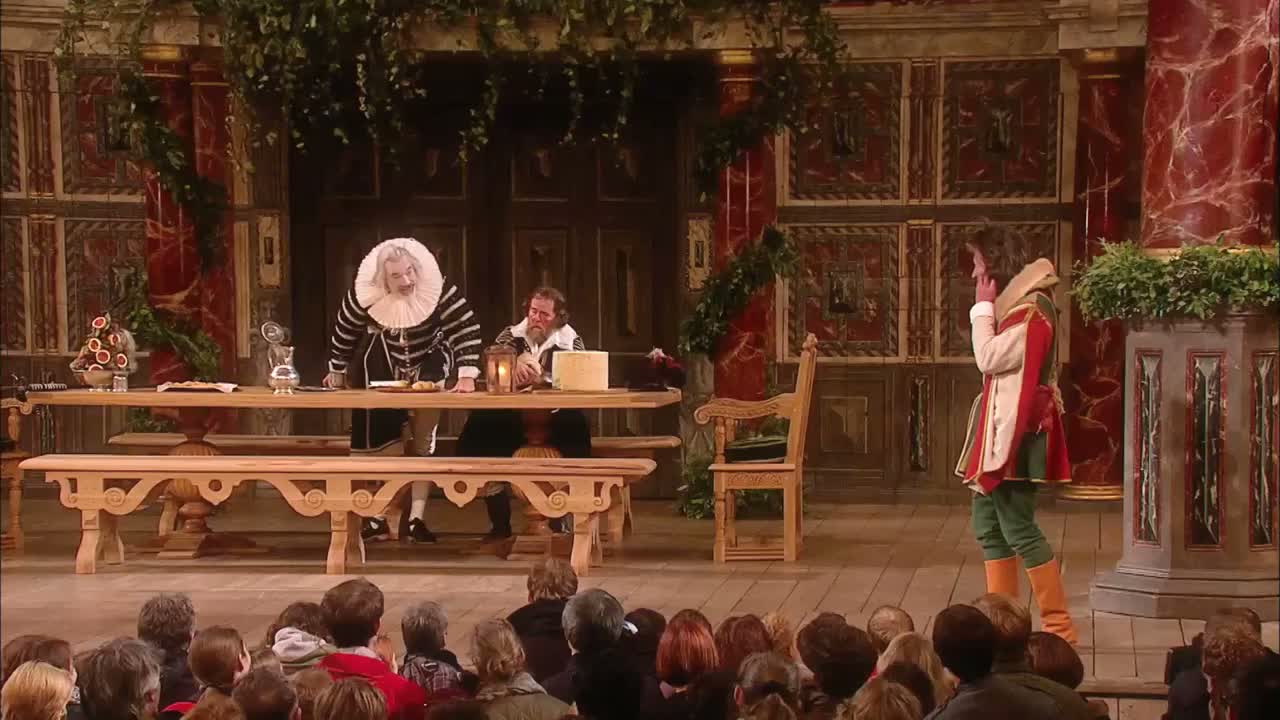
Two farewells, one grief. Sebastian tells Antonio how his twin sister drowned, praising her mind so that "envy could not but call fair." Antonio refuses to leave him: "If you will not murder me for my love, let me be your servant." Then Olivia's ring returns to Viola, and she realizes the lady loves her.
❝ Monologue · 5 lines Sebastian's Story and Antonio's Vow
Olivia's Ring Returns to Viola
On a street in Illyria, Sebastian tells Antonio his life story: his father left him and a twin sister, born in the same hour, and the sister drowned at sea. He praises her mind so highly that 'envy could not but call fair.' Antonio insists on following him into danger. Later, Malvolio returns Olivia's ring to the disguised Viola, who realizes Olivia has fallen for her.
The scene pairs two kinds of love that both risk everything. Sebastian's grief for his sister is formal and measured — he will not overstate her beauty, but he will 'boldly publish' her mind, which even envy had to call fair. Antonio's devotion is more reckless: he offers to trade his life for the right to serve, asking not to be 'murdered' for his love, and says danger will 'seem sport.' Their farewell sets the play's theme of love as devotion that ignores safety. Then the tone flips to comedy: a ring Sebastian never gave becomes proof that Olivia loves the disguised Viola, and Viola's only worry is that her borrowed looks have 'charmed' a lady. The scene turns one character's heroic love into another's mistaken identity.
A1–C2 is the CEFR scale. Cards above the level you pick fade, and playback will not auto-pause on them.
“She bore a mind that envy could not but call fair.”
It gives the highest praise by making even envy agree, which beats any direct compliment.
literary
“If you will not murder me for my love, let me be your servant.”
It ties devotion to a life-or-death condition, so affection sounds reckless yet controlled.
literary
“I do adore thee so that danger shall seem sport, and I will go.”
By recasting danger as sport, the line makes devotion sound lighter and braver than a promise.
literary
“I have many enemies in Orsino's court, else would I very shortly see thee there.”
Enemies stand in for a reason: an excuse that quietly carries rank and danger.
literary
“She is drowned already, sir, with salt water.”
Already and salt water close the case: grief stated as fact, impossible to question.
Neutral
He left behind him myself and a sister. Both born in an hour. If the heavens had been pleased would we had so ended. But you, sir, altered that. For some hour before you took me from the breach of the sea, was my sister drowned.
Up next · 08make the welkin danceThe scene: Feste Sings for a Drunken PartyAntonio saved Sebastian from the sea and has refused to leave him since. He offers to be Sebastian's servant; Sebastian calls him a good friend and accepts his company.
She drowned in the shipwreck that separated them. Sebastian says she was lost at sea about an hour before he was rescued, so he believes his twin is dead.
Olivia has fallen for the young messenger and sends her ring back as a pretext to draw 'him' closer. Malvolio thinks the messenger left it, while Viola knows she never did.
She is alarmed that her male disguise may have 'charmed' Olivia. 'Fortune forbid' is her wish that this bad turn not be true.
It means whatever happens, or no matter what. Antonio says it as he decides to follow Sebastian despite the danger waiting in Orsino's court.