00:00 / 02:47
00:00 / 02:47

Viola Argues Women Love as Deeply, Explained

Twelfth Night · 2012

Chapter 11 of 25 · 2'47"

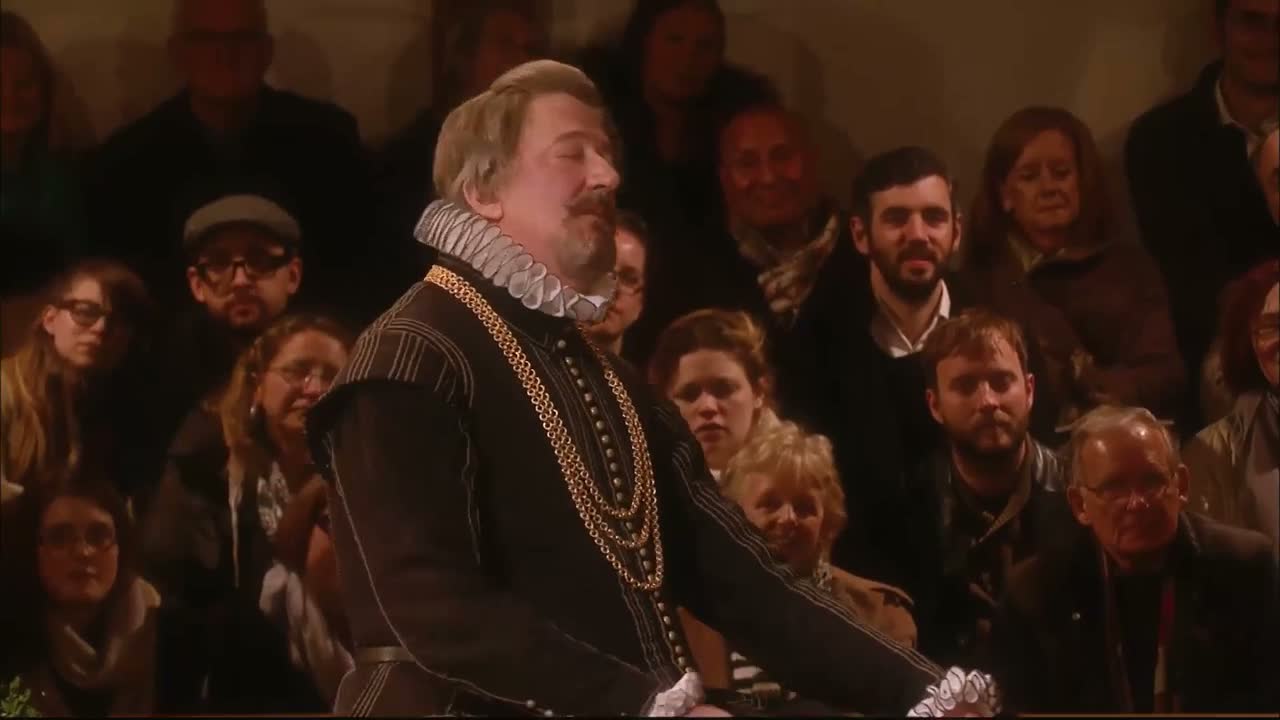
Orsino sends Viola to Olivia again and dismisses women's love as mere 'appetite.' Viola answers with a story: her father's daughter loved in silence until grief consumed her, and men, she says, 'prove much in our vows, but little in our love.'

Talking to the bossConfessing feelingsConfessing lovePersuadingBoss & employeeC1slowbritishClean

Key moments

Start here, then watch the full scene
  1. ❝ Monologue · 6 lines Orsino Sends Viola to Olivia Again

    0:23–1:11
    48s
  2. ❝ Monologue · 6 lines Viola's Story of Silent Love

    2:08–2:42
    35s
  1. ❝ MonologueOrsino's passion speech6 linesPractice page ↗
  2. ❝ MonologueA daughter's silent love6 linesPractice page ↗

Viola Argues Women Love as Deeply, explained

What happens

Orsino orders Cesario back to Olivia and insists no woman's heart could hold a love as strong as his. Viola disagrees, telling the story of her father's daughter, who loved in silence so long that concealment, 'like a worm in the bud,' wasted her cheek. The story ends in no marriage, only grief: a warning about how men's vows outrun their love.

What's really going on

The scene is Orsino talking about love and Viola quietly saving it from him. He insists that women cannot love as deeply, calling their feeling 'appetite' and claiming his own is 'as hungry as the sea.' Viola never argues head-on; she tells a story instead, of her father's daughter who loved without speaking, until concealment fed on her cheek like a worm in a bud. The point lands softly but completely: 'For still, we prove much in our vows, but little in our love.' She is describing herself without naming herself, and Orsino, who hears only a sad tale, asks whether the girl died of love. The scene shows the play's real interest — who gets to define love — while Viola keeps her disguise and her silence intact.

Key lines & what they mean

“For still, we prove much in our vows, but little in our love.”
Viola's verdict on men: they make grand promises but deliver little love in practice.
“but let concealment, like a worm in the bud, feed on her damask cheek.”
Her image of hidden love: secrecy eats away at the lover from the inside, like a worm in a flower bud.
“There is no woman's sides can bide the beating of so strong a passion as love doth give my heart.”
Orsino's boast that no woman could endure the force of the passion he feels.
“Was not this love indeed?”
Viola's question about the silent girl, inviting Orsino to admit that such hidden love was the real thing.

Theme

  • Romance — Orsino defines love as his own grand passion, while Viola reveals a quieter, deeper love by telling a story.
  • Identity — Viola speaks about 'my father's daughter' to describe her own feelings without breaking her disguise.

What this chapter teaches

Teaching points

Review right after watching
My level0/6

A1–C2 is the CEFR scale. Cards above the level you pick fade, and playback will not auto-pause on them.

Twelfth Night: your progress

Chapter 11 of 25 · about 46 min to go

← Previous
Up next · 12the woodcock near the ginThe scene: Malvolio Dreams of Marrying Olivia

Takeaways

What you walk away with
  1. Orsino praises his own love more than he feels it.
  2. Cesario's hypothetical quietly corners the Duke.
  3. The worm image makes hidden grief physical.
  4. The final question turns a story into a challenge.

People also search

Questions, then the lines
Why does Orsino send Viola to Olivia again?

He wants Cesario to plead his suit once more, telling Olivia that his love is nobler than the world and ignores her wealth. Viola warns that Olivia may simply not be able to love him.

What is the story Viola tells?

She invents a 'father's daughter' who loved a man but never spoke of it. Concealment wasted her, and she sat 'like patience on a monument, smiling at grief.' It is really Viola's own story in disguise.

Why does Orsino say women cannot love deeply?

He claims a woman's heart is too small to hold a great passion and that her love is only 'appetite,' which quickly cloys. Viola challenges this with her story of silent, enduring love.

What does 'prove much in our vows' mean?

It means men make big promises in their oaths but show little love in their actions. Viola uses the line as her summary of male courtship.

What happens at the end of the scene?

Orsino is moved by the story and asks whether the sister died of love, not realizing Viola has been describing herself. She deflects with her account of a woman who never told her love.