
“I feel that I have blood on my hands.”
Por qué es buena
A confession of guilt delivered in the plainest physical image.
Registro
Neutral
Úsala tú
I feel that I have blood on my hands after that decision.
Capítulo 20 de 28 · 3'31"
Oppenheimer comes to the White House to talk arms control, but the meeting turns on one confession. He says he feels he has "blood on my hands"; Truman answers that no one in the bombed cities cares who built the weapon, only who dropped it, and tells him Hiroshima is not about him.
The Most Famous Man
❝ Monólogo · 5 frases Blood on My Hands
At the White House, Oppenheimer is welcomed and praised for helping end the war, though he insists the weapon was hardly his invention. He raises the risk of an arms race and the need for international control of atomic energy. When he says he has "blood on my hands," Truman dismisses it, telling him that people care who dropped the bomb, not who built it.
The Oval Office scene is a collision between two ways of thinking about responsibility. Oppenheimer arrives wanting to talk about the future - arms control, the inevitability of a Soviet bomb - and ends by confessing something personal: "I feel that I have blood on my hands." Truman refuses the frame entirely. For him, the question is not who designed the weapon but who ordered it used, and he tells Oppenheimer that the bombed cities care "who dropped it." Then comes the colder line, "Hiroshima isn't about you," which reduces the physicist to one cog in a machine. The theatre of it is that Truman barely pauses before moving on: he praises the bomb as a lifesaver, dismisses the guilt, and afterward has no patience for the man at all.
A1–C2 es la escala MCER. Las tarjetas por encima del nivel elegido se atenúan y la reproducción no se pausa en ellas.
“I feel that I have blood on my hands.”
A confession of guilt delivered in the plainest physical image.
Neutral
“Your invention let us bring our boys home.”
Praise that quietly hands over the responsibility with it.
Formal
“How's it feel to be the most famous man in the world?”
A light praise-question that leaves the person's unease hanging.
Informal
“Don't let that crybaby back in here.”
A crude dismissal that freezes the powerful man's contempt in one line.
Informal
You think anyone in Hiroshima or Nagasaki gives a shit who built the bomb? They care who dropped it. I did. Hiroshima isn't about you.
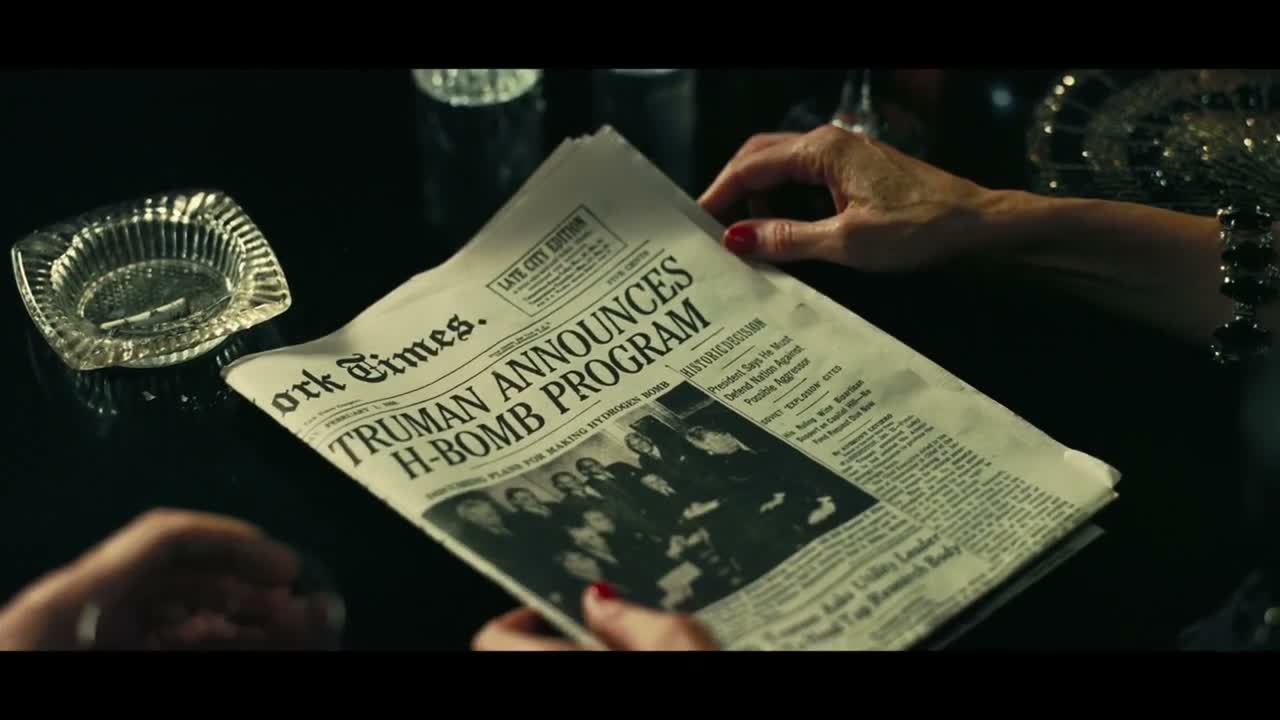 Siguiente · 21A man of convictionLa escena: The Fuchs Spy Case Comes Up
He feels personally responsible for the deaths caused by the atomic bomb. It is a moral confession rather than a legal one, and it is the emotional center of the scene.
He rejects the confession. He says no one in the bombed cities cares who built the weapon, only who dropped it, and tells Oppenheimer that Hiroshima is not about him.
Arms control: Oppenheimer wants to use the moment to secure international cooperation on atomic energy and to warn about an arms race with the Soviets.
He tells the room not to let that crybaby back in, showing how little patience he has for the physicist's guilt.
Oppenheimer insists it was hardly his invention, even as others credit him, because the bomb was the work of many people and the state that ordered it.