00:00 / 02:38
00:00 / 02:38

Hill Blames Strauss at the Hearing, Explained

Oppenheimer · 2023

Capítulo 26 de 28 · 2'38"

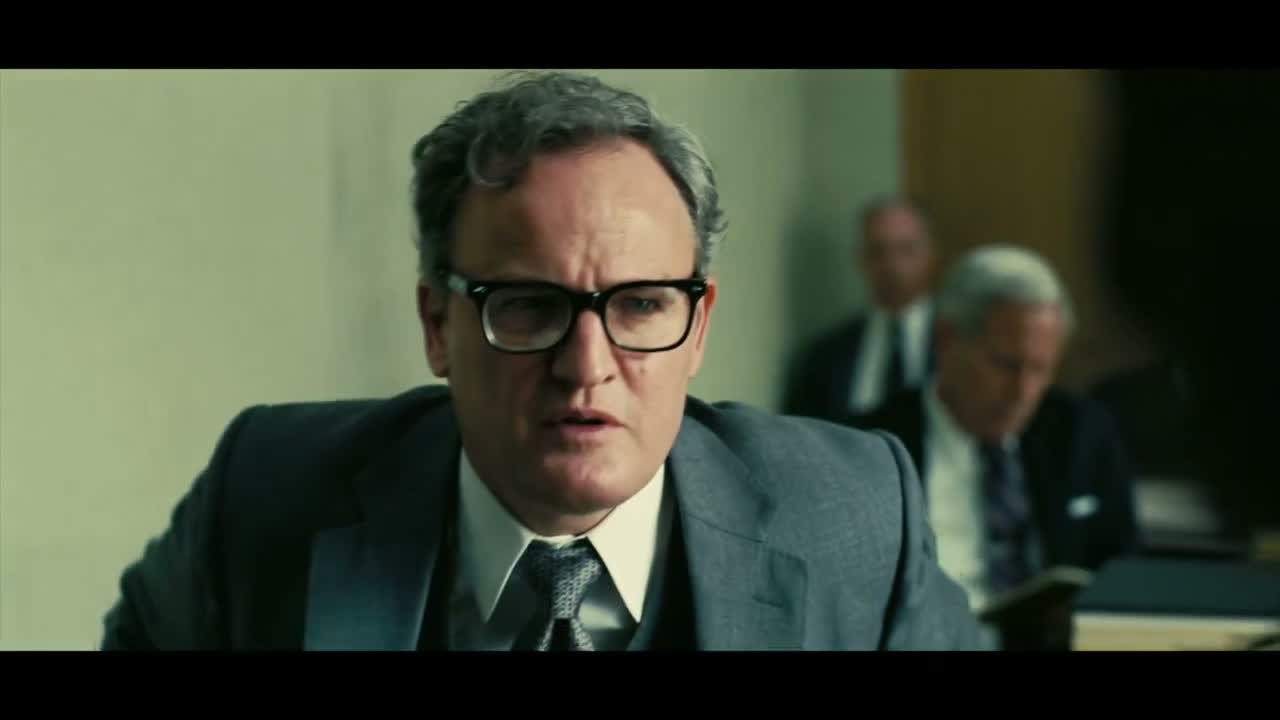
At the confirmation hearing, David Hill testifies that most scientists want Strauss out of government. Pressed on why, he rejects the security explanation: the real cause was Strauss's private vindictiveness toward Oppenheimer, rooted in an old public humiliation that Strauss "never forgave."

CourtroomAccusationsConfrontingExplainingC1slowamericanClean

Key moments

Start here, then watch the full scene
  1. ❝ Monólogo · 5 frases You Should Try Me Instead

    1:06–1:49
    44s
  2. ❝ Monólogo · 7 frases The Animus of Lewis Strauss

    1:56–2:37
    40s
  1. ❝ MonólogoBush on trying a man5 frasesPracticar ↗
  2. ❝ MonólogoHill names the feud7 frasesPracticar ↗

Hill Blames Strauss at the Hearing, explained

What happens

David Hill is called to testify about Lewis Strauss. He grants Strauss's long government service, then says most scientists would rather see him out of government, and not because of security: it was Strauss's personal vindictiveness against Oppenheimer, driven by an old humiliation after Oppenheimer demolished his position on isotope shipments.

What's really going on

The scene is the trial's counterargument, and it is delivered in the calm of a sworn statement rather than a speech. Hill is careful to concede Strauss's virtues first—earnest, hardworking, intelligent—so that what follows lands harder. His explanation of the case is one sentence of motive: "The Oppenheimer matter was initiated and carried through largely through the animus of Lewis Strauss." The rest is the paper trail of a grudge, from an isotope dispute in which Oppenheimer "made mincemeat out of Strauss's position" to a security system used to destroy a rival's influence. What makes the scene sting is that nobody here is shouting; Hill even pre-empts the charge of bias by admitting he has become stirred, and then finishes the job.

Key lines & what they mean

“No board in this country should sit in judgment of a man because he expressed strong opinions.”
The principle Hill states: a hearing must not punish someone for holding unpopular views.
“If you want to try that case, you should try me.”
He offers himself as a target, making the accusation personal and public.
“The Oppenheimer matter was initiated and carried through largely through the animus of Lewis Strauss.”
The key claim: the case was powered by Strauss's personal hostility, not security.
“Strauss turned to the personnel security system in order to destroy Oppenheimer's effectiveness,”
The mechanism of the grudge: a security process used deliberately to neutralize a rival.

Theme

  • Revenge — Hill names a personal grudge as the real reason for the hearing against Oppenheimer.
  • Power — The testimony shows a security system used to destroy a rival's influence inside government.

Qué aprendes en este capítulo

Puntos de enseñanza

Repasa justo después de ver
Mi nivel0/4

A1–C2 es la escala MCER. Las tarjetas por encima del nivel elegido se atenúan y la reproducción no se pausa en ellas.

Oppenheimer: tu progreso

Capítulo 26 de 28 · quedan unos 6 min

← Anterior
Siguiente · 27Haven't the slightest ideaLa escena: Kitty Testifies Before the Board

Preguntas frecuentes

La pregunta, luego la frase
Who is David Hill and why is he testifying?

He is a scientist asked to testify about Lewis Strauss, and he speaks about how Strauss treated Oppenheimer rather than about security itself.

What reason does Hill give for the case against Oppenheimer?

He says it was driven by the animus of Lewis Strauss, who never forgave Oppenheimer for publicly humiliating him, and who used the security system to destroy his influence.

What did Oppenheimer do to Strauss?

Oppenheimer made mincemeat out of Strauss's position on shipping isotopes to Norway, and Strauss never forgave the public humiliation.

What does Hill say a board should not do?

He says no board in the country should sit in judgment of a man merely because he expressed strong opinions, and offers himself to be tried instead.

What does "sit in judgment of" mean here?

It means to put someone on trial and judge them; Hill argues that a board should not judge a man for his opinions.