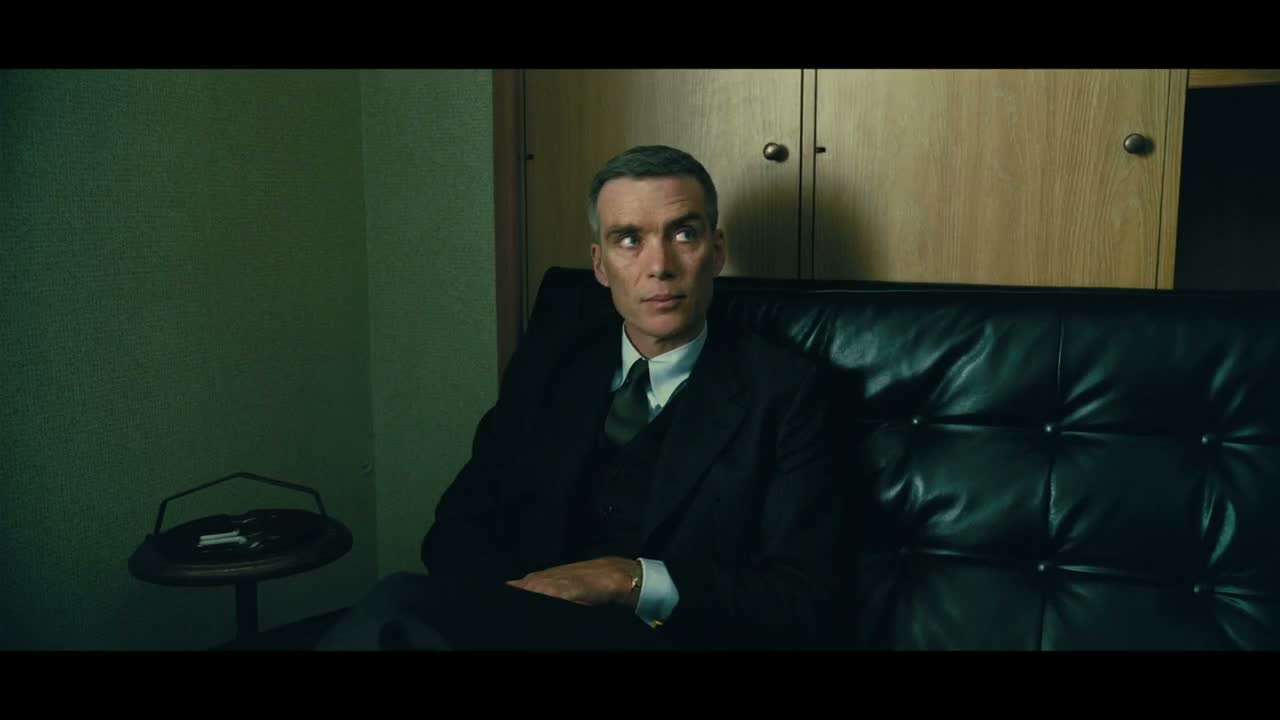
“Why go through all this against a man who has accomplished what Dr. Oppenheimer has?”
One question that measures the whole hearing against a man's record.
Formal
Capítulo 24 de 28 · 2'22"
At Oppenheimer's security hearing, Rabi is called to vouch for him. The questions dig into old rumours and old friends, but Rabi stands firm: he calls Oppenheimer a man of upstanding character and asks why they are going after someone with such a record. Then comes the one-word rebuke: "What more do you want?"
❝ Monólogo · 3 frases A Man of Upstanding Character
❝ Monólogo · 6 frases What More Do You Want
Rabi testifies at Oppenheimer's security hearing. He is asked about Strauss's claims, an alleged affair, and the way friends like Lawrence were turned against Oppenheimer, then asked to speak to his loyalty and character. Rabi answers that Oppenheimer is a man of upstanding character and loyal to his country, and asks why the board is going after such a man.
The hearing is less a trial than a war over reputations. Rabi is brought in to vouch for Oppenheimer, and the questions reach back through old friendships and old rumours, including the tale that Strauss used to turn one friend against another. What makes Rabi's testimony matter is that he refuses the frame: instead of defending each charge, he goes to character - "Dr. Oppenheimer is a man of upstanding character" - and then to incredulity: why go through all this against a man with such a record? The scene's final beat is the most telling, when he asks what more anyone could want and answers his own question with the absurd word "Mermaids?" It is a courtroom moment that turns exasperation into argument.
A1–C2 es la escala MCER. Las tarjetas por encima del nivel elegido se atenúan y la reproducción no se pausa en ellas.
“Why go through all this against a man who has accomplished what Dr. Oppenheimer has?”
One question that measures the whole hearing against a man's record.
Formal
“Dr. Oppenheimer is a man of upstanding character.”
A plain character witness in a room built to destroy one.
Formal
“You'd be better off asking him.”
A polite refusal that sends the question back where it belongs.
Informal
“What more do you want?”
A short, fiery rhetorical question that shuts down an unfair demand.
Informal
Dr. Oppenheimer is a man of upstanding character. And he is loyal to the United States, to his friends, to the institutions of which he is part.
Why go through all this against a man who has accomplished what Dr. Oppenheimer has? Look at his record. We have an A-bomb and a whole series of it. We have a whole series of Super bombs. What more do you want? Mermaids?
Siguiente · 25cuts both waysLa escena: Borden Reads the Accusation LetterHe is called to speak to Oppenheimer's loyalty and character at the security hearing, and he uses his testimony to defend his friend's integrity.
They involve an alleged affair and old gossip that Strauss used to turn one friend against Oppenheimer, including the claim that Richard died of a broken heart.
He says Oppenheimer is a man of upstanding character, loyal to the United States, to his friends, and to the institutions he belongs to.
It is a sarcastic retort. Rabi has just listed the bombs the country already has and asks what more anyone could want, then offers Mermaids as an absurd example.
No. He asks why they are going through all this against a man who has accomplished so much, implying the pursuit is unjustified.