
“Ask yourself what it is sometime.”
Por qué es buena
He never names the weapon, only hands the question back, and that is what makes it linger.
Registro
Neutral
Úsala tú
Ask yourself what it is sometime, and you may not like the answer.
Capítulo 8 de 16 · 3'01"
D'Anconia seeks Rearden out at a party, not to sell anything but to warn him. The small talk turns when he says, "I want to learn to understand you," and then argues that the people Rearden supports have one terrible weapon against him: "It's their only weapon, but it's a terrible one."
D'Anconia Introduces Himself to Rearden
❝ Monólogo · 4 frases The Warning About a Terrible Weapon
At a party, Francisco d'Anconia introduces himself to Hank Rearden, who tells him flatly, "I'm not a fan." Unbothered, d'Anconia says he came only to meet him and wants to understand him. He asks why Rearden carries people who would be helpless without him, and warns that they hold one terrible weapon against him.
Taken as conversation, this is the strangest small talk at the party. D'Anconia refuses every frame Rearden offers — no sales pitch, no fight, no flattery — and instead turns the meeting into a diagnosis. Rearden is the man everyone depends on, and D'Anconia's question, "Why are you willing to carry them?", is not admiration but a warning about what that dependence costs. His image of the "miserable children" and the "battle" in which one must "make one's stand clear" reframes Rearden's work as a war he has not noticed he is in. The lines about a weapon he cannot see — "It's their only weapon, but it's a terrible one" — and about his own unhappiness are the real payload. When Rearden asks his motive, D'Anconia answers that he is giving him "the words you need for the time when you'll need them," which is exactly what a warning is.
A1–C2 es la escala MCER. Las tarjetas por encima del nivel elegido se atenúan y la reproducción no se pausa en ellas.
“Ask yourself what it is sometime.”
He never names the weapon, only hands the question back, and that is what makes it linger.
Neutral
“I want to learn to understand you.”
Not wanting to beat him but to understand him, the line turns a rival into a puzzle.
Neutral
“If it wasn't for you, most of these people would be left helpless.”
A hypothetical that states his value and everyone's dependence at once, praise that is really a question.
Neutral
“What battle? I don't fight the disarmed.”
First he questions there is any battle, then declares fighting the weak beneath him.
Neutral
“...to give you the words you need for the time when you'll need them.”
A farewell that gifts not advice but words that will be needed later, half blessing and half prophecy.
literary
Oh, they have a weapon against you. It's their only weapon, but it's a terrible one. Ask yourself what it is sometime. There's a reason you're as unhappy as you are.
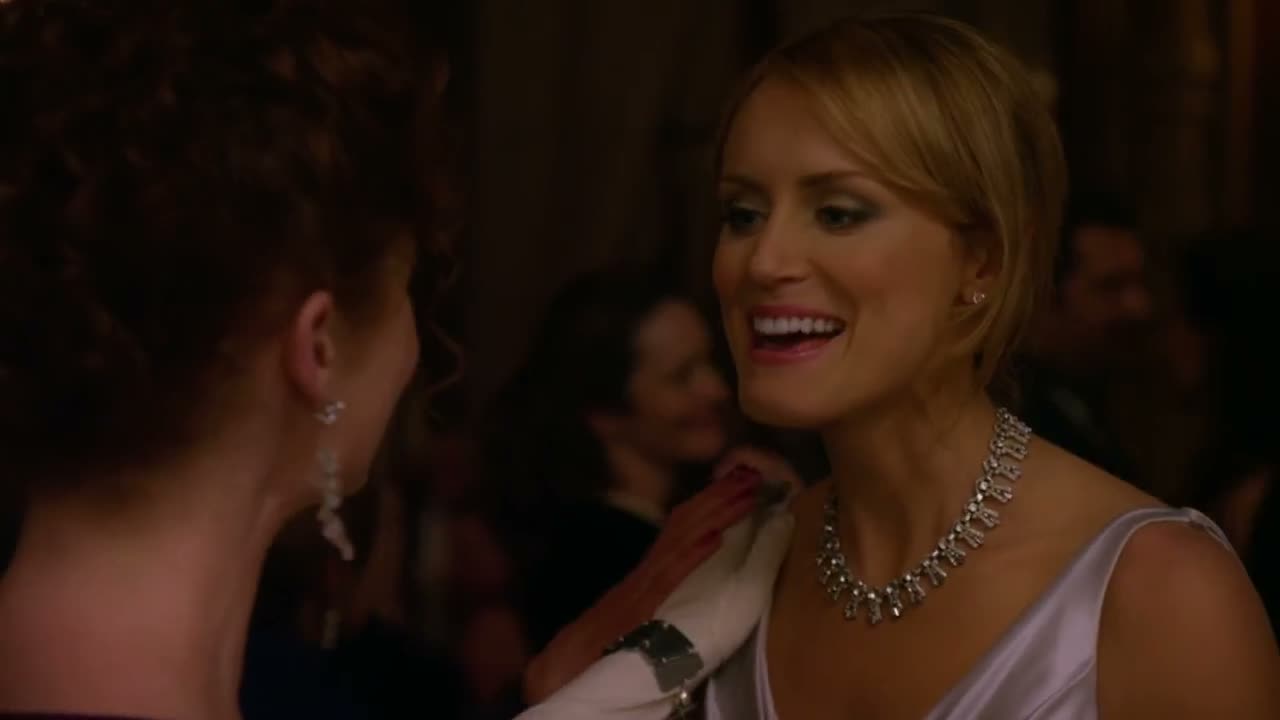 Siguiente · 09take it off your handsLa escena: Lillian Trades the Bracelet
He says he came only to meet Rearden and to understand him. He is not selling anything, and he turns down Rearden's assumption that the visit is about money or a deal.
He only says it is their one weapon and a terrible one, and tells Rearden to ask himself what it is. Withholding the name is part of the warning, pushing Rearden to work it out for himself.
He argues there is a reason for Rearden's unhappiness: he carries people who resent and depend on him, and he has not yet named the battle he is in. The line is a challenge, not sympathy.
It means your fame has arrived before you did — a formal way of saying "I've heard of you." Rearden uses it to greet D'Anconia, whose name is already notorious.
D'Anconia has described a battle, and Rearden answers that he sees no opponent with any power. It shows his confidence that the people around him cannot really threaten him.