
“I miss Richard more than I can bear.”
Por qué es buena
Grief stated as a weight past the limit of bearing.
Registro
Neutral
Úsala tú
I miss my old teammates more than I can bear.
Capítulo 21 de 28 · 1'36"
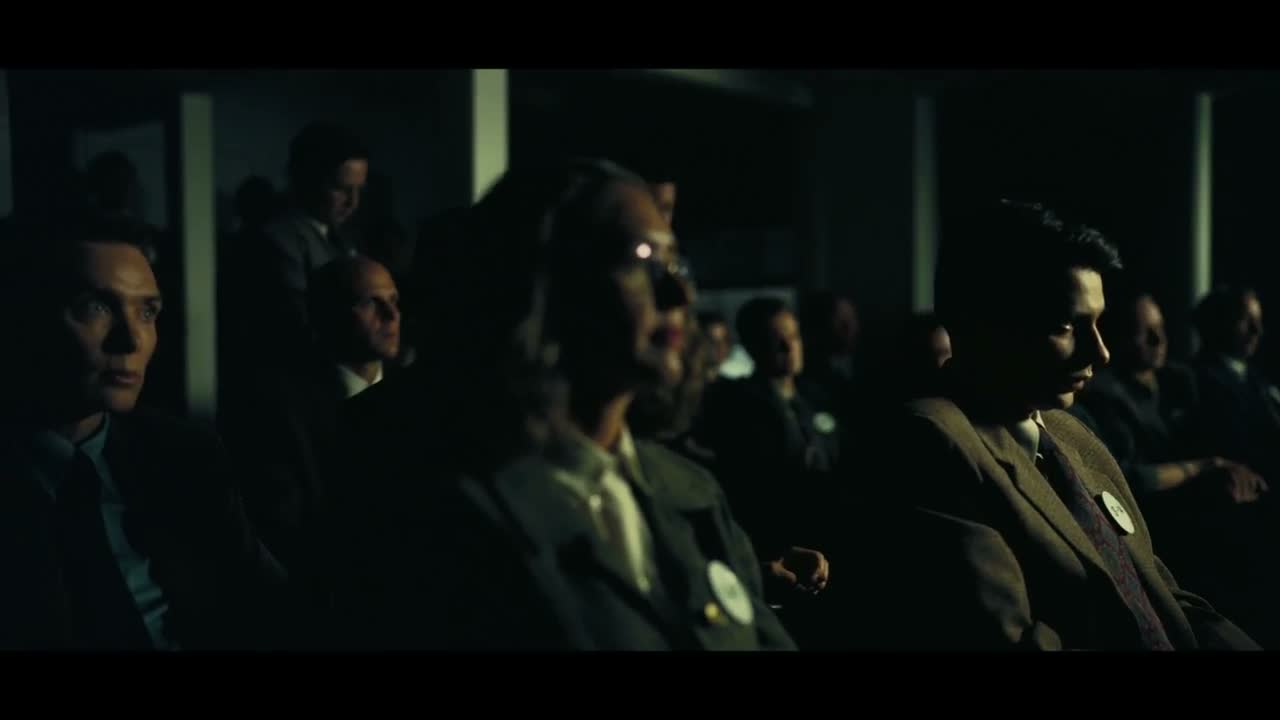
At a gathering, the talk turns to Klaus Fuchs, the man Oppenheimer had placed on the implosion team, exposed as a spy "the whole time." Even under tapped phones and surveillance, he "never stopped speaking his mind" — and the remark that closes it is pointed praise: "A man of conviction."
Spying the Whole Time
❝ Monólogo · 7 frases A Man of Conviction
At a party, the conversation turns to Klaus Fuchs, the British scientist Oppenheimer had put on the implosion team at Los Alamos, who was spying for the Soviets the whole time. The FBI stepped up surveillance, tapping his phone and following him, yet he never stopped speaking his mind.
The scene is a portrait of a spy drawn by people who admire him anyway. Fuchs is introduced as Oppenheimer's own hire, "the British scientist that you put onto the implosion team," and the damage is stated in the plainest terms: "he was spying for the Soviets the whole time." What follows is not outrage but a kind of rueful respect, cataloguing taps, tails and searched trash before landing on "But never stopped speaking his mind" and the verdict "A man of conviction." The scene closes on a colder thought — that he may have believed fame could protect him — turning admiration into a warning.
A1–C2 es la escala MCER. Las tarjetas por encima del nivel elegido se atenúan y la reproducción no se pausa en ellas.
“I miss Richard more than I can bear.”
Grief stated as a weight past the limit of bearing.
Neutral
“Part of me's glad he didn't live to see where this is all going.”
Grief mixed with relief that the dead never saw where the world is heading.
Neutral
“And maybe he thought fame could actually protect him.”
A quiet note on mistaking fame for protection.
literary
“What does Fuchs mean to the rest of the world?”
A cold rhetorical question that shrinks a spy scandal to scale.
Neutral
After the truth about Fuchs came out, the FBI stepped up surveillance on him. He knew his phone was tapped, he was followed everywhere... ...his trash picked through. But never stopped speaking his mind. A man of conviction. And maybe he thought fame could actually protect him.
 Siguiente · 22curse the name ofLa escena: Oppenheimer Refuses the Super Bomb
A British scientist Oppenheimer had placed on the implosion team at Los Alamos. He turned out to have been spying for the Soviets the whole time.
They stepped up surveillance: his phone was tapped, he was followed everywhere, and his trash was picked through.
With grudging respect. It notes he never stopped speaking his mind and calls him a man of conviction, even while hinting his pride may have misled him.
Because the news is so bleak that dying earlier looks like a mercy, which sets the tone before the spy case is even discussed.
That he may have believed his reputation could shield him from suspicion, a hope the FBI's surveillance proved wrong.