
“But today, that pride must be tempered with a profound concern.”
Por qué es buena
Pride on one side, dread on the other, balanced in one clause.
Registro
Formal
Úsala tú
The celebration must be tempered with a hard look at the numbers.
Capítulo 22 de 28 · 1'58"
The war is over, and the film turns to the aftermath: burns, radiation, and the line that the bombings were "the first act of this cold war." Teller asks Oppenheimer to back the Super; he answers, "I neither can nor will." His farewell speech warns that pride must be tempered with concern.
❝ Monólogo · 9 frases Reading the blast
Burns, then luck, then death locked to the flash.
I Neither Can Nor Will
❝ Monólogo · 4 frases The curse on the calendar
He hands them pride, then books the day people will curse this place.
After the bombings, the film describes the human cost in burns and radiation, and notes that a physicist called the attacks the first act of the Cold War. Teller asks Oppenheimer to push for the Super, and Oppenheimer refuses, saying it is not the right use of their resources. At the Los Alamos farewell, he warns that pride must be tempered with concern.
The scene is where the film's argument becomes explicit. The war ends, and Oppenheimer's triumph is immediately reframed as danger: a physicist reads the bombings as the opening move of a cold war, and the men around him want the next weapon. His refusal—"I neither can nor will"—is the hinge of his later downfall, because it puts him against the program he built. The farewell speech states the film's view of him in one line, "that pride must be tempered with a profound concern." Even his own warning—that people may one day "curse the name of Los Alamos"—reads as prophecy, since his name will be the one dragged through hearings. He ends the war as a hero and starts his afterlife as a suspect.
A1–C2 es la escala MCER. Las tarjetas por encima del nivel elegido se atenúan y la reproducción no se pausa en ellas.
“But today, that pride must be tempered with a profound concern.”
Pride on one side, dread on the other, balanced in one clause.
Formal
“I neither can nor will, Edward.”
A refusal that closes both ability and will in one breath.
Formal
“Stimson is now telling me we bombed an enemy that was essentially defeated.”
The moral case stated as hearsay, and all the sharper for it.
Formal
“I hope that in years to come you will look back on your work here with pride.”
A farewell disguised as a blessing.
Formal
Virtually everyone in the street, for nearly a mile around, was instantly and seriously burned. The, uh, Japanese spoke of people who wore striped clothing upon whom the skin was burned in stripes. There were many who thought themselves lucky, who climbed out of the ruins of their homes only slightly injured. But they died anyway. They died days or weeks later from the radium-like rays emitted in great numbers at the moment of the explosion.
I hope that in years to come you will look back on your work here with pride. But today, that pride must be tempered with a profound concern. If atomic weapons are to be added to the arsenals of a warring world, then the day will come when people will curse the name of Los Alamos.
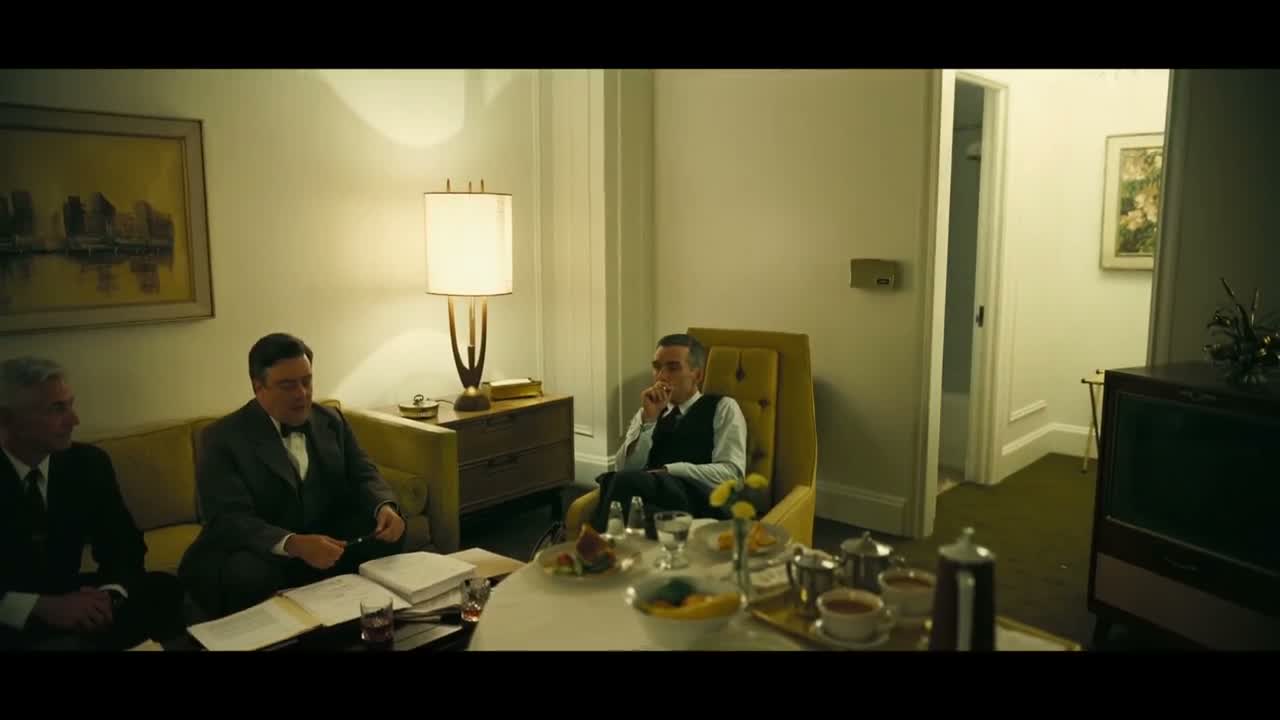 Siguiente · 23how the game is playedLa escena: Planning Oppenheimer's Downfall
People within nearly a mile were instantly and seriously burned, and many who thought themselves lucky because they were only slightly injured died days or weeks later from radiation.
He tells Teller he neither can nor will help, adding that continuing the research is not the right use of their resources.
He calls him a Sphinx-like guru of the atom and says nobody knows what he really believes, pressing him to reveal his true position.
He says pride in the work must be tempered with profound concern, and that people may one day curse the name of Los Alamos.
It means he is both unable and unwilling to do something; used here, it is a firm, formal refusal to support the Super.