00:00 / 02:34
00:00 / 02:34

Mireau Orders Fire on His Own Men, Explained

Paths of Glory · 1957

Chapter 6 of 17 · 2'34"

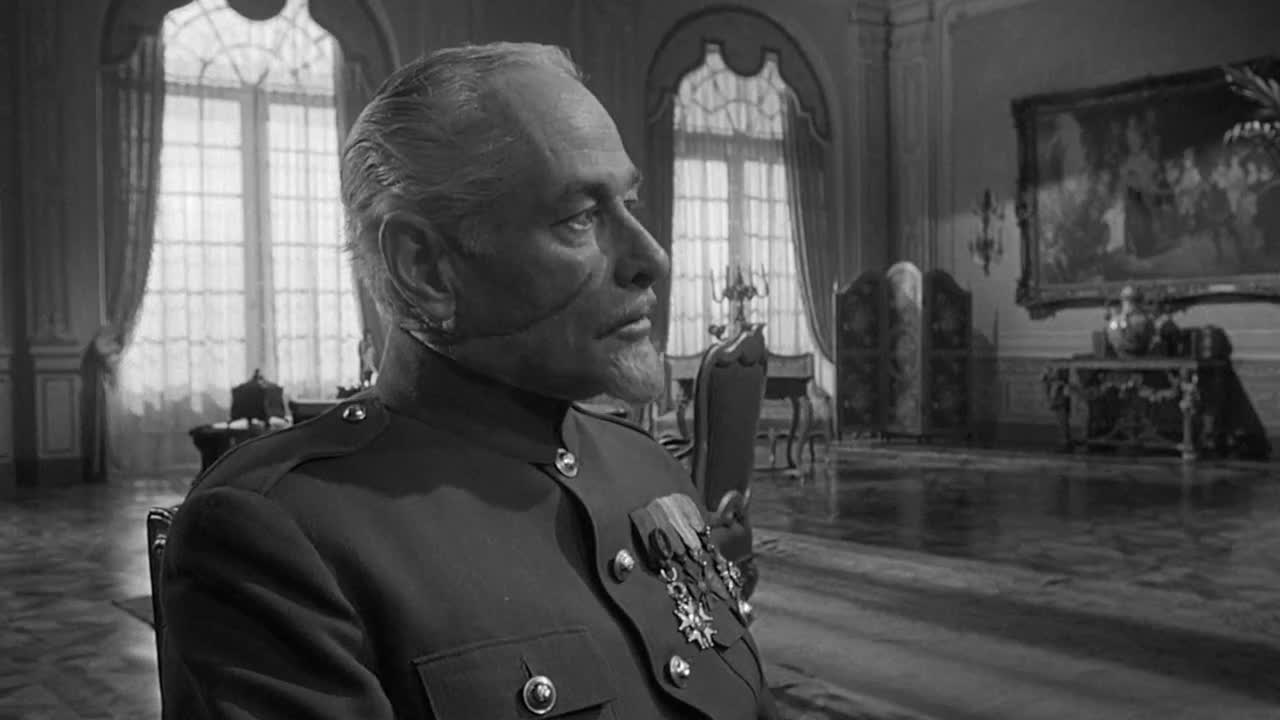
General Mireau, convinced his troops are mutinying, orders an artillery battery to fire on French positions. The battery commander refuses unless the order is written and signed, and insists the general take full responsibility. Mireau seizes the phone, threatens a firing squad, and has him arrested.

Talking to the bossThreatsSaying noThreateningBoss & employeeB2mediumamericanClean

Key moments

Start here, then watch the full scene
  1. The Battery Commander Refuses

    0:34–1:05
    31s
  2. Mireau Calls for a Court-Martial

    1:49–2:32
    43s

Mireau Orders Fire on His Own Men, explained

What happens

The attack has failed, and Mireau calls it mutiny. He orders the artillery to fire on his own front line, but the battery commander refuses, pointing out those are French positions. He demands a written, signed order and full responsibility from the general. Mireau takes the phone, threatens him with a firing squad, and relieves him.

What's really going on

The scene is about the refusal of responsibility. Mireau wants his artillery to shell French soldiers, and the battery commander's objection is procedural on purpose: 'unless you are willing to take full and undivided responsibility for it.' He is not simply defying the general; he is making him own the order in writing, which is exactly what Mireau will not do. Mireau's response is all threat — a firing squad, arrest, the loss of his command — because a man who cannot justify an order can only punish the one who questions it. Later, when the attack collapses, the same logic turns into blame: the men who would not die on command will face a court-martial, and their general will face nothing.

Key lines & what they mean

“With all respect, sir, you have no right to order me to shoot down my own men...”
The battery commander's refusal, framed as respect: he will not turn his guns on French soldiers, whatever the order says.
“Supposing you're killed. Then where will I be?”
His practical objection to an oral order: if the general dies, the commander is left exposed and alone with a killing he cannot justify.
“Hand over your command and report yourself under arrest to my headquarters!”
Mireau's response to being refused — not an argument but a punishment, stripping the officer of command and freedom at once.
“If those little sweethearts won't face German bullets, they'll face French ones!”
The general's line about shooting his own troops, dressed up as justice, which reveals how little the men mean to him.
“The troops are mutinying, refusing to advance.”
Mireau's framing of the failed attack: he calls frightened men mutineers, which turns a military disaster into a crime he can punish.

Theme

  • Power — Mireau uses rank to demand an atrocity, and when it is refused he punishes the refuser instead of justifying himself.
  • Duty — The battery commander's duty is split between obeying orders and not killing his own soldiers, and he chooses the latter.

What this chapter teaches

Teaching points

Review right after watching
My level5/7

A1–C2 is the CEFR scale. Cards above the level you pick fade, and playback will not auto-pause on them.

Paths of Glory: your progress

Chapter 6 of 17 · about 36 min to go

← Previous
Up next · 07set an exampleThe scene: Generals Choose Three Scapegoats

Takeaways

What you walk away with
  1. An order to fire on your own side breaks the chain of command.
  2. A wartime refusal is a legal act, not only courage.
  3. Mireau's threat shows rank driven by temper, not judgment.
  4. Both men know the written order is a shield.

People also search

Questions, then the lines
Why does Mireau order fire on his own troops?

He believes the men are mutinying by refusing to advance, so he wants the artillery to force them out by shelling their own positions.

Why does the battery commander refuse?

He will not fire on French soldiers, and he insists the general put the order in writing, sign it, and take full responsibility for it.

Why does the commander want a written order?

He knows the order is indefensible. If the general dies or denies it, a written and signed command is the only proof that he was following orders.

What does Mireau do to the commander?

He threatens him with a firing squad, orders him to hand over his command, and has him report for arrest, punishing him for refusing.

What happens after the attack fails?

Mireau refuses to accept defeat, sends the men back in, and then orders a court-martial, turning the disaster into a trial of the soldiers instead of himself.