00:00 / 02:59
00:00 / 02:59

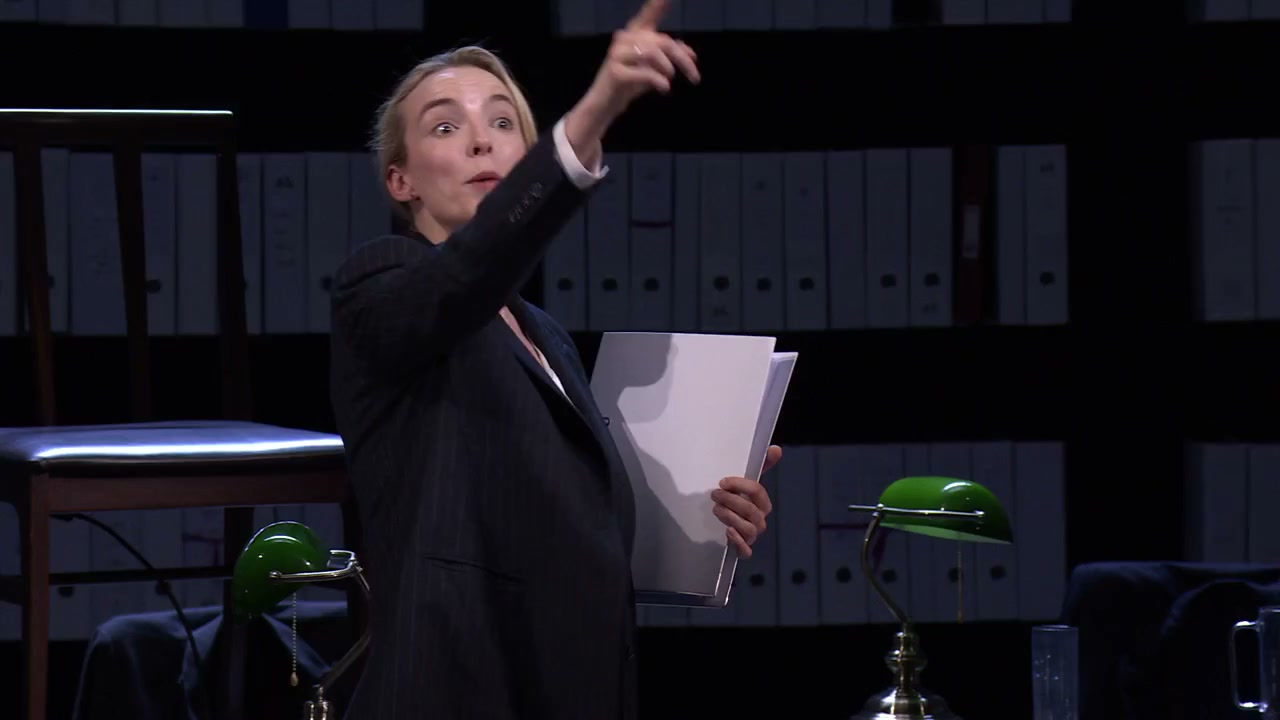
Tessa Baiting the Sergeant, Explained

She shows a police cross that looks like a rank slip and a polite close. "So, the trick is to get under their skin." Under that, she wants the officer defensive enough to contradict himself. A sexual assault cross, she says, is different: the act happened, and the fight is whether he could reasonably think it was OK.

CourtroomInterrogationsConfrontingExplainingC1slowbritish

Key moments

Start here, then watch the full scene
  1. ❝ Monologue · 8 lines Rattling the police

    She admits the pleasure, then stacks irritation, mistakes, and ruined testimony into one method.

    0:09–0:45
    36s
  2. ❝ Monologue · 13 lines The Apology That Names His Anger

    0:51–1:58
    67s
  3. Word Against Word on Consent

    1:58–2:48
    50s
  1. ❝ MonologueRattling the police8 linesPractice page ↗
  2. ❝ MonologueNot that kind of cross13 linesPractice page ↗

Tessa Baiting the Sergeant, explained

What happens

At Snaresbrook Crown Court, Tessa Ensler reenacts cross-examining a police sergeant. She calls him Constable until he snaps over the rank, gets him to admit he read his partner's statement, and closes in elaborate thanks. She then turns to sexual assault trials, where the dispute is consent and the defence only has to show his belief was reasonable.

What's really going on

The rank mistake is craft. Call him Constable until the correction replaces the answer, and "Oh, I am sorry, Sergeant?" keeps the sore open instead of closing it. He ends up admitting he read his partner's statement. She adds that the partner has said "the exact opposite." Thanks for his "frank answers" and for "assisting the court," then "I have no further questions," frames the collapse as courtesy. A sexual assault cross is "a completely different thing." "it's usually just one person's word against the other." The sex is conceded. Consent is the fight, and the defence need not prove she consented. It only points out that he may not have known consent was missing, and asks whether that belief was reasonable. She feels for "the alleged victim," and she contrasts barristers who "make them look like liars" with her own aim: test the case without destroying the complainant. "And yet, sometimes" lets the doubt stand.

Key lines & what they mean

“Show me an officer who hasn't run their story past their partner, trying to close the gaps.”
She treats a clean police story as something rehearsed with a partner so the holes are already closed before court.
“If you try to play God in this system, you are damned, but the police, they forget.”
Anyone who plays the system's final judge is finished, she says, but police forget that and act as if they are the system itself.
“'I didn't mean to make you angry, sir.”
Not a real apology. It announces his anger and turns the temper her questions stirred into the thing the court is asked to notice.
“'Thank you so much for your frank answers and for assisting the court today.'”
The courtesy is the last twist. Praise for frank, helpful answers arrives once those answers have already been turned against him.
“In sexual assault cases, it's usually just one person's word against the other.”
Her point is evidentiary. These cases often come down to two accounts of one act, with no partner statement to smash them together.
“I feel for the alleged victim, the complainant, I really do.”
She offers sympathy, but the labels stay legal: alleged victim and complainant, not a person the court has already called a victim.

Theme

  • Justice — She separates a police cross she can crack from a sexual assault trial, where the act is admitted and the fight is consent and a reasonable belief.
  • Deception — Calling him Constable, the quick sorry, and the lavish thanks are there to expose anger and inconsistency, not to make peace.

What this chapter teaches

Teaching points

Review right after watching
My level0/8

A1–C2 is the CEFR scale. Cards above the level you pick fade, and playback will not auto-pause on them.

National Theatre Live: Prima Facie: your progress

Chapter 8 of 22 · about 48 min to go

← Previous
Up next · 09her word against hisThe scene: Jenna's Word on Trial

People also search

Questions, then the lines
Why does the cross keep calling him Constable?

The trick named here is to get under their skin. Aggravate the officer and he gets defensive and makes mistakes, which can discredit what he said before. Each "Constable" pulls him off the story and onto his rank.

Is "Oh, I am sorry" a real apology?

It is staged as one. Right after "Constable" comes "Oh, I am sorry, Sergeant?", as if the rank had only just come to mind. The line that actually names the anger is "I didn't mean to make you angry, sir."

Why is a sexual assault cross a different thing?

It is usually one person's word against the other. The sex happened. The fight is whether it was consensual. The defence does not have to prove she consented, only that he did not know consent was missing, and whether his belief was reasonable.

Why does she say the complainant is lucky it is her?

She says some male barristers still try to make complainants look like liars and doubt themselves. She claims she is clear and concise, testing the case without destroying them, so they are "actually lucky it's me." She also says she can see they are scared, then stops on "And yet, sometimes."