00:00 / 04:01
00:00 / 04:01

Ensler Corners the Witness, Explained

She lets a witness feel in control, then circles the box until one question lands. It sounds like a polite clarification. It is not. "There is blood in the water, and I let the witness swim on." The judge and the other lawyers already cringe for him; he still thinks he is the cat.

CourtroomInterrogationsConfrontingWarningRivalsC1slowbritish

Key moments

Start here, then watch the full scene
  1. ❝ Monologue · 13 lines She Lets the Witness Swim On

    0:02–1:16
    75s
  2. ❝ Monologue · 8 lines No flaunting the win

    She drops the feeling, bars any flaunting, and renames only the loss.

    3:34–3:59
    25s
  1. ❝ MonologueLet him keep swimming13 linesPractice page ↗
  2. ❝ MonologueNo flaunting the win8 linesPractice page ↗

Ensler Corners the Witness, explained

What happens

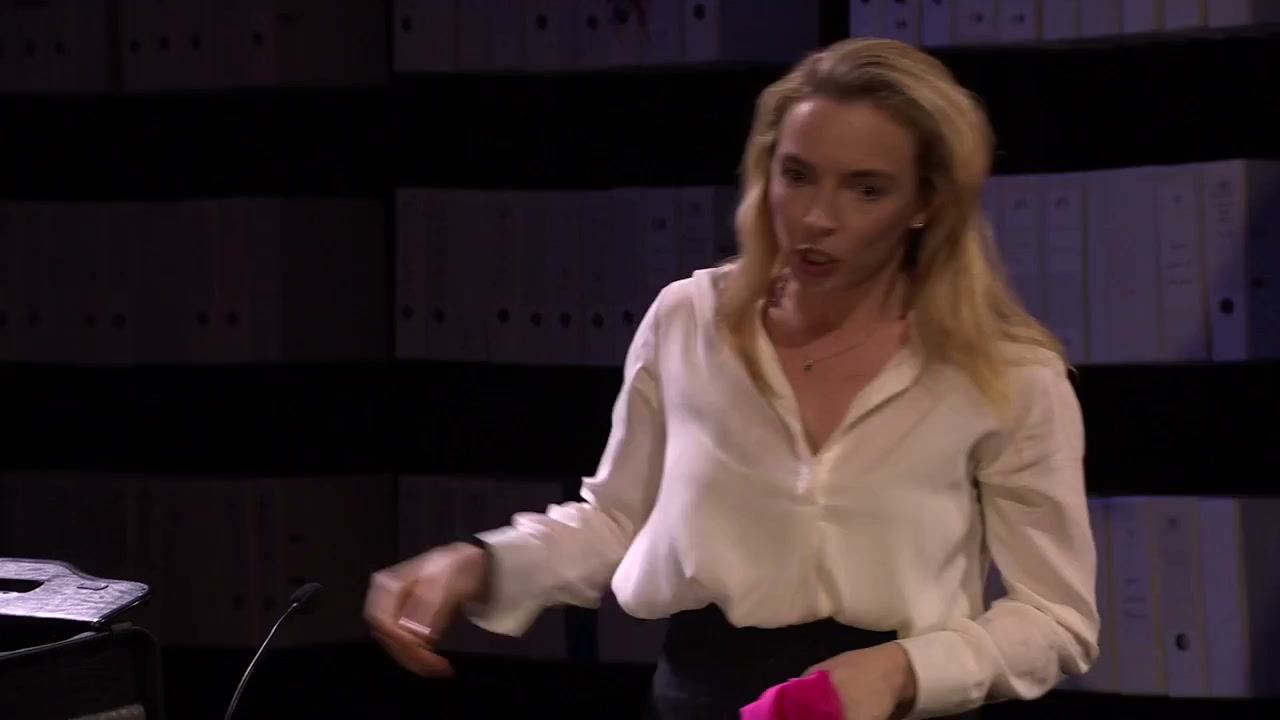
In court, the accused's barrister narrates the questioning. She lets the witness feel safe, flicks through pages, and circles until one question breaks him. The prosecutor's eyes warn him too late. The judge makes Mr Bateman answer, then tells Ms Ensler she already has it. She submits there is no case to answer, and notes the rule: a winner does not flaunt it. Barristers call a loss coming second.

What's really going on

The courtesy is the weapon. She lets him lean back and feel safe, then tip-toes in and flicks through pages so the strike looks like a clarification. "There is blood in the water, and I let the witness swim on." The judge and the other lawyers already cringe and lean forward; the jury and the gallery have no idea; the man in the box still has no clue. He thinks he is the cat and she is the mouse. The prosecutor's eyes try to say "Keep your wits about you." Then shock, dawning, hatred. She stays professional, uses her sweetest voice because he will not answer, and smiles when the judge makes him speak into the microphone. Out loud she thanks the court and submits there is no case to answer. "It's not emotional for me. It's the game." Winners must not flaunt it. Any of them might lose the next day, and they do not call that losing. They call it "coming second."

Key lines & what they mean

“There is blood in the water, and I let the witness swim on.”
She can already see the witness is wounded, and she deliberately lets him keep talking until he swims into the trap.
“He thinks he is the cat and I am the mouse.”
The witness is sure he is the predator and she is the prey, which is exactly the mistake she wants.
“What just happened? It's not emotional for me. It's the game.”
Once he is destroyed she refuses to treat it as feeling. For her, this is a game of law.
“The barristers' rule is the winner can't flaunt it.”
Even after she wins, the code of the bar is that the winner does not show off.
“Every winner might be the one who loses the next day.”
Any winner can lose the next day, so nobody's victory is safe enough to parade.
“We don't call it losing. We call it 'coming second'.”
Inside this profession a loss is renamed second place, a softer word that still admits the ranking.

Theme

  • Power — She lets the witness feel safe, then corners him while the lawyers watch and the gallery has no idea.
  • Deception — A polite just to clarify hides the strike, and she calls the whole cross-examination a game rather than a feeling.

What this chapter teaches

Teaching points

Review right after watching
My level1/8

A1–C2 is the CEFR scale. Cards above the level you pick fade, and playback will not auto-pause on them.

National Theatre Live: Prima Facie: your progress

Chapter 2 of 22 · about 69 min to go

← Previous
Up next · 03What's new?The scene: Tessa Comes Home After the Win

People also search

Questions, then the lines
Why does she let the witness feel safe?

The confidence is the trap. There is blood in the water, and she lets him swim on, lets him feel his control, then tip-toes closer. If he were less cocky he might sense the danger. Instead he thinks he is the cat and she is the mouse.

Why do the other lawyers cringe when the jury does not?

They know what is coming. The judge and the other lawyers cringe for him and still lean forward because they love it. The jury and the people in the gallery have no idea, and the man in the witness box has no clue.

Why does the prosecutor not re-examine?

There is no point. The prosecutor stands, but does not go on. Digging his witness in further would only make it worse, and the narration calls that a no-brainer.

Why is the winner not allowed to flaunt it?

It is the barristers' rule. The winner cannot flaunt it, because every winner might be the one who loses the next day. They do not call that losing. They call it coming second.