00:00 / 03:00
00:00 / 03:00

Ensler Lets the Witness Talk, Explained

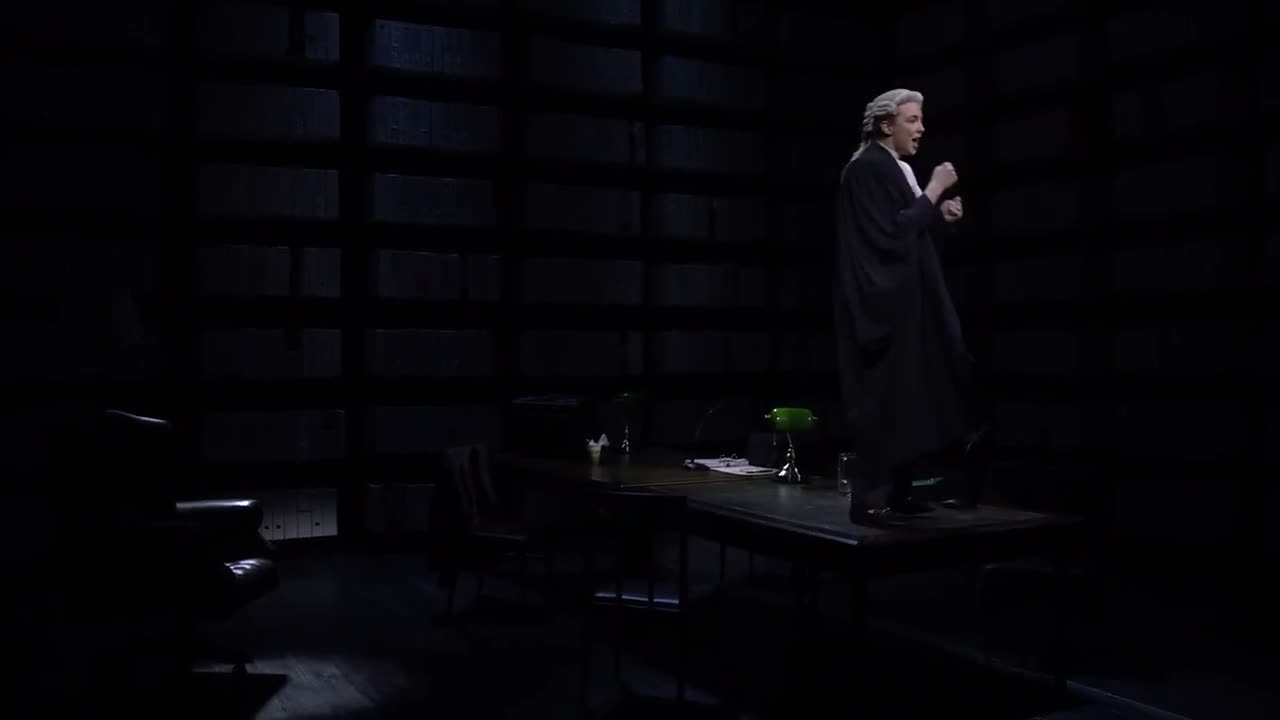
She waits through the charged quiet, then takes the witness looking almost lost. Pages turn, questions repeat, and she thanks him for clarifying. The real aim sits in one order to herself: "Let the witness talk, over talk."

CourtroomInterrogationsConfrontingExplainingC1slowbritishClean

Key moments

Start here, then watch the full scene
  1. ❝ Monologue · 10 lines Win the point, then play it cool

    0:17–1:28
    70s
  2. ❝ Monologue · 8 lines She nods and lets him dig deeper

    1:55–2:50
    55s
  1. ❝ MonologueOrders to play it cool10 linesPractice page ↗
  2. ❝ MonologueThe nod that digs8 linesPractice page ↗

Ensler Lets the Witness Talk, explained

What happens

In a courtroom, a barrister rises after an application is granted. The judge looks at her, and one line follows: "It's your witness, Ms Ensler." She buttons her jacket and cross-examines as if she is slow. She flicks through pages, repeats questions, and lets the witness relax. He talks too much, contradicts himself, and keeps explaining while she nods.

What's really going on

The silence is the point. She treats it as "the calm before," the wait that measures her skill. The application is granted. Her client feels "the shift" without knowing she has "won a point." The room gives her a thrill, and she orders herself to "Play it cool." The clumsiness is staged. Pages get flicked. Questions get repeated. She lets him think she is "a bit slow," and she clocks the line she wanted: "This one doesn't seem to know what she's doing." His shoulders drop. A prosecution snicker and her client shifting in the dock both count as "Good." He is no longer vigilant. The judge stays expressionless, yet one line insists "this judge has seen me before, seen the likes of me." She lets him "clarify," then nods while "he digs himself in deeper." "that's a bit clearer now, but..." draws another fact, and he volunteers more. A finger rises to the prosecutor's forehead.

Key lines & what they mean

“He doesn't quite know that I've won a point, but he feels the shift, likes it.”
Her client senses the win without understanding the legal point. The mood has moved, and he likes it.
“My client hates the witness, but for me, the witness is just the witness.”
She keeps it impersonal: the witness is only a witness to her, while her client hates him.
“Let the witness talk, over talk. Let him 'clarify'. Good.”
She wants him past a careful answer, dressing the extra words as clarification. The surplus is the point.
“'This one must be straight out of uni or something. She's not that good.'”
The dismissal she is fishing for: young, just out of university, not a threat. His confidence is her bait.
“Nodding. I'm nodding, while he digs himself in deeper.”
She looks helpful and keeps nodding. His attempt to explain only worsens the inconsistency.

Theme

  • Deception — She pretends she has lost her way so the witness will stop watching his own words.
  • Power — Looking weak is how she takes the upper hand, and his extra talk becomes her point.

What this chapter teaches

Teaching points

Review right after watching
My level0/8

A1–C2 is the CEFR scale. Cards above the level you pick fade, and playback will not auto-pause on them.

National Theatre Live: Prima Facie: your progress

Chapter 1 of 22 · about 73 min to go

Up next · 02blood in the waterThe scene: Ensler Corners the Witness

People also search

Questions, then the lines
Why does she pretend to lose her way during cross-examination?

She wants him relaxed and careless. She flicks through pages so he will "think I have lost my way," lets him "over talk" and "clarify," and waits until he is "no longer vigilant." Then he "says something inconsistent" and "digs himself in deeper."

Why does she order herself to play it cool?

The courtroom is "charged," and she feels "the thrill of this" once the application is granted. "Play it cool" keeps that excitement out of her voice. She still wants the moment "in the pa-a-a-a-alm of your hand," not already won.

Why does she call the prosecution's snicker very good?

She has been acting lost, flicking pages until the other side laughs. "A snicker from the prosecution counsel" means the act is working, so her answer is "Good. Good. Very good." Her client shifting uncomfortably in the dock gets the same "Good," because worry on her side relaxes the witness.

Is she really not that good, as the witness decides?

No. "She's not that good" and "straight out of uni" are the opinion she wants him to hold. She has already "won a point," the judge has "seen the likes of me," and she calls this "the best part. All instinct." The upper hand he feels is the one she gave him.

Why does the prosecutor touch his forehead?

She lets him explain the slip, says "that's a bit clearer now, but...", and he "volunteers more information." She then sees the prosecutor "put a finger to his own forehead," the look of a lawyer whose witness will not stop.