
“Today, the prosecutor came second.”
Why it's great
She ranks the prosecutor like a race result, so the win sounds playful and arrogant together.
Register
Informal
Use it yourself
In the pub quiz, the noisy table came second.
Chapter 3 of 22 · 4'39"
A lawyer leaves court on "Today, I came first," and the phone throws back "What's new?" The ride to Mum's melts the gloss of this legal life into the seat. In the kitchen one line lands: "you got more criminals out on our streets then, did ya?" The win does not survive the room.
❝ Monologue · 16 lines Coming First Outside the Courtroom
The Kitchen Answers the Win
❝ Monologue · 8 lines Regret after the insult
The insult softens into an old friendship and ends on a mother picking up food.
After court, the lawyer packs up, nods to the judge, and tells a weeping mother she has to run. A phone call brings "What's new?" A cab, a missed fare, then the train to Mum's, where the gloss melts. The kitchen has Fanta, chopping, a sale shirt, and a fight that ends with Mum on the floor picking up carrots.
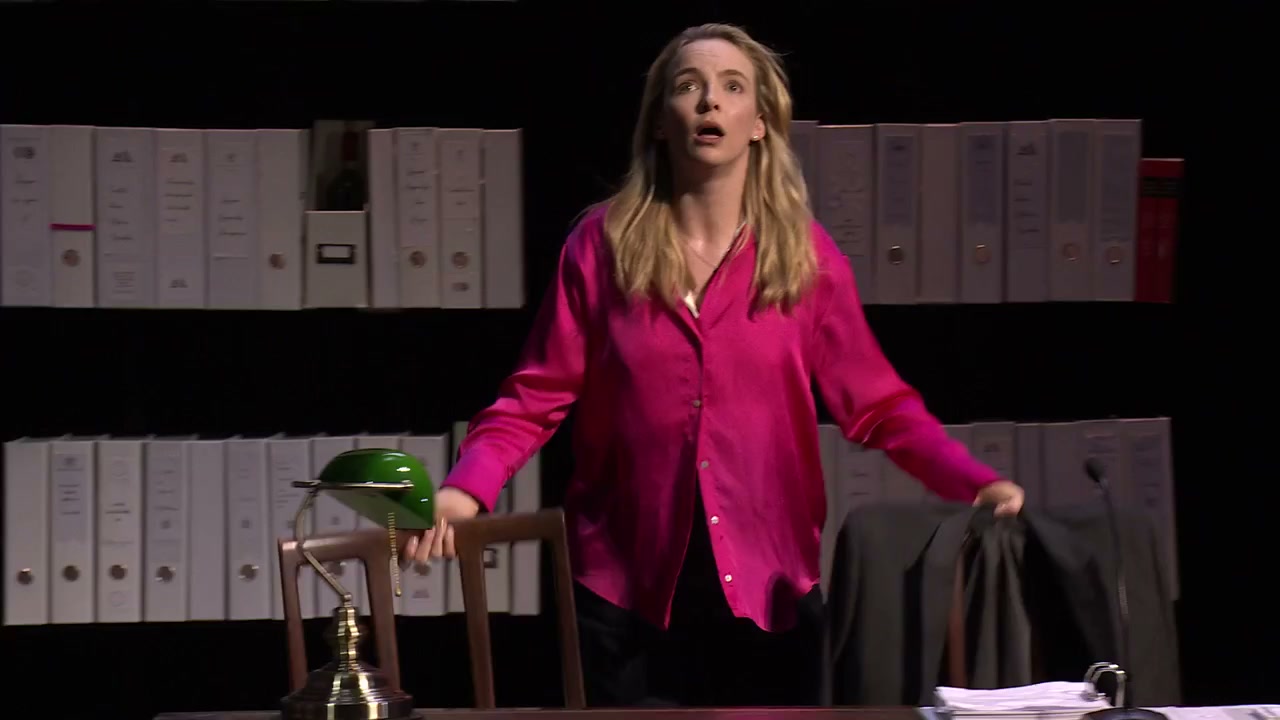
One line puts the prosecutor second. Another says "Today, I was a winner. Today, I came first." No eye contact, a nod to the judge, the client shown to do the same, then a weeping mother told there is another case. The scoreboard stops outside. On the phone, "I won" gets "What's new?" The train to Mum's lets the gloss of this legal life melt into the seat. The kitchen has the news, a brother in bed after a big night, and Fanta that is not sugar-free. "I won a case today" is met with "you got more criminals out on our streets then, did ya?" A shirt on sale is offered as what a lawyer would wear, and it goes on right there. The brother stands in the door, eyebrow a dried bloody mess, and turns the pink shirt into an insult. He does not hit her. She leaves. Mum is on her hands and knees, picking up carrots and broccoli.
A1–C2 is the CEFR scale. Cards above the level you pick fade, and playback will not auto-pause on them.
“Today, the prosecutor came second.”
She ranks the prosecutor like a race result, so the win sounds playful and arrogant together.
Informal
“Today, I was a winner. Today, I came first.”
The repeated Today turns a private boast into two drumbeats she can walk out on.
literary
“It's a long ride to Mum's, and the gloss of this legal life melts into my seat”
The job's shine melts into the seat, so the ride home undoes the courtroom performance.
literary
“'Oh, you got more criminals out on our streets then, did ya?'”
The tag question turns her win into a danger on the street and dares her to agree.
Informal
“'Fancy fucking lawyer in your fancy fucking pink shirt, eh?'”
Repeating fancy sticks the job and the pink shirt together so class and spite land in one spit.
Informal
“And the last thing that I see is my mum on the floor trying to pick them up.”
The fight ends on a mother on the floor, so the exit is guilt rather than a last word.
literary
Today, the prosecutor came second. I pack up my files. Nod thanks to counsel for the prosecution. Don't make eye contact, blah, blah, blah. Motion for my client to up and leave. Everybody watches my walk, leather satchel across my chest. Undo my jacket button. Saunter. Turn at the door, nod to the judge, gesture for my client to do the same. Outside the courtroom, he's free. He gets to go home. His mother is weeping, she holds my hand to her heart. I like the mothers, they know, they understand. I tell them, 'I've got to run. 'I've got another case to prepare. I don't want to see you in here again.' My client nods, shakes my hand. Respect. Power. Today, I was a winner. Today, I came first.
I feel bad that I've just said that. I just... I want him to be better. Not be this guy, the one with a blood-encrusted forehead, while breathing out last night's fumes as he speaks. This man, he... He was once my best mate. He did everything with me. Johnny swoops at the wall, vegetable pieces fly everywhere. I am just gonna leave. And the last thing that I see is my mum on the floor trying to pick them up. Pieces of carrots and broccoli. On her hands and knees.
 Up next · 04crème de la crèmeThe scene: The Dean's Induction Warning
The walk out of court is told as a race. "Today, the prosecutor came second" puts the other side behind, and "Today, I was a winner. Today, I came first" takes the top place. The same stretch names respect and power.
Someone on the phone asks how it went. The reply to "I won" is "What's new?" Coming first is treated as old news, not something to celebrate.
The case itself gets no praise. "I won a case today" is answered with "you got more criminals out on our streets then, did ya?" The narration locates pride in the shirt instead: it was on sale and "looks like what a lawyer would wear," called her way of saying she is proud.
The shirt has just been put on in the kitchen. He stands in the doorway with a dried bloody mess over his eyebrow, and the line he spits is about a fancy lawyer in a fancy pink shirt. He does not hit her.
He swoops at the wall and vegetable pieces fly everywhere. She is about to leave. The last thing she sees is her mum on the floor, on her hands and knees, picking up carrots and broccoli.