
“He loved a girl once. Twenty years ago now.”
Why it's great
The soft 'now' at the end makes twenty years feel like yesterday and a lifetime at once.
Register
literary
Use it yourself
We were neighbours once, forty years ago now.
Chapter 7 of 27 · 2'33"
Mrs. Jennings explains Colonel Brandon's tragic past — a young love forbidden for lack of money, a woman passed from man to man, and a search that ended at a poorhouse — then cheerfully tries to match him with Marianne. Brandon's only answer to her pushing is 'I do not know any duets.'
❝ Monologue · 6 lines Mrs. Jennings Tells of Brandon's Lost Love
Mrs. Jennings Pushes a Duet
At Barton Park, Mrs. Jennings tells Elinor the story of Colonel Brandon: he loved a poor girl named Eliza, was sent into the army when her father found out, and later found her dying in a poorhouse. She then turns to matchmaking, urging Brandon and Marianne to play a duet, which he politely refuses.
The chapter does two things at once, and it is the collision between them that makes it sting. Mrs. Jennings tells Brandon's story as entertainment — 'She was passed from man to man' — with the same cheerful voice she then uses to push him toward Marianne. The tragedy is not hidden; it is simply treated as a good anecdote, and that is the point. Brandon, who lived through it, must sit and listen, and his one unguarded line, 'I think he would've done himself a harm if not for John,' comes from the person telling the tale, not from him. When he is asked to play, his refusal — 'I do not know any duets' — is quiet and absolute, the only defence available to a man who will not explain himself in company. The scene reads as comedy, but Brandon is not in on it.
A1–C2 is the CEFR scale. Cards above the level you pick fade, and playback will not auto-pause on them.
“He loved a girl once. Twenty years ago now.”
The soft 'now' at the end makes twenty years feel like yesterday and a lifetime at once.
literary
“She was passed from man to man.”
The passive voice strips her of any agency, and that is exactly the cruelty of it.
Formal
“I think he would've done himself a harm if not for John.”
A conditional that names the worst without ever saying it, out of respect for the man.
Neutral
“She has nothing to do but marry off everyone else's.”
It damns her kindness as boredom and turns other people's marriages into a hobby.
Informal
“The rent here may be low, but we have it on very hard terms.”
It measures a cheap cottage against a costly arrangement, and the second half wins.
Neutral
He has no wife and children, for he had a tragic history. He loved a girl once. Twenty years ago now. A ward to his family, but they were not permitted to marry. - On what grounds? - Money. Eliza was poor. When the father discovered their amour... she was flung out of the house and he was packed up into the army.
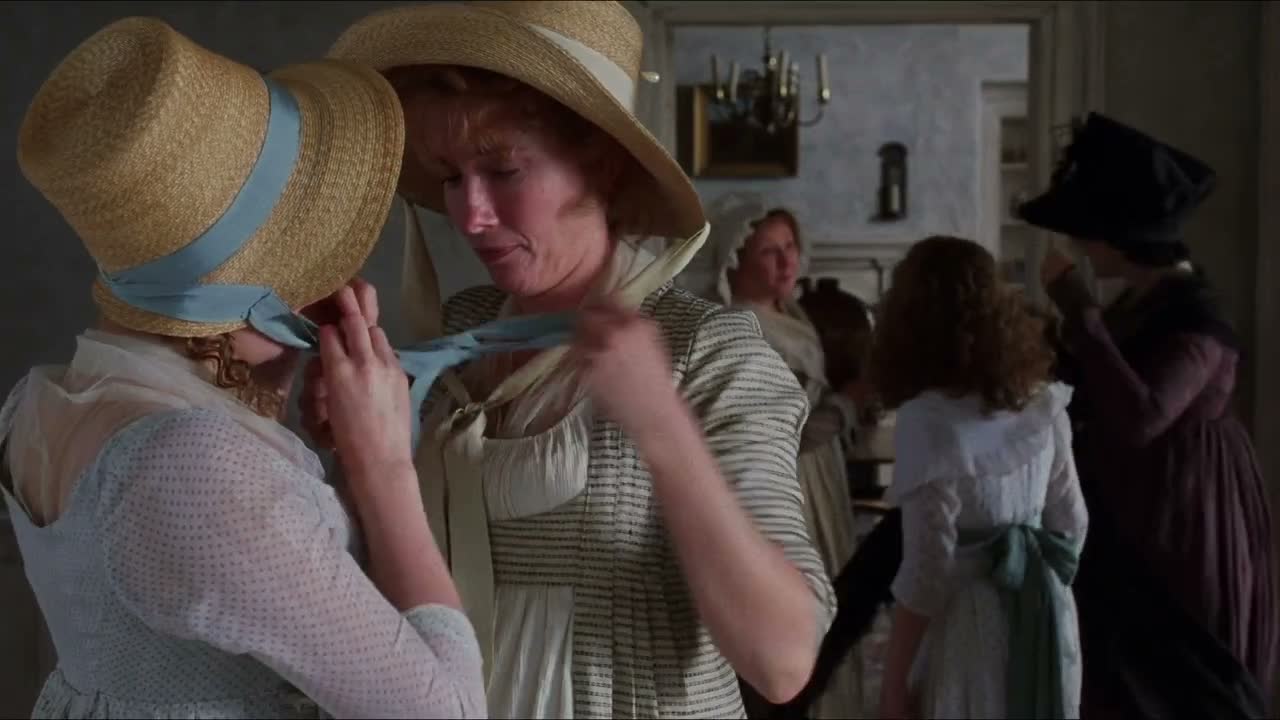 Up next · 08at death's doorThe scene: Marianne Falls in the Rain
Because she was poor. Her family forbade the match, and when her father discovered the affair he threw her out and packed Brandon off into the army.
She was passed from man to man and disappeared from respectable society. When Brandon returned from India he searched for her and found her dying in a poorhouse.
As a piece of gossip. She tells it cheerfully to Elinor and then moves straight on to matchmaking, apparently untouched by what the story means to him.
She wants him to play the pianoforte with Marianne, first praising his playing and then insisting on a duet so the two can sit side by side.
Because Mrs. Jennings will not leave them alone. Elinor answers that the cheap rent comes at a price, since their host's matchmaking is inescapable.