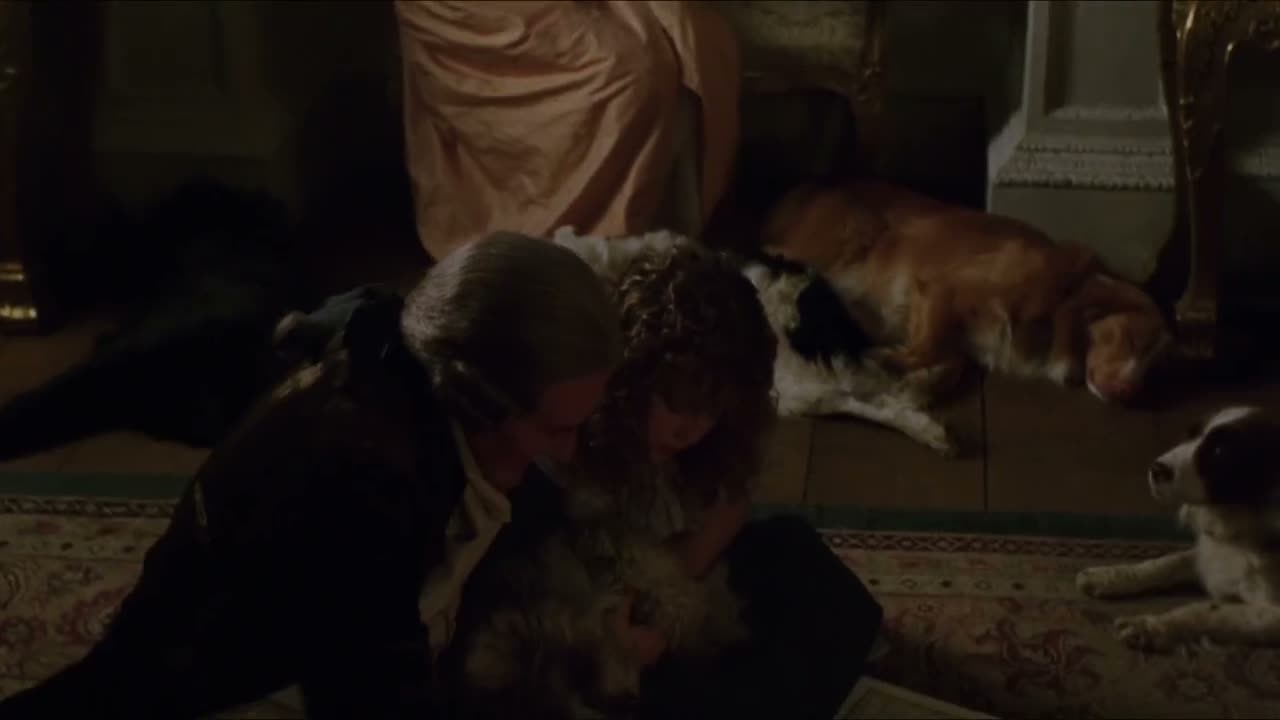
“Miss Marianne, will you do me the honor of granting me an interview tomorrow?”
Framing a private talk as an honour shows something weighty is coming before he says a word.
Formal
Chapter 13 of 27 · 4'04"
Willoughby asks Marianne for a private interview, then announces he is being sent to London and leaves at once, giving her nothing to hold on to. The family is left guessing — his manner looked 'so underhand' — and Elinor refuses to interrogate Marianne, saying 'I cannot force a confidence.'
Willoughby Says Goodbye for Good
Elinor Refuses to Pressure Marianne
Willoughby asks Marianne to grant him a private interview, and she agrees. The next day, as the family returns from church, he announces that Lady Allen is sending him to London immediately and that he does not expect to return to Devonshire soon. He leaves abruptly, and the Dashwoods are left to wonder what it meant.
The chapter is a courtship stopped mid-sentence. Everything is arranged for a proposal — Willoughby has asked for a private interview, and Margaret wonders aloud whether he will kneel — and then it is cancelled in the space of a single morning. His explanation is all social grievance and no substance: Lady Allen 'has exercised the privilege of riches' upon a dependent cousin. Marianne's mother tries to keep him talking, but Willoughby's exit line, 'It is folly to linger. I will not torment myself further,' is the sound of a man running from a room. Afterwards the two sisters argue over what it means, and Elinor's restraint is the chapter's moral centre. She will not believe the worst, but she will not force the truth either: 'I cannot force a confidence, nor should you.' The comedy of the picnic has turned into something colder.
A1–C2 is the CEFR scale. Cards above the level you pick fade, and playback will not auto-pause on them.
“Miss Marianne, will you do me the honor of granting me an interview tomorrow?”
Framing a private talk as an honour shows something weighty is coming before he says a word.
Formal
“I have no idea of returning immediately into Devonshire.”
No idea of returning sounds polite while quietly closing the door on any quick return.
Formal
“For shame. Can you wait for an invitation from Barton Cottage?”
A mock scolding plus a question turns a plea to stay into something playful and firm.
Informal
“It is folly to linger. I will not torment myself further.”
He calls staying a folly and spares himself pain, and the self-command is what cuts.
literary
“Certainly not. I cannot force a confidence, nor should you.”
She refuses and lays down a principle in one breath, and the inversion leaves no room to argue.
Formal
“I prefer to give him the benefit of my good opinion.”
She extends the benefit of the doubt to character, and the phrasing sounds both fair and firm.
Formal
Up next · 14the whip handThe scene: Lucy Tells Elinor Her SecretHe asks her to do him the honor of a private interview the next day, which the family takes as the prelude to a proposal.
He says Lady Allen has exercised the privilege of riches over her dependent cousin and is sending him to London, and he does not expect to return to Devonshire soon.
She is devastated. She shuts herself away and tells the family not to ask her questions, refusing to explain what passed between them.
That Willoughby has behaved strangely. Mrs. Dashwood and Margaret wonder whether he and Marianne quarrelled, and his leaving seems underhand to them.
Because she believes a confidence cannot be forced. She says they must trust Marianne to confide in them in her own time, and prefers to think well of Willoughby.