
“Reduced to the condition of visitor in my home.”
Why it's great
It names the humiliation of inheritance in one word: a guest in your own house.
Register
Formal
Use it yourself
After the sale, he was reduced to the condition of a tenant.
Chapter 2 of 27 · 2'06"
With Mr. Dashwood dead, his widow and daughters must leave Norland for the son who inherits it. Waiting for John and Fanny to arrive, Mrs. Dashwood seethes — "Vultures" — while Elinor quietly plans to find a house and urges the family to "bear their coming."
Mrs. Dashwood Refuses to Bear It
Elinor Explains the Inheritance
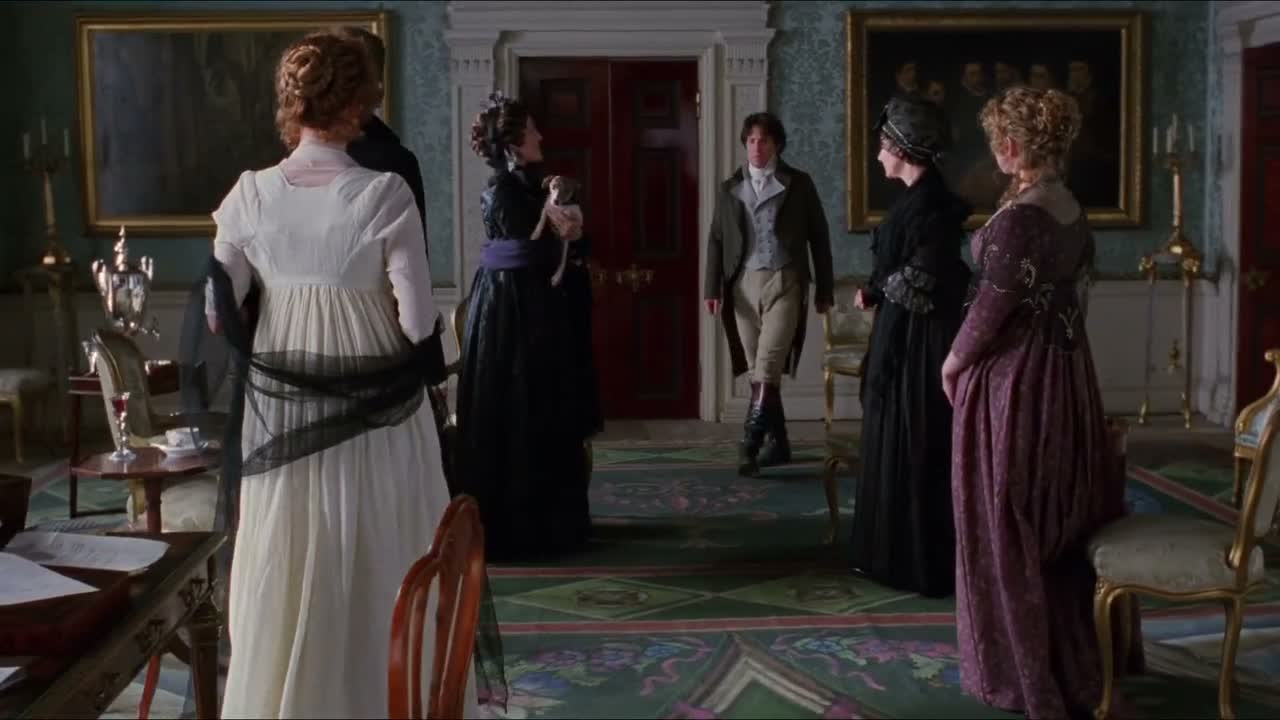
After Mr. Dashwood dies, his wife and daughters must give up Norland to John and Fanny, who are arriving from London. Mrs. Dashwood is humiliated at being reduced to a visitor in her own home, while Elinor begins looking for a new house and explains to Margaret that the estate goes from father to son.
The scene is about inheritance as a quiet violence. Nothing dramatic happens — no one is thrown out, no one shouts — and that is exactly the point. Mrs. Dashwood names her position with bitter precision: "Reduced to the condition of visitor in my home." The law she cannot fight determines everything, and Elinor explains it to Margaret in one flat sentence: houses go from father to son, not to daughter. The daughters do what women in their position must do: look for lodgings and keep up appearances. Even the kind leave-taking becomes part of the transaction, as the family tells the servants they may keep only two of them. The single word that releases the pressure is Mrs. Dashwood's 'Vultures' — the visitors are already picking over the estate.
A1–C2 is the CEFR scale. Cards above the level you pick fade, and playback will not auto-pause on them.
“Reduced to the condition of visitor in my home.”
It names the humiliation of inheritance in one word: a guest in your own house.
Formal
“It is not to be borne, Elinor.”
The stiff, old-fashioned phrasing makes her outrage sound almost dignified.
Formal
“Because houses go from father to son, dearest, not from father to daughter.”
Its balanced clauses make an unjust law sound like simple family custom.
Neutral
“It's not my atlas anymore. It's their atlas.”
A child measures the loss of a home with a single atlas that is no longer hers.
Informal
“My only real concern is how long it will take them to move out.”
Under the guise of concern she reveals exactly whose side she is on.
Neutral
 Up next · 03by any chanceThe scene: Edward Ferrars Visits Norland
Because the estate goes to the male heir, John Dashwood, under the law. Mr. Dashwood's widow and daughters have no claim to it.
Because they are about to take over Norland while she and her daughters have nowhere to go. To her, the relatives are picking over what is left.
Margaret asks why their relatives are moving in. Elinor answers plainly that houses pass from father to son, which is the law, not to daughters.
It means something cannot be endured. Mrs. Dashwood uses it to say that being treated as a visitor in her own home is unbearable.
Elinor will look for a new house and they will keep only two servants. Until they move, they must put up with the arriving relatives.