
“There I fell, and there I first saw Willoughby.”
Why it's great
One place holds both her fall and her first sight of him, so the line aches twice.
Register
literary
Use it yourself
There I first learned to swim, and there I met my best friend.
Chapter 26 of 27 · 2'38"
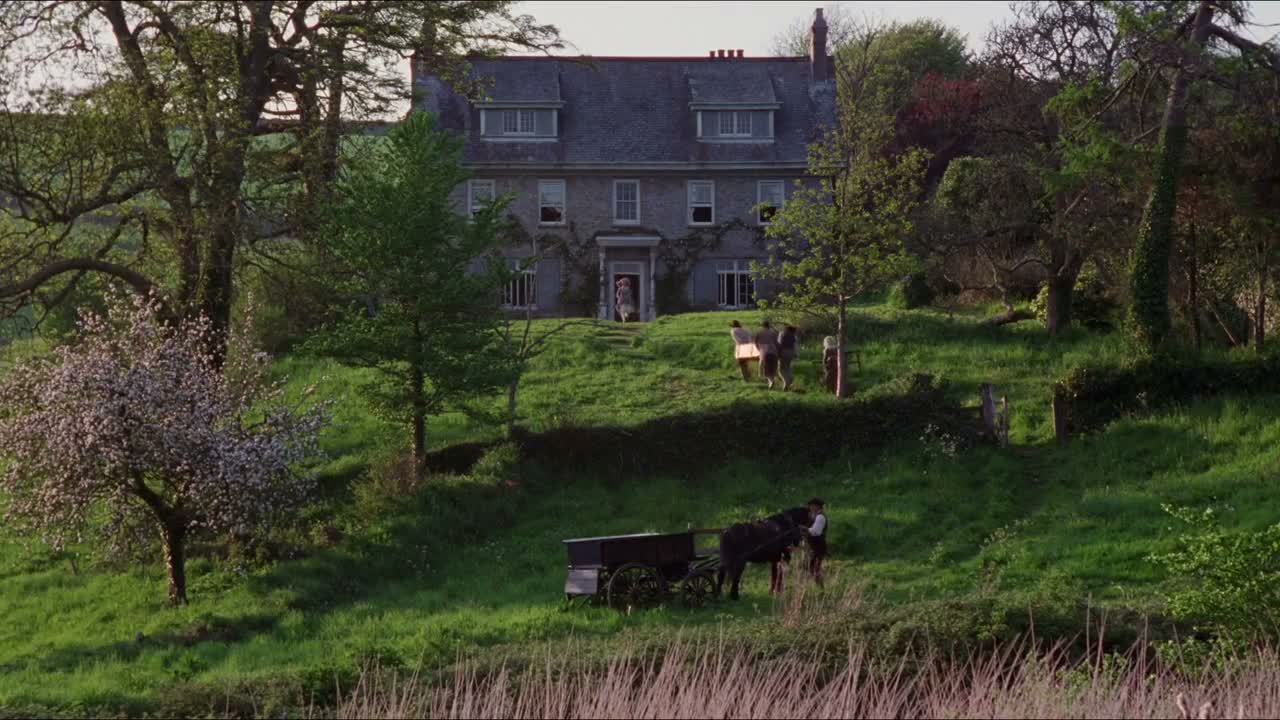
Marianne returns to the hill where she fell and finally judges her own conduct as harshly as Willoughby's, wondering whether he would ever have been content with her. Then a servant's gossip reaches Elinor: Mr. Ferrars is married, and his wife, 'Miss Lucy Steele as was.'
Marianne Turns Her Judgment Inward
❝ Monologue · 8 lines The News of Mr. Ferrars's Marriage
Recovering from her illness, Marianne returns with Elinor to the hill where she fell and first met Willoughby. She now judges her own behaviour rather than his, admitting that even if he had chosen her he might not have been content. A servant then tells Elinor that Mr. Ferrars is married to Lucy Steele.
The chapter quietly reverses the roles the sisters have been playing all film. Marianne, who spent the story insisting that feeling must be shown, is now the one doing the reasoning: she asks whether Willoughby would really have been happy with a wife he loved and no money, and answers her own question — his pocketbook would have won. Her line, 'I compare it with what it ought to have been,' is an act of self-judgment she has never allowed herself before, and she extends it even to Elinor, 'I compare it with yours.' And then the blow falls on the sister who has been calm throughout: a servant reports that Mr. Ferrars is married to Lucy Steele. Elinor keeps her composure and asks for details, but the scene gives her away, because the news she has dreaded for months has apparently arrived. The film lets Marianne grow up in the same hour that Elinor's endurance is finally tested.
A1–C2 is the CEFR scale. Cards above the level you pick fade, and playback will not auto-pause on them.
“There I fell, and there I first saw Willoughby.”
One place holds both her fall and her first sight of him, so the line aches twice.
literary
“But does it follow that having chosen me he would have been content?”
It turns a private wound into a fair question: choosing her would not have made him happy.
Formal
“He would've had a wife he loved but no money...”
It sets love beside poverty and shows how little freedom a poor marriage had.
Neutral
“If his present regrets are half as painful as mine, he will suffer enough.”
Half her pain is already too much for him; the restraint makes the line sharper.
literary
“I compare it with what it ought to have been.”
She measures herself against her own duty, not against someone else's failure.
Formal
“Do you compare your conduct with his?”
A pointed question that exposes how unfairly she judges herself against him.
Formal
I seen Mrs. Ferrars myself: Miss Lucy Steele as was. She and Mr. Ferrars were stopping in a chaise at the New London Inn. I looked up as I passed by, and I see it was Miss Steele... so I took off my hat. She inquired after you, ma'am, and all you young ladies... especially Miss Dashwood... and begged me to give you her and Mr. Ferrars' best compliments... and how they'd send you a piece of the cake.
 Up next · 27not a wordThe scene: A Visitor Arrives at Barton Cottage
That even if Willoughby had chosen her he might not have been content, since he would have had a wife he loved but no money.
Harshly, and honestly. She says she compares her conduct with what it ought to have been, and even with Elinor's, instead of only blaming Willoughby.
That Mr. Ferrars is married. The servant saw Mrs. Ferrars himself, and she was Miss Lucy Steele as was, stopping with him at the New London Inn.
She keeps her composure and asks for details, but to the audience the news is devastating, since she believes it means Edward has married Lucy.
That she looked well and vastly contented, inquired after the ladies, and sent her best compliments with a promise of a piece of the wedding cake.