
“I've listened to them all, but I've never danced to any of them.”
Why it's great
It sets all that music beside one admission that she never joined in.
Register
Neutral
Use it yourself
I've watched them all, but I've never joined in.
Chapter 20 of 25 · 2'37"
Evey tells V she is leaving, and he does not try to stop her. Instead he gives her the truth: the woman in the letter existed, and V was once locked in the cell beside her. "You're getting back at them for what they did to her." The goodbye turns into an origin story and then into a request.
❝ Monologue · 5 lines V Reveals Valerie's Photo
Evey comes to tell V she is leaving. He accepts it, tells her there are no more locked doors, and asks to show her something. It is a photograph of the real Valerie, the woman whose letter Evey read. V admits he was in the cell next to hers, and that she wrote the letter just before she died.
The scene answers the question Evey has been carrying: is any of it real? V does not argue or explain himself at length. He hands her evidence. He shows her Valerie's photograph, admits he was in the next cell, and says the letter was written just before Valerie died and passed from prisoner to prisoner. That is what finally makes Evey see the shape of V's project. "You're getting back at them for what they did to her." V does not deny it, and he extends the list to include himself: "And to you." His reply, that what was done to him created him, and that every action creates an equal and opposing reaction, turns revenge into something closer to a law of nature. Then the film does something quieter. The man who built himself around vengeance asks Evey for one small thing, to see her again if only once, admitting the wish matters more than the plan.
A1–C2 is the CEFR scale. Cards above the level you pick fade, and playback will not auto-pause on them.
“I've listened to them all, but I've never danced to any of them.”
It sets all that music beside one admission that she never joined in.
Neutral
“Well, you won't find any more locked doors here.”
Locked doors stand for control, and he says there will be no more of them.
Neutral
“-And to you. -What was done to me created me.”
It fuses what was suffered with what was made, in only seven words.
literary
“...that every action will create an equal and opposing reaction.”
Dressing revenge as a law of physics makes it sound inevitable.
Formal
“You're getting back at them for what they did to her.”
She names his motive plainly, as if revenge were the obvious reading.
Informal
“If I had one wish, I would wish to see you again, if only once...”
His one wish is stated so quietly that it becomes hard to refuse.
literary
“-Like an equation? -What was done to me was monstrous.”
The same opening now lands on monstrous, giving the suffering its full weight.
Formal
It's a basic principle of the universe... ...that every action will create an equal and opposing reaction. Is that how you see it? -Like an equation? -What was done to me was monstrous. And they created a monster.
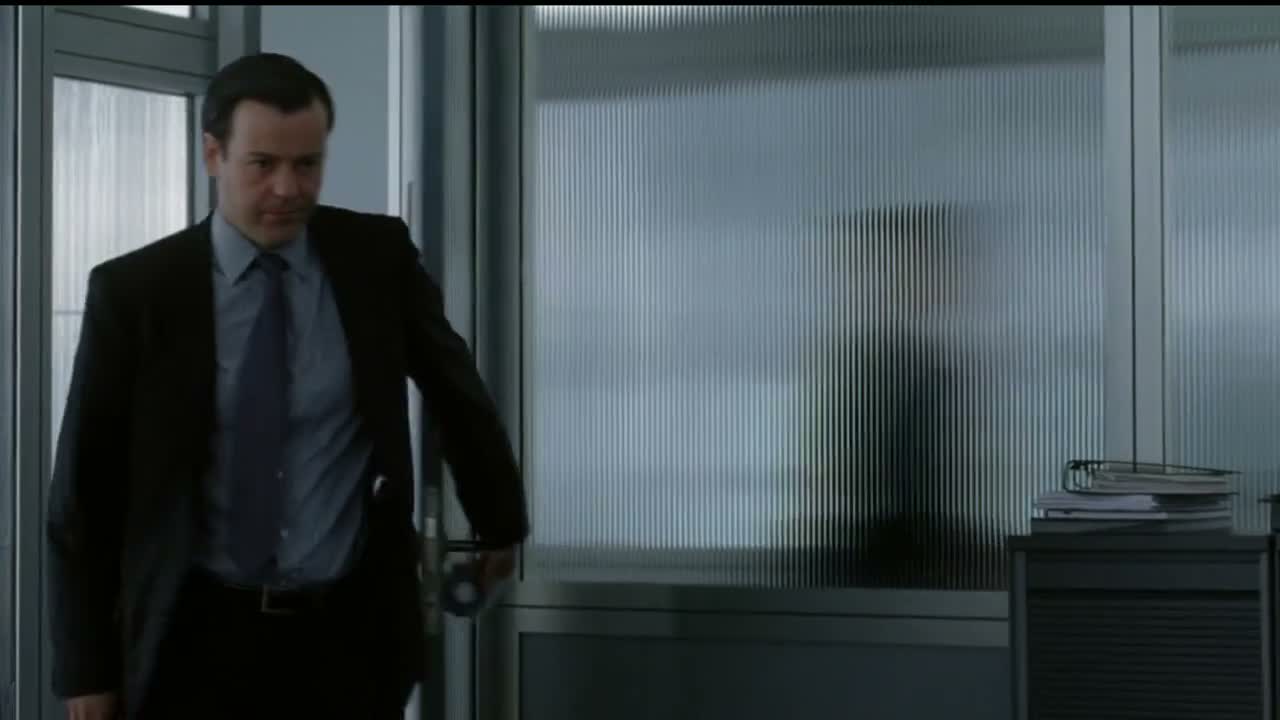 Up next · 21the ends justify the meansThe scene: Finch Meets the Informant Rookwood
Valerie, the prisoner who wrote the letter Evey read. V tells Evey she was real, that she wrote the letter just before she died, and that he was locked in the cell beside hers.
Yes. V confirms it when Evey puts the pieces together. The letter reached him the same way it reached Evey, passed along by prisoners, and he kept it until he could give it to her.
He asks her, before she leaves, to grant one wish: to see her again if only once. It is the one thing he wants that has nothing to do with his plan for revenge.
He borrows a law of physics to describe his revenge. For every action there is an equal and opposite reaction, so the violence done by the state will be answered with the same force.