
“Life is a thief. Sebastian always said, "Life steals everything."”
Why it's great
Aphorism as armor: she quotes her dead son to say she has been robbed.
Register
literary
Use it yourself
Age is a thief; it takes your friends first.
Chapter 2 of 27 · 3'29"
Mrs. Venable keeps the doctor waiting and then holds court, quoting her dead son and a story about a Byzantine throne that rises into the air. She is charming, imperious, and circling something: "I am. I'm in mourning." The real business — her niece Catherine — is only hinted at.
❝ Monologue · 5 lines Mrs. Venable Holds Court
❝ Monologue · 5 lines The Widow's Unnamed Grief
She follows language to the edge of a word that does not exist for her.
Dr. Cukrowicz arrives for an appointment at Mrs. Venable's house and finds himself drawn into her performance. She talks about her dead son Sebastian, the Byzantine emperor's rising throne, and her white mourning, dropping hints about a coming operation. The 'urgent matter' in her letter turns out to concern her niece Catherine, whom she clearly wants the doctor to treat — or silence.
The scene is a seduction and a negotiation disguised as polite conversation. Mrs. Venable performs her grief and her grandeur — the goddess from the machine, the emperor's floating throne — to establish that she is not a woman to be managed. She corrects the doctor on her own widowhood, jokes that she has old age 'to look forward to,' and drops a line about life as a thief, all while never naming what she wants. The one thing she keeps circling is the 'urgent matter' in her letter, which is really about Catherine, the niece who knows the truth about Sebastian's death. Her charm is the trap: she flatters the doctor, sizes him up, and lets her wealth do the talking. By the time she shows him the garden she intends to build as a memorial, the audience sees a woman buying silence with a fortune.
A1–C2 is the CEFR scale. Cards above the level you pick fade, and playback will not auto-pause on them.
“Life is a thief. Sebastian always said, "Life steals everything."”
Aphorism as armor: she quotes her dead son to say she has been robbed.
literary
“I don't know very much about the Byzantine.”
He refuses to fake sophistication, and the plain answer lands as quiet dignity.
Neutral
“...whatever age they may seem to others, die young.”
It sounds like wisdom but works as an excuse for how her son died.
literary
“White was my son's favorite color.”
A tiny personal detail explains the white dress and carries the whole weight of grief.
literary
The emperor of Byzantium, when he received people in audience... ...had a throne which, during the conversation... ...would rise mysteriously in the air to the consternation of the visitors. As we are living in a democracy, I reverse the procedure. I don't rise. I come down.
After all, I've buried a husband and a son. I'm a widow and a... Funny, there's no word. Lose your parents, you're an orphan. Lose your only son and you are... ...nothing.
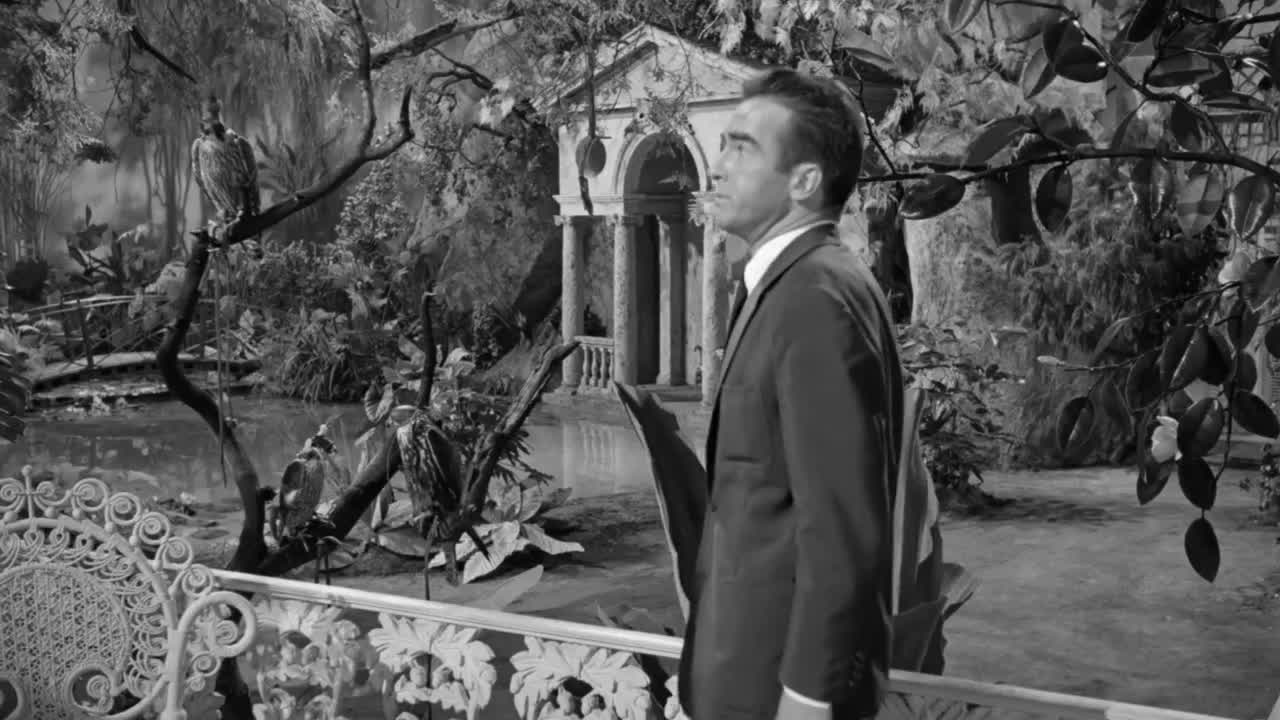 Up next · 03not unlikeThe scene: Mrs. Venable Shows the Garden
A wealthy New Orleans widow and the mother of Sebastian, a poet who died in Europe the previous summer. She has summoned Dr. Cukrowicz to discuss an 'urgent matter.'
It comes from the theatre: a god lowered by machinery to resolve the plot. Mrs. Venable uses it to describe herself as a dramatic rescuer who descends to help — 'I come down.'
She is still mourning him and uses his words to impress the doctor. Her habit of referring to him as if he were alive shows how much his death still controls her.
Her letter mentions an 'urgent matter,' but she only hints at it. It concerns her niece Catherine, whom she clearly wants the doctor to treat — and to silence about Sebastian.
She says white was Sebastian's favorite color. Her mourning is for him specifically, and she turns even her dress into a tribute and a performance.