
“He liked me, so I loved him.”
Why it's great
In eight plain words it admits a love that was only ever a response, never a choice.
Register
Neutral
Use it yourself
He needed someone, so I stayed longer than I should have.
Chapter 11 of 27 · 3'34"
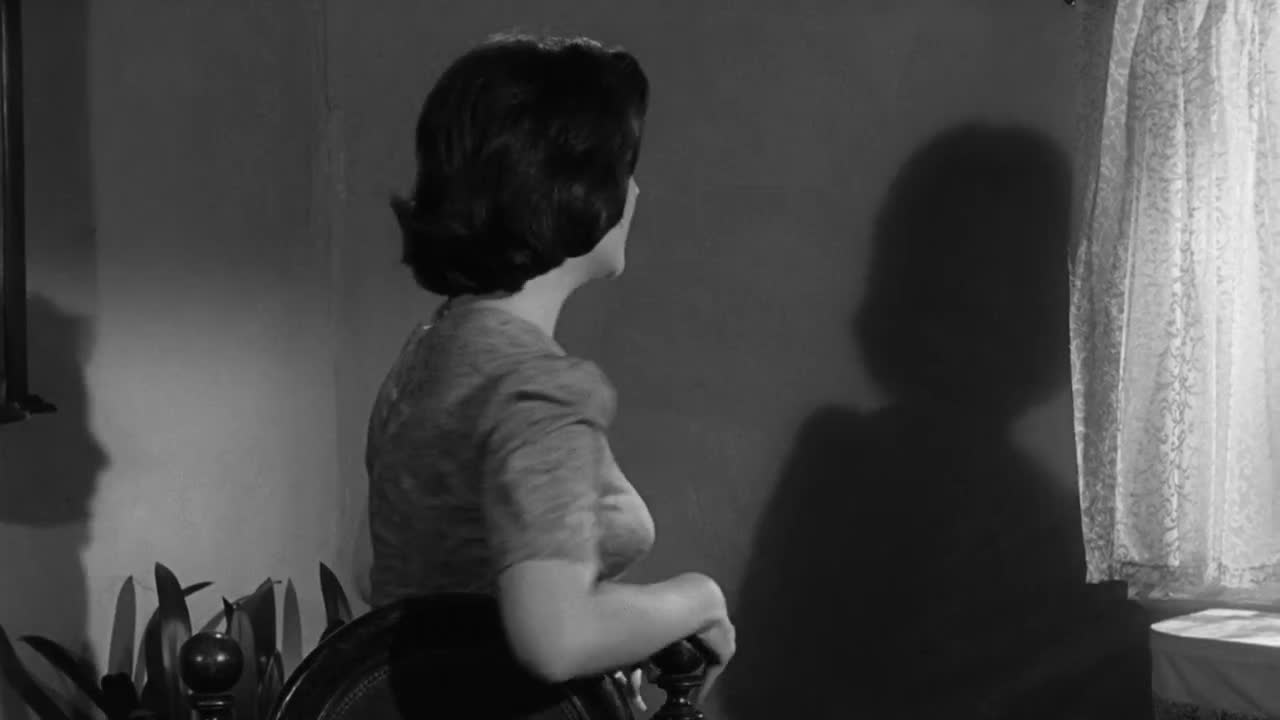
Catherine tells the doctor how she came to be punished. A man took her home, then said they had better forget it; she rushed back to the Mardi Gras ball and, as she puts it, "I'd gone back to make a scene." She beat him until Sebastian pulled her away.
❝ Monologue · 14 lines Catherine's Mardi Gras Confession
Under questioning, Catherine describes the Mardi Gras night that ended in her breakdown. A man drove her home, then told her his wife was expecting and they should forget the encounter. She took a taxi back to the Roosevelt Hotel ballroom, found him on the dance floor, and attacked him until her cousin Sebastian carried her away.
The confession is the film's turn from mystery to memory. Catherine describes the night without softening anything: the man who took her home, the cruel sentence he gave her, and her own decision to return and wreck the party. The key line is a correction of her own story: 'I thought I'd gone back to pick up my coat. But I hadn't... I'd gone back to make a scene.' She admits she was not an innocent victim that night; she wanted a public collapse. And then Sebastian is named, and the doctor begins to steer her toward something darker. When she says she loved Sebastian 'the only way he'd accept,' and calls him a sacrifice, the film signals that the summer's real horror lies with the dead cousin, not the scandal.
A1–C2 is the CEFR scale. Cards above the level you pick fade, and playback will not auto-pause on them.
“He liked me, so I loved him.”
In eight plain words it admits a love that was only ever a response, never a choice.
Neutral
“I hadn't gone back for that at all. I'd gone back to make a scene.”
The line denies the excuse first, then names the real motive, turning self-destruction into a confession.
Neutral
“I'm trying to make you feel sorry for her.”
It lays bare the manipulation of pity with no apology, and that is exactly what makes it unsettling.
Informal
“I thought I'd gone back to pick up my coat. But I hadn't.”
A stated reason collapses into a flat denial, exposing the self-deception behind the scene.
literary
I lost him. He took me home. Then he said an awful thing to me. He said: "We'd better forget it. My wife's expecting a child, and..." I just entered the house and sat there thinking a while. I called a taxi and rushed to the Roosevelt Hotel ballroom. The ball was still going on. I thought I'd gone back to pick up my coat. But I hadn't. I hadn't gone back for that at all. I'd gone back to make a scene. I didn't pick up Aunt Violet's silver fox in the coatroom. I rushed right into the ballroom, spotted him on the floor... ...ran up to him and started... ...to beat him in the face and the chest with my fists till... ...Cousin Sebastian took me away.
 Up next · 12burn upThe scene: Catherine Relives the Burning Beach
She went back to make a scene. After the man told her to forget their encounter, she took a taxi to the Roosevelt Hotel ballroom and attacked him in public.
He said they had better forget what happened, because his wife was expecting a child. She calls it an awful thing to say.
It means to cause a noisy public disturbance, usually by losing control of your emotions. Catherine admits she went back to the ball deliberately to create one.
She says she loved him 'the only way he'd accept' and describes him as a sacrifice to 'a terrible sort of a God.' The wording keeps the relationship deliberately ambiguous.
He asks how Sebastian died and where. Catherine says they were at Cabeza de Lobo last summer, and that this is where Sebastian died.