“It seemed like such a natural thing to do, but he pulled away.”
A gesture that felt natural turns into quiet rejection, all shown through one movement.
literary
Chapter 23 of 27 · 3'33"
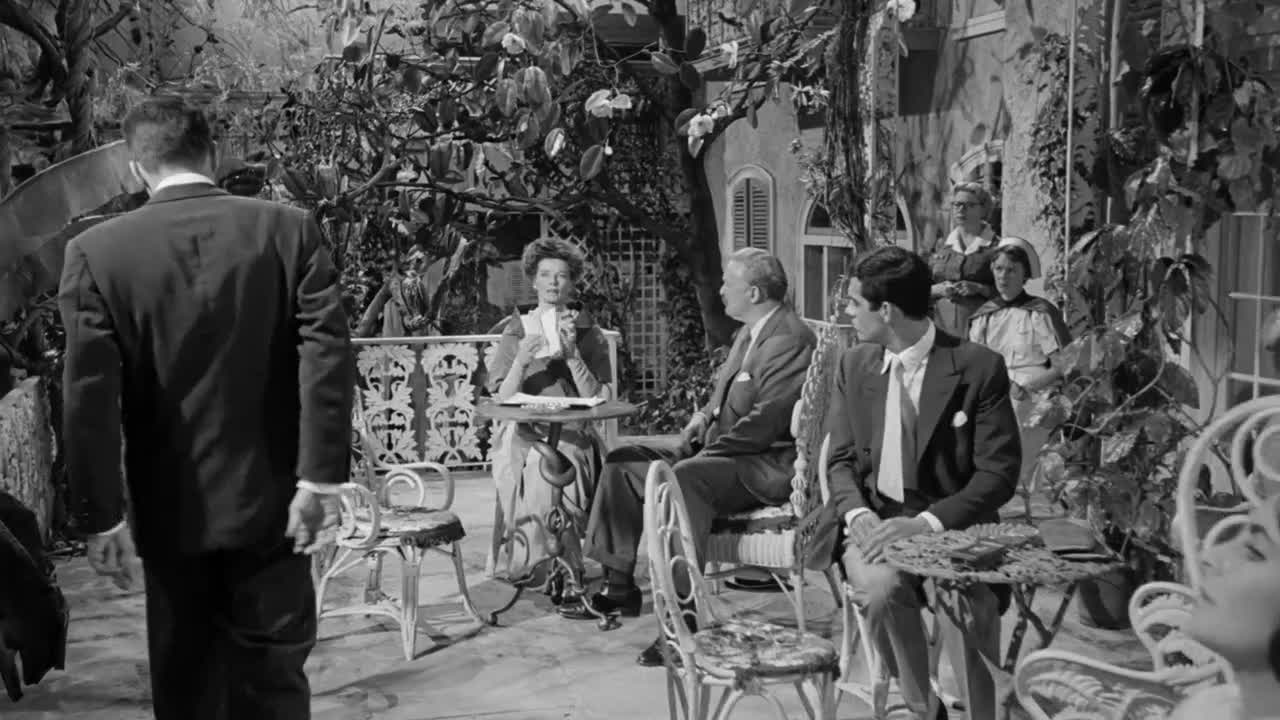
Under the truth serum, Catherine begins the true account: after the Dueling Oaks she kept a diary in "the third person singular," then Sebastian took her abroad instead of his mother. In a garden at Amalfi she took his arm, and "he pulled away." After that he could not write his summer poem.
Catherine's Third-Person Diary
❝ Monologue · 6 lines The sunshine days in Europe
A few lines open a whole journey, brightness already hiding what comes next.
With the drug taking effect, Catherine narrates the past in a calm voice. She says it began after the Dueling Oaks, when she started writing her diary in the third person. Sebastian took her with him to Europe instead of his mother, then grew restless and could not write his summer poem. She remembers taking his arm at Amalfi and being rejected.
The third-person diary is the scene's key. Catherine's decision to write about herself as 'she' rather than 'I' is a way of surviving what happened at the Dueling Oaks: 'She is still living this morning.' She describes Sebastian taking her to Europe in his mother's place, and for a while the account sounds almost like a romance — Paris, Barcelona, Rome, the 'sunshine days where it's always noon, and we cast no shadows.' The spell breaks at Amalfi, in a garden, when she takes his arm. His recoil tells her the truth: 'It seemed like such a natural thing to do, but he pulled away.' After that he becomes restless and cannot write the summer poem, which is the film's official cause of death hiding in plain sight.
A1–C2 is the CEFR scale. Cards above the level you pick fade, and playback will not auto-pause on them.
“It seemed like such a natural thing to do, but he pulled away.”
A gesture that felt natural turns into quiet rejection, all shown through one movement.
literary
“He was a very ordinary married man.”
One flat sentence shrinks a dangerous affair back into an ordinary married man.
Neutral
“...where it's always noon, and we cast no shadows.”
Happiness rendered as a shadowless noon: too bright to be real.
literary
“I only did it to try and show my appreciation for his kindness.”
A plain defence sets the worst misunderstanding beside the purest kindness, and it hurts.
Neutral
He helped bring me back to life... ...in Paris, Barcelona, Rome. All those lovely foreign cities I'd never seen, we saw together. And those... What did he call them? Those sunshine days... ...where it's always noon, and we cast no shadows.
Up next · 24give someone awayThe scene: Violet Explains the Spider's WebWriting about 'she' instead of 'I' lets her describe her own life as if from outside, a way of surviving what happened at the Dueling Oaks.
Sebastian did, in his mother's place. He said she would go with him that summer instead of his mother, and they traveled to Paris, Barcelona and Rome.
In a garden above the Mediterranean, Catherine took Sebastian's arm as a gesture of thanks, and he pulled away. After that he grew restless and could not write.
The scene implies the failure began at Amalfi, after he recoiled from Catherine's touch: 'He couldn't write his summer poem.'
A place in New Orleans connected to something Catherine does not want to tell. Mrs. Holly tries to stop her from speaking of it.