
“Sebastian was a vocation, not a man.”
Why it's great
Calling a man a vocation explains why everyone served him as if called to it.
Register
literary
Use it yourself
The band was a vocation, not a hobby, for those fans.
Chapter 10 of 27 · 4'29"
Catherine tells the doctor that Sebastian used people and that this is what love is: "Isn't that what love is? Using people?" She describes her aunt giving up everything, letting her husband die alone, and says none of them ever had a choice. Then she begins her first memory.
❝ Monologue · 7 lines Catherine Says Love Is Using People
❝ Monologue · 19 lines The night of the ball
From a lost coat check to a cry in the dark, short lines make the memory replay live.
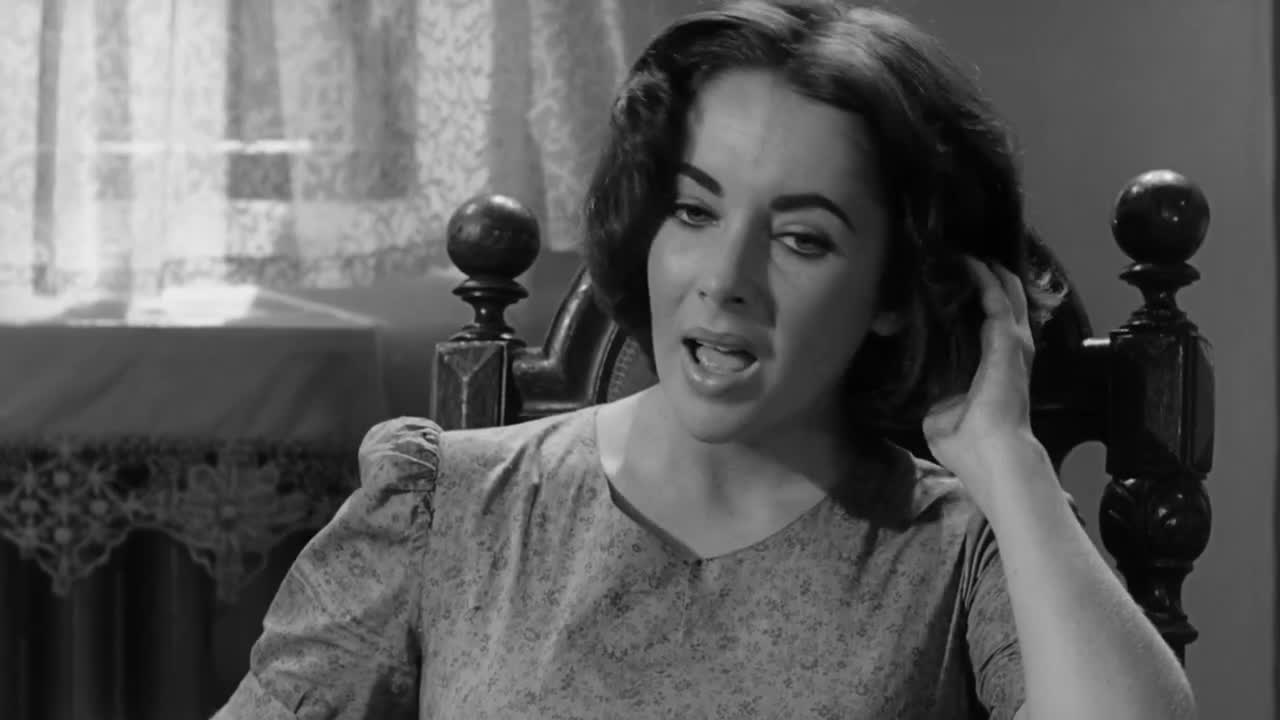
In her hospital room, Catherine explains the Venables to Dr. Cukrowicz: Sebastian was 'a vocation, not a man,' and her Aunt Vi was completely hooked on him. She gave up everything, followed him to Tibet, and when her husband lay dying, chose to stay with Sebastian instead. Catherine calls it love as use, then recalls her earliest memory, a Mardi Gras ball.
Catherine's calm is the unsettling thing. She describes her aunt letting a husband die alone the way someone might describe the weather, and when the doctor flinches she explains the family logic: Sebastian 'was a vocation, not a man,' and everyone around him simply existed 'to be used.' Her line 'Isn't that what love is? Using people?' is the film's thesis stated out loud — love and hate as mirror images, one being used and the other being unable to use. She refuses to sound heartless even while describing terrible things, and the pity in her voice is for her aunt as much as for herself. The scene then pivots to her own first memory, the Mardi Gras ball, as if she can only approach her trauma sideways.
A1–C2 is the CEFR scale. Cards above the level you pick fade, and playback will not auto-pause on them.
“Sebastian was a vocation, not a man.”
Calling a man a vocation explains why everyone served him as if called to it.
literary
“Isn't that what love is? Using people?”
The question redefines love as use and dares the listener to disagree.
Neutral
“She chose to let her husband die alone.”
One verb, chose, carries the whole moral weight without a word of judgment.
literary
“It's as if my life began and ended that night.”
Starting and ending in the same night packs a first love and a fate into one sigh.
literary
Once, Sebastian decided to give up the torments of this world... ...and become a Buddhist monk. That was in Tibet. He shaved his head, was given a wooden bowl and was happy. Till Aunt Vi came. Why? What did she do? Lived in a hut, even took vows, or whatever women do. Anything to be near him, to get to him, to make him come home.
At the ball... I was taken there by some boy who got too drunk to stand. I wanted to leave. My coat was in the cloakroom. They couldn't find the check for it, so I said, "Let it go"... ...and started out for a taxi. Then somebody took my arm and said: "I'll drive you home." As we left, he took off his coat and put it around my shoulders... ...and then I looked at him. I don't think I've ever seen him before then, really. He took me home. But he took me another place first. Near the Dueling Oaks at the end of Esplanade Street. We stopped. I asked what for. He didn't answer. Just struck a match to light a cigarette... ...and I looked at him, and I knew what for. I think I got out of the car before he got out of the car, and we... ...walked through the wet grass toward the great misty oaks as if... ...as if somebody were... ...calling for help there.
 Up next · 11make a sceneThe scene: Catherine Recalls the Mardi Gras Ball
She is with Sebastian in Tibet when word comes that her husband is dying and wants to see her. Instead of going home, she stays near Sebastian, so the man dies without her. Catherine says some people even thought she killed him.
She believes Sebastian's hold over people was total. Her aunt gave up everything, followed him as far as Tibet and took vows just to be near him, so to Catherine it never felt like a free decision.
A Mardi Gras ball the previous spring, before which she remembers nothing. A boy took her there, she lost the check for her coat and decided to let it go, and a man she had never met offered to drive her home.
She says Sebastian treated everyone around him as something 'to be used,' and that hate is simply the inability to use someone. To her, being loved and being used come down to the same thing.