
“There is no such thing as bad publicity, sweetheart.”
Why it's great
It states the cold logic of fame in one light, dismissive line.
Register
Informal
Use it yourself
There is no such thing as bad attention for a new brand.
Chapter 8 of 30 · 5'03"
Forbes comes to profile the man behind Stratton Oakmont, and the piece turns him into a headline. Jordan is furious at what he calls a hatchet job, but he refuses to treat it as a loss: "There is no such thing as bad publicity, sweetheart." Soon the attention has job-hunters lined up at the door.
❝ Monologue · 4 lines Forbes Calls Him the Wolf of Wall Street
❝ Monologue · 5 lines Mad Max's phone rant
The sudden shift from rage to a polite hello makes the temper hilarious.
A reporter from Forbes arrives to interview Jordan for a profile of Stratton Oakmont. He answers grandly, and when the piece runs it brands him the Wolf of Wall Street and mocks his operation. Enraged, Jordan spins it as good press, and the exposure pulls a flood of young recruits to his door.
The scene is about the gap between what the Forbes piece says and what Jordan decides it says. The article is unkind — Robin Hood in reverse, a wolf, a cult of young brokers — and any ordinary man would treat it as damage. Jordan does the opposite: he reads it as advertising. "There is no such thing as bad publicity, sweetheart", he tells his wife, and the film immediately proves him right, as recruits line up and the firm doubles. That is the logic that will carry him through the rest of the story: attention is currency, and shame only exists if you accept it. The irony is that the nickname he hates becomes the title of the film itself.
A1–C2 is the CEFR scale. Cards above the level you pick fade, and playback will not auto-pause on them.
“There is no such thing as bad publicity, sweetheart.”
It states the cold logic of fame in one light, dismissive line.
Informal
“there's always gonna be some asshole trying to drag him down.”
It captures the cynical rule of success: someone always wants to pull you down.
Informal
“It wasn't long before Forbes magazine, the flagship of Wall Street, called to do a profile on me.”
One sentence turns success into a fact, with the magazine's weight tucked into a phrase.
Neutral
“Forbes made me a superstar.”
One line captures how a magazine turned him into a superstar overnight.
Informal
Who the fuck has the goddamn gall to call this house on a Tuesday night? God damn it! You're gonna miss it! Ooh, please, tell me something I don't know. I wait all week for the fucking Equalizer and they have to fucking... Hello.
Forbes made me a superstar. Every day, dozens of money-crazed kids beat a path to my door. If we hired 'em, they dropped straight out of college overnight and spent whatever allowance they had on a new suit from our Stratton tailor.
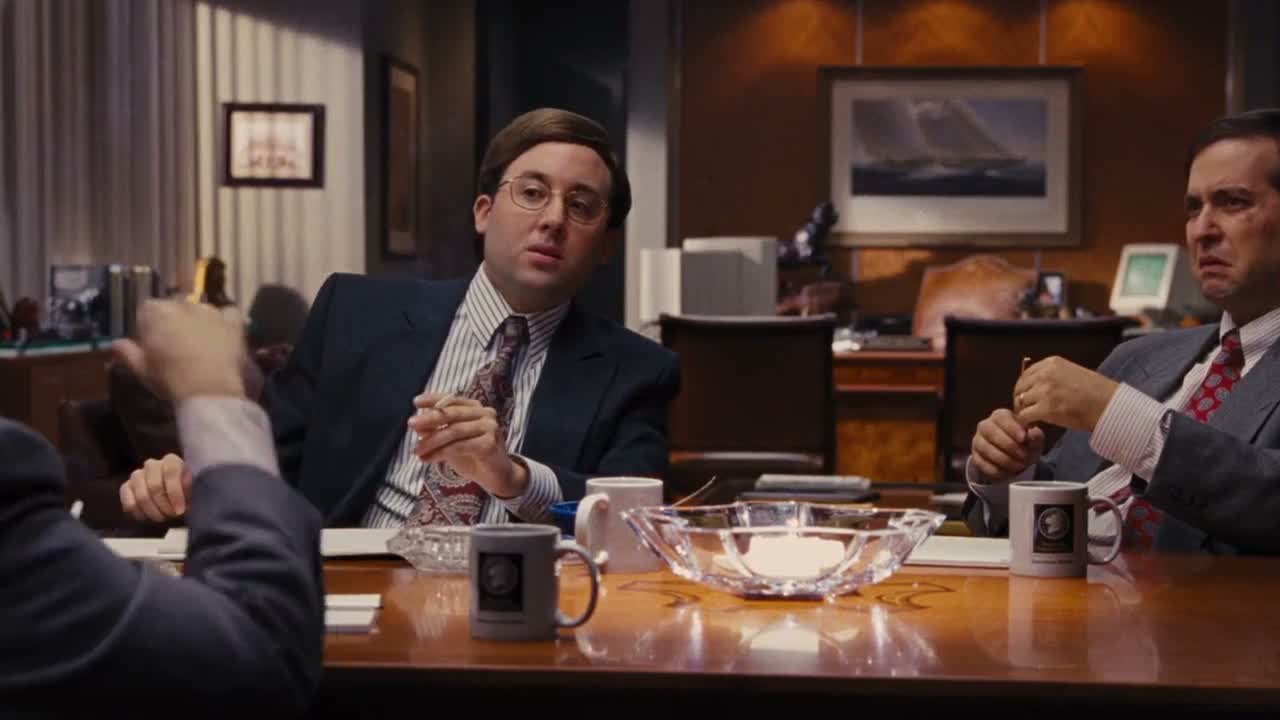 Up next · 09loopholeThe scene: Max Confronts Jordan Over the Bill
Because it mocks him instead of celebrating him — the Robin Hood comparison and the wolf nickname read as attacks. He wanted flattery and got a hit piece.
No. The publicity brought a wave of job applicants and made him famous. Even a hostile article worked as advertising, which is exactly what he predicted.
It means people rush to someone's door in large numbers. Jordan uses it for the crowds of money-hungry young men who want to work at Stratton after the article.
Mad Max is Jordan's father, hired as the office enforcer. He has a hair-trigger temper but keeps his manners on the phone, switching to a strange British accent with clients.