“Divide our losses by 10 and multiply the enemy's by 20.”
It answers a grand order with arithmetic, showing how easily a real battle is made to look tidy.
Neutral
Chapter 1 of 30 · 2'18"
The Home Guard is told the exercise is meant to feel authentic: "War starts at midnight." Then the cheating begins — "Divide our losses by 10 and multiply the enemy's by 20" — so the numbers look heroic. Someone calls the bluff: "Like the real thing, my Aunt Fanny!"
War Starts at Midnight
At night, the Home Guard receives a coded message: an exercise will invade London, with war starting at midnight. The commander adds orders to make it feel real, and the fix is already in — friendly losses divided by ten, the enemy's multiplied by twenty. Before dawn, the men are armed and moving.
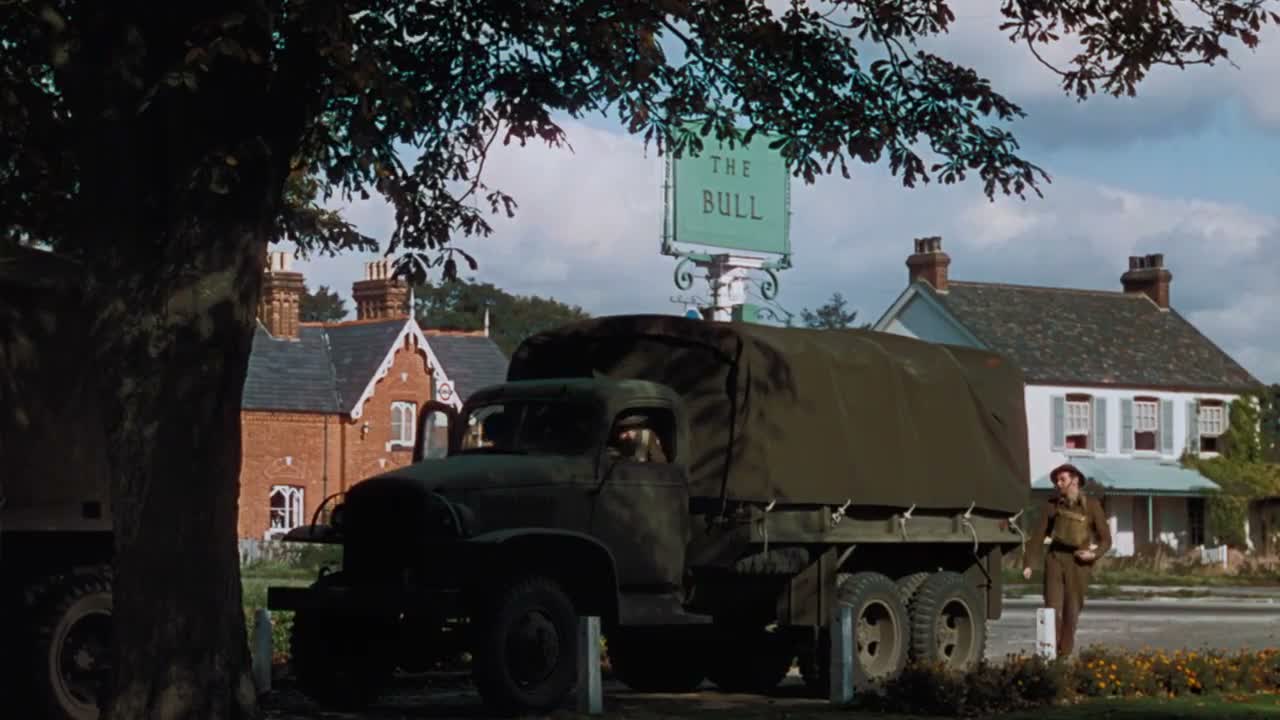
The scene is about how a war game is quietly unmade. The order is to stage an exercise that feels authentic — "Make it like the real thing" — but authenticity turns out to be a matter of accounting: "Divide our losses by 10 and multiply the enemy's by 20." Someone sees through it at once, and the golden line, "Like the real thing, my Aunt Fanny!" is the sound of that illusion breaking. What stays with the viewer is not the tactics but the tone: a commander who nudges the numbers to look good, and the men who notice. Even the final order — a stop at The Bull, a date with Mata Hari — undercuts the seriousness, suggesting the whole exercise is one more performance from a man who prefers the idea of war to its reality.
A1–C2 is the CEFR scale. Cards above the level you pick fade, and playback will not auto-pause on them.
“Divide our losses by 10 and multiply the enemy's by 20.”
It answers a grand order with arithmetic, showing how easily a real battle is made to look tidy.
Neutral
“Like the real thing, my Aunt Fanny!”
My Aunt Fanny is a jokey dismissal that punctures the officer's grand phrase on the spot.
Informal
“It's total war, isn't it? What do you want?”
A tag question demands agreement, then a short question cuts off any argument before it starts.
Informal
“I've got a date there with Mata Hari.”
Calling a pursuit a date turns the tension into a joke, which is the British way of bragging.
Informal
The Life and Death of Colonel Blimp: your progress
Chapter 1 of 30 · about 105 min to go
Up next · 02not a hopeThe scene: The Home Guard Exercise Turns RealTo make the exercise look like a victory. By cutting friendly losses and inflating the enemy's, the commander guarantees a flattering result regardless of what happens.
It is British rhyming slang for a flat refusal, close to 'nonsense' or 'no way.' Here it dismisses the claim that the drill will be just like the real thing.
It is a joke that punctures the scene's seriousness. After all the orders and codes, he reveals his real plan for the night: a stop at a pub for a date.
Because the exercise is modelled on Pearl Harbor, an attack launched without warning. The detail shows how far the planners will bend the rules to make it realistic.