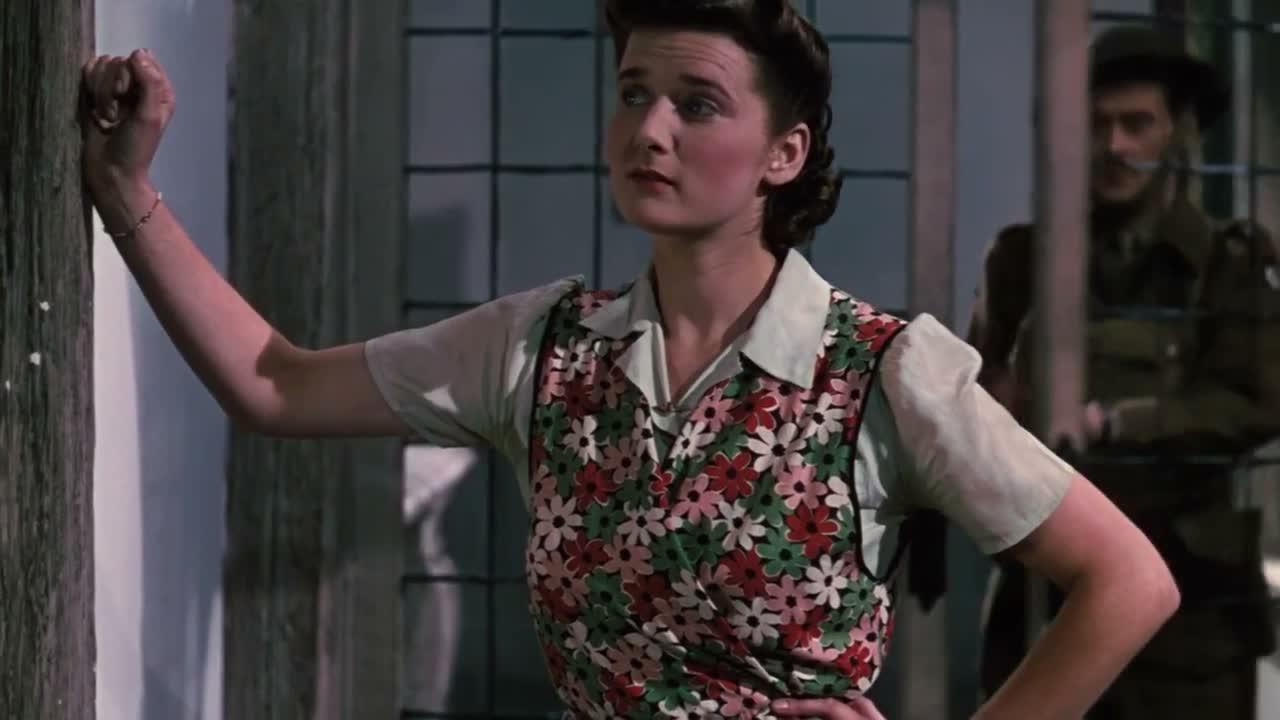
“This time you are fighting for your very existence, against the most devilish idea ever created by a human brain.”
It raises the stakes from winning to surviving, then names the enemy as an idea rather than an army.
literary
Chapter 29 of 30 · 4'51"
Retired again and feeling useless, Candy is told by his old friend Theo that this war cannot be fought by the old rules: "The enemy's different, so you have to be different too." Theo's argument is that fair play will lose to a ruthless enemy, and that the British have not learned the lesson.
Axe Him and He Still Argues
❝ Monologue · 23 lines Fair Play Will Lose
This Is Not a Gentleman's War
Candy has been retired again and tells his friends that they no longer need him. Theo, himself a refugee after losing everything, argues that the coming war must be fought differently. When Candy insists on fair play, Theo answers with the lesson of the last war and the warning that defeat now would be final.
The scene is the film's argument at full strength, and it is staged as a conversation between friends rather than a debate. Candy arrives diminished — 'Retired again. Axed. They don't need me any more' — and Theo, who has lost a country, refuses to comfort him with a lie. His point is not that cruelty is good but that the enemy has changed the terms: 'The enemy's different, so you have to be different too.' The most cutting line is aimed at victory itself: 'We lost it, but you lost something too.' Theo is saying that a war won by rules that the other side ignores teaches the winner nothing, and now the fees come due again. Candy's insistence on honour, which the film has treated warmly for two hours, is here exposed as a luxury that may cost everything.
A1–C2 is the CEFR scale. Cards above the level you pick fade, and playback will not auto-pause on them.
“This time you are fighting for your very existence, against the most devilish idea ever created by a human brain.”
It raises the stakes from winning to surviving, then names the enemy as an idea rather than an army.
literary
“We lost it, but you lost something too.”
The repeated lost turns a scoreline into a warning: winning can still cost you something you needed.
literary
“The enemy's different, so you have to be different too.”
Two uses of different frame the whole argument in one line: change your method or lose to it.
Neutral
“Retired again. Axed. They don't need me any more.”
Three clipped sentences shorten as they go, and the rhythm itself sounds like being dismissed.
Informal
Clive, if you let yourself be defeated by them just because you are too fair to hit back the same way they hit at you, there won't be any methods but Nazi methods. If you preach the rules of the game while they use every foul and filthy trick against you, they'll laugh at you. They'll think you are weak, decadent. I thought so myself in 1919. I heard all that in the last war. They fought foul then and who won it? I don't think you won it. We lost it, but you lost something too. You forgot to learn the moral. Because victory was yours, you failed to learn your lesson 20 years ago. And now you have to pay the school fees again. Some of you will learn quicker than the others. Some will never learn it. Because you've been educated to be a gentleman and a sportsman in peace and in war. But, Clive... ... dear old Clive... ... this is not a gentleman's war. This time you are fighting for your very existence, against the most devilish idea ever created by a human brain. Nazism. And if you lose... ... there won't be a return match next year. Perhaps not even for a hundred years.
Up next · 30anything goesThe scene: Spud Plans to Capture the WizardHe is no longer wanted by the army, which he describes as being axed again. The film uses his dismissal to put him on the outside of the war he knows best.
It means a completely different situation, not to be compared with the first. Theo uses it to say that Candy's case is unlike his own.
That the enemy has changed the rules, so Britain must change too. He argues that a country too fair to hit back will be defeated, and that there will be no second chance.
Because winning the last war taught Britain nothing, as victory hid the lesson. He argues that this blindness is now being paid for in the present conflict.