
“Not another word until we've finished our pink champagne.”
Why it's great
It shuts down a difficult subject with a toast, turning a boundary into a flirt.
Register
Informal
Use it yourself
Not another word until we've finished dinner.
Chapter 6 of 30 · 4'01"
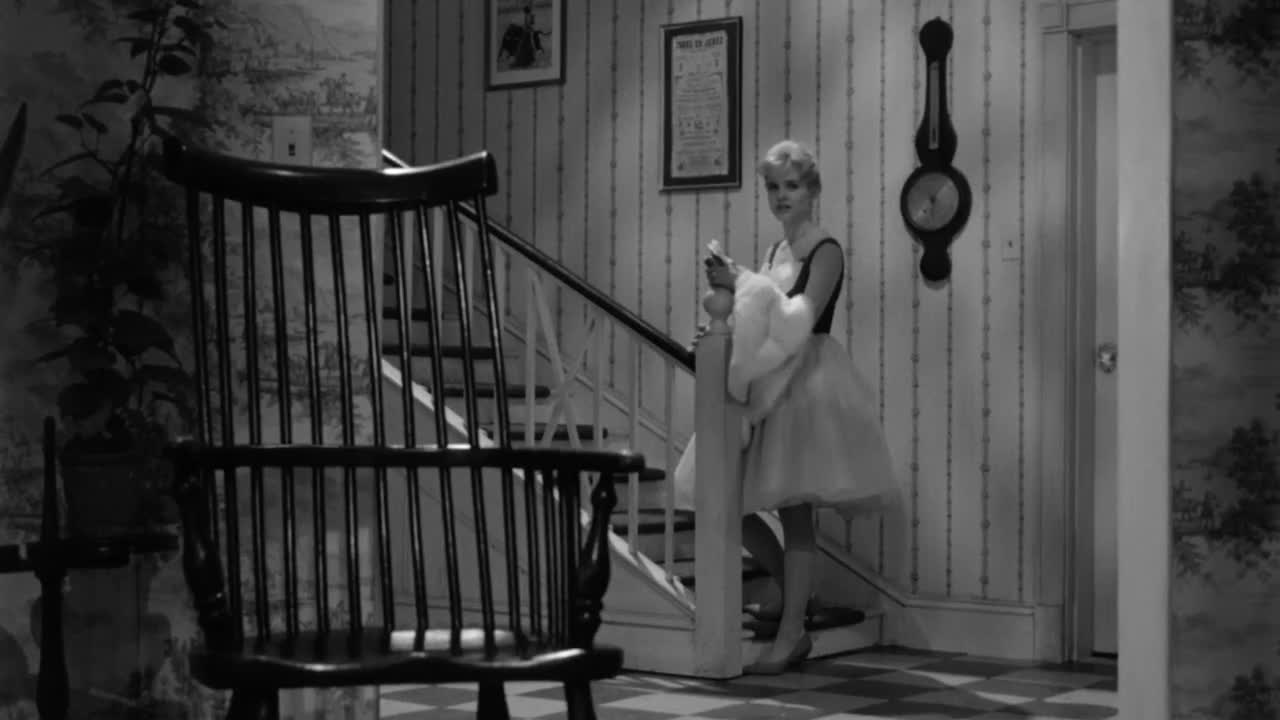
Charlotte has changed into something cozier and opened the pink champagne. Over a dance lesson, she tells Humbert he feels like family, then mentions her late husband Harold, testing whether loyalty to the dead should give way to living. Humbert mostly tries not to answer.
Charlotte Sizes Up Humbert
❝ Monologue · 4 lines Charlotte Proposes Without Asking
❝ Monologue · 5 lines A late-night confession
It confesses loneliness, asks for touch, and closes on a line she repeats to convince herself.
On the porch, Charlotte Haze has changed into something cozier and poured pink champagne. She proposes to teach Humbert some new dance steps, then, while they dance, tells him he seems like a member of the family. She mentions her late husband Harold and wonders aloud whether she should stop living in the past.
The scene is a courtship performed as a dance lesson, and every compliment is a move. Charlotte calls Humbert 'charmingly Old World' and says he makes her think of Harold; the flattery and the dead husband are the same argument, that she is ready to marry again. Humbert tries to keep the conversation impersonal, protesting that "this is none of my business," while never actually leaving. Charlotte's line "I can't live in the past. Not anymore, Hum, not anymore" is both her theme and her proposal. The dance lets her touch him without asking, and the pink champagne supplies the excuse. He keeps saying he cannot dance; she keeps holding on, and that is the whole relationship in miniature.
A1–C2 is the CEFR scale. Cards above the level you pick fade, and playback will not auto-pause on them.
“Not another word until we've finished our pink champagne.”
It shuts down a difficult subject with a toast, turning a boundary into a flirt.
Informal
“It wouldn't be fair to his memory, do you think?”
She asks permission from a dead man, making her own desire sound like loyalty.
Neutral
“...shouldn't life be for the living?”
A rhetorical question that turns guilt into permission and grief into an argument for pleasure.
literary
“I can't live in the past. Not anymore, Hum, not anymore.”
The repetition moves from resolve to need, and the nickname makes the plea personal.
Neutral
But, you know, I adored Harold. I really did. I swore at the time I would never marry again. I don't think I will, but.... It wouldn't be fair to his memory, do you think?
You see, I'm a strongly emotional woman. Very strongly emotional. - Don't be afraid of hurting me. - No, I'm not, really. Take me in your arms. I can't live in the past. Not anymore, Hum, not anymore.
 Up next · 07a dragThe scene: Lolita Sneaks Back for a Sandwich
Dancing is an excuse to touch him and to keep him on the porch. She frames it as a friendly lesson, but the whole scene is her working up to proposing.
Charlotte's late husband. She compares Humbert to him, says she adored him, and then asks whether staying loyal to his memory is really fair to herself.
It is French for the joy of living, and Charlotte is telling Humbert to loosen up and enjoy the dance. She uses it as both encouragement and a hint about how she wants to live.
No. He insists he cannot dance and has no sense of rhythm, and he would rather sit and watch. He submits mainly because refusing her outright would be awkward.
Whether he would marry her. Everything else — the champagne, the dance, Harold, the talk of coming alive — is built to make that question easy to answer.