
“You've got a big, fat nerve, dragging me away.”
Why it's great
Have a nerve accuses him of outrageous boldness, and fat makes the anger physical.
Register
Informal
Use it yourself
You've got a nerve, cutting the whole line.
Chapter 24 of 30 · 2'28"
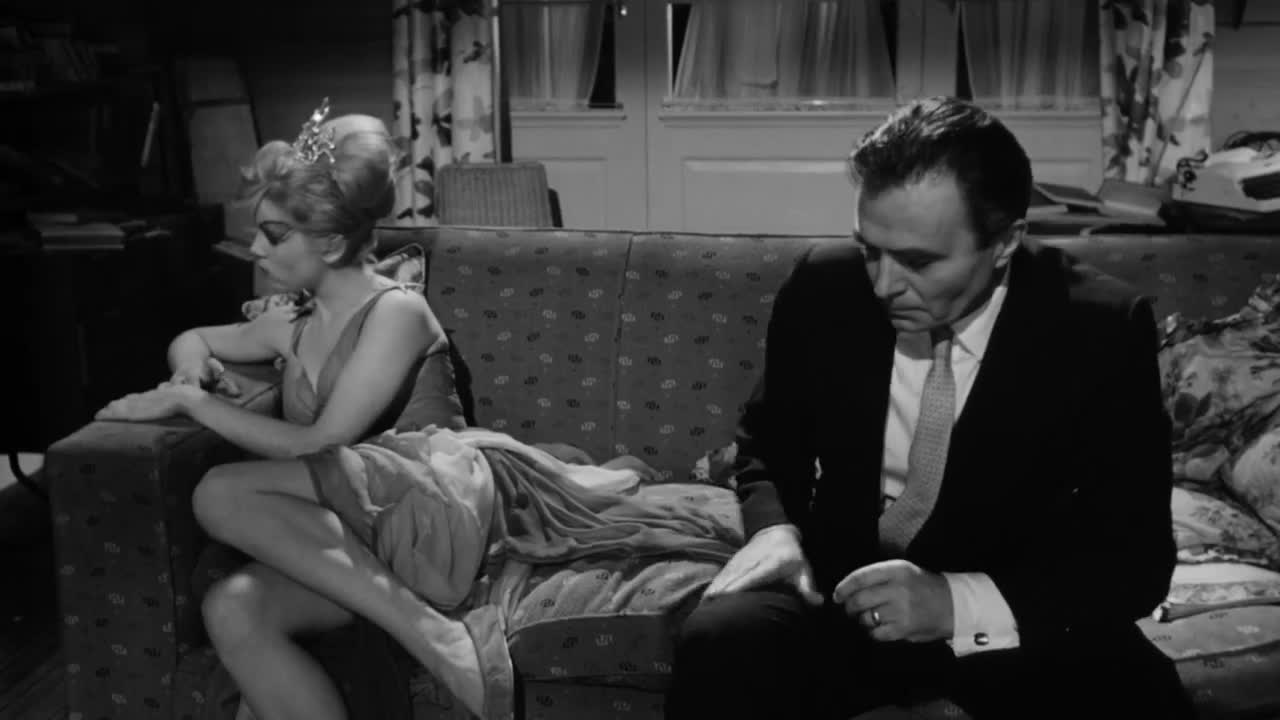
A school play ends and Humbert's patience snaps. He drags Lolita from the cast party and demands to know where she has been, then catches her in a lie: "I happen to know you haven't been to a piano lesson for four weeks." She tries a second excuse, and he accuses her of being with the leading man, Roy.
Humbert Drags Lolita Home
❝ Monologue · 4 lines The Piano Lesson Lie
After school performances of the play, Humbert refuses to let Lolita join the cast party and takes her home. He sits her down to answer a few questions. She claims she was at piano lessons until he says Miss Starch told him she has not gone for four weeks. She then blames extra rehearsals, and he accuses her of seeing Roy.
The interrogation is Humbert losing control and knowing it. His authority rests on a lie—that he is her father—and Lolita now tests it openly. She lies back with a straight face, first about piano lessons, then about rehearsals, and her jeering "You've got a big, fat nerve, dragging me away" shows she no longer respects him. Humbert has already done the detective work, telling her, "I happen to know you haven't been to a piano lesson for four weeks," which proves how closely he watches her. But the jealousy is his tell: he jumps straight to the leading man, Roy, and when Lolita answers with "You're sick" and "You need help," she names the thing he cannot confront. His only reply is to shout her down—"Shut up, Lolita! Stop that silly talk!"—because he has no argument left.
A1–C2 is the CEFR scale. Cards above the level you pick fade, and playback will not auto-pause on them.
“You've got a big, fat nerve, dragging me away.”
Have a nerve accuses him of outrageous boldness, and fat makes the anger physical.
Informal
“Sit down! Now you're going to answer a few questions.”
A command to sit, then a flat announcement that the questioning is about to begin.
Informal
“I happen to know you haven't been to a piano lesson for four weeks.”
Happen to know sounds casual while dropping the fact that destroys her alibi.
Neutral
“That's the most fatuous lie you could possibly think up.”
The bookish word fatuous lands harder precisely because the tone is so cold.
Formal
“Stop! Don't throw those silly, silly clichés at me.”
The doubled silly exposes a person raging yet still guarding her dignity.
Informal
That's the most fatuous lie you could possibly think up. Don't say any more. I know what you've been doing. You've been with this leading man of yours... ...this Roy, isn't that so?
 Up next · 25come betweenThe scene: Humbert and Lolita's Big Fight
He is jealous and wants to keep her from the boy he suspects, Roy. Refusing the party and taking her home lets him interrogate her privately.
He says he asked her teacher, Miss Starch, who told him Lolita has not attended for four weeks. He mentions seeing Miss Starch at the performance.
No. Humbert calls it "the most fatuous lie," and the scene implies she has been meeting Roy, the leading man, instead.
She is telling Humbert his jealousy and his interest in her are abnormal—an accusation he refuses to hear and answers by shouting her down.
Her accusations sound like standard lines to him, and he wants to dismiss them so he does not have to answer what they might be true about.