
“I know that our love is sacred, the others were profane.”
Why it's great
It sets sacred against profane, turning a private affair into a kind of faith.
Register
literary
Use it yourself
This promise is sacred; the others were just talk.
Chapter 12 of 30 · 3'28"
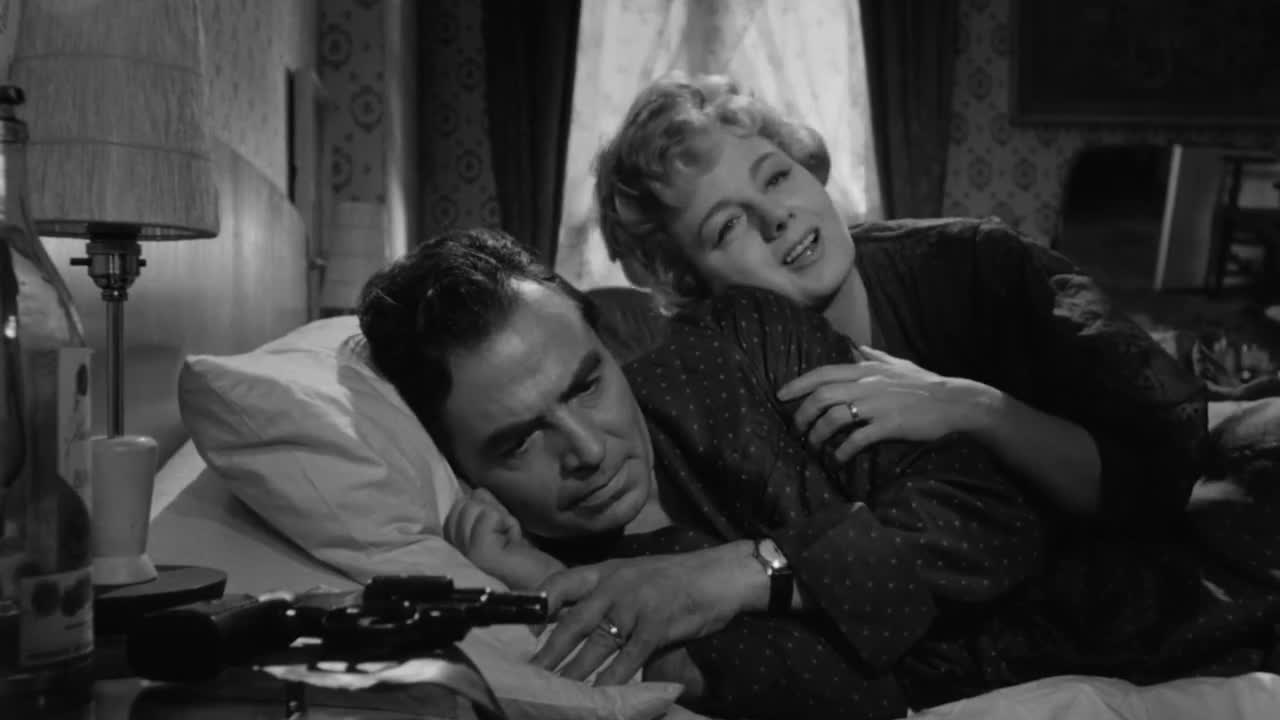
It plays like a love scene: Charlotte insists their love is "sacred" and asks if Humbert believes in God. Then she produces her late husband's pistol, calling it "a sacred weapon," and calmly plans to send Lolita away to boarding school. The romance and the threat are delivered in the same breath.
Their Love Is Sacred
❝ Monologue · 4 lines Charlotte's warning
She shrugs off ancestry, then makes belief a matter of life and death in four quick lines.
In their bedroom, Charlotte tells Humbert their love is sacred while other loves were "profane," and asks whether he believes in God. When she finds her late husband's pistol, she calls it a sacred weapon, not a danger. Then she shares a plan: bring in a French servant and send Lolita off to boarding school, leaving her and Humbert alone.
The pillow talk keeps sliding into something darker. Charlotte wraps the affair in religion—"I know that our love is sacred, the others were profane"—and tests Humbert's devotion by asking about God. When he deflects with "the question is, does God believe in me," she produces her dead husband's pistol and calls it a sacred weapon, as if a gun were part of the romance. Her real wish is quieter and crueler: she wants Lolita gone, shipped to boarding school, so the house holds only the two of them. She dresses the plan as a convenience—hiring a servant, freeing a room—but it is a mother clearing her daughter out of the way. Humbert hears all of it while thinking only of what he is losing.
A1–C2 is the CEFR scale. Cards above the level you pick fade, and playback will not auto-pause on them.
“I know that our love is sacred, the others were profane.”
It sets sacred against profane, turning a private affair into a kind of faith.
literary
“The question is, does God believe in me?”
It flips belief around: instead of asking if he believes, it asks whether God believes in him.
Neutral
“That's what they all say, "I didn't know it was loaded."”
It quotes the excuse back to expose it, catching everyone who claims they did not know.
Informal
“Hum, you just touch me and I go as limp as a noodle.”
The noodle simile makes an intimate confession funny instead of heavy, which is what keeps the scene playful.
Informal
“I wouldn't care if your maternal grandfather turned out to be a Turk.”
The absurd hypothetical makes the reassurance sound sweeping, which is exactly how it sets up the condition that follows.
Neutral
I wouldn't care if your maternal grandfather turned out to be a Turk. But if I ever found out... ...that you didn't believe in God... ...I think I would commit suicide.
 Up next · 13every game has its rulesThe scene: Charlotte Confronts Humbert Over Candy
She has romanticized everything about her first marriage, even the pistol Mr. Haze bought to spare her the sight of his illness. To her it is a relic, not a danger.
He never says. He dodges with a famous retort—"does God believe in me?"—and Charlotte accepts it, more interested in his devotion to her than in a straight answer.
She wants the house to herself and Humbert. Bringing in a servant and turning Lolita's room into a guest room are the excuses; moving her daughter out is the purpose.
She seems not to be. She reads his silences as devotion and builds a future around "you and me alone forever," while he is distracted and distant.
She wants to hire a real French servant girl and have her live in the house, which would push Lolita out of her room and ultimately off to boarding school.