
“But that's every cent I have in the world.”
Why it's great
It states total loss in the plainest words, which makes the blow land harder.
Register
Neutral
Use it yourself
That treatment cost every cent I had in the world.
Chapter 13 of 15 · 3'35"
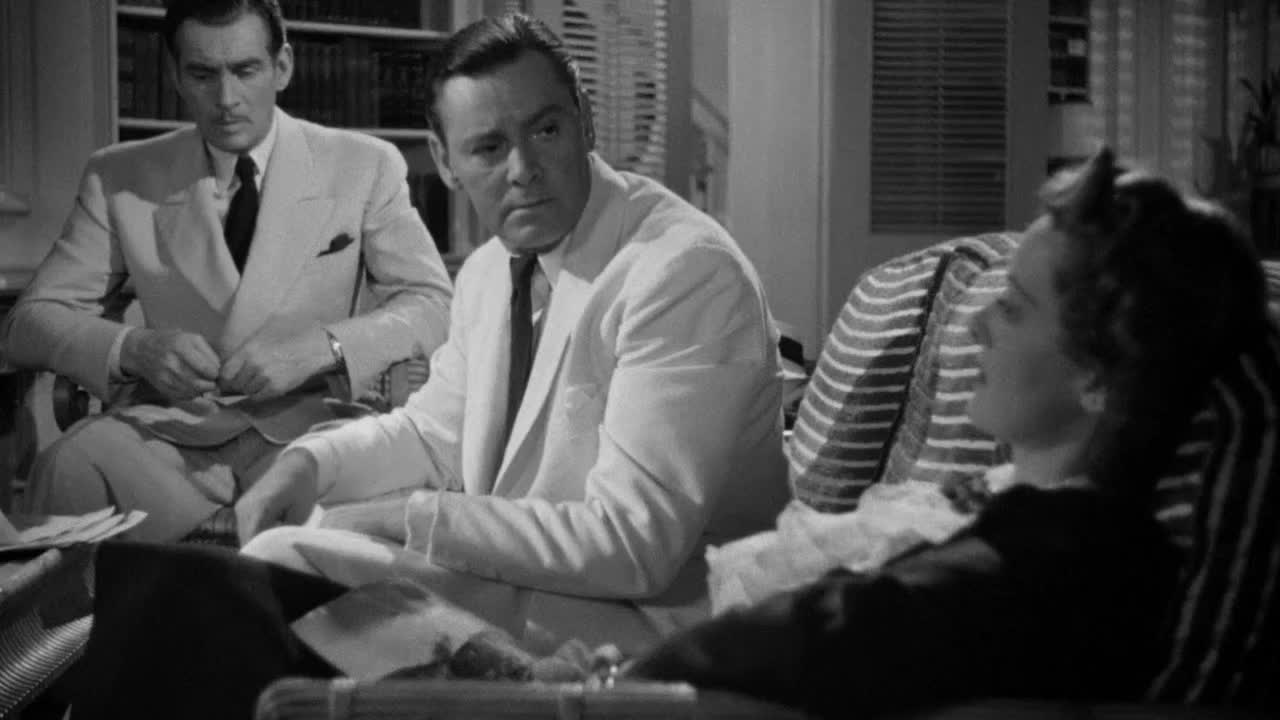
Robert is still planning his Sumatra estate when Howard finally tells him the costs—including the $10,000 paid for Leslie's letter. Robert is stunned: "But that's every cent I have in the world." The question of what the letter contained starts to come apart from Leslie's story, and Robert insists on seeing it.
Howard Reveals the Cost of the Letter
Robert Learns Buying the Letter Was a Crime
Howard, Leslie and Robert talk over Robert's plans to buy the Sumatra estate. Howard warns that the case has left heavy costs, then names the main one: the $10,000 he paid to buy back Leslie's letter. Robert is shocked, asks why the letter wasn't simply shown to the jury, and begins to doubt Leslie's story.
The cost is not money but trust. Howard reveals that he paid $10,000—almost exactly Robert's savings—to keep the letter away from the courtroom, and Robert's reaction is not anger but disbelief: "But that's every cent I have in the world." From there the scene becomes an interrogation. Robert recalls the gun he was already buying and asks why Leslie would order him another one; her "How should I know you were going to buy a gun?" meets his "Because I told you." Howard admits the purchase was a crime that could get him disbarred, so the stakes are no longer only Leslie's. When Robert demands the letter and says "I've got to pay $10,000 for that letter, and by heaven, I'm going to see it," the marriage and the cover-up are both on the line.
A1–C2 is the CEFR scale. Cards above the level you pick fade, and playback will not auto-pause on them.
“But that's every cent I have in the world.”
It states total loss in the plainest words, which makes the blow land harder.
Neutral
“Buying that letter was a criminal offense, wasn't it?”
A soft tag question names the crime and quietly puts the friend on the spot.
Neutral
“It's not your letter or mine, Bob.”
It hands ownership back to the person who wrote the letter and refuses to share the blame.
Neutral
“It would break his heart.”
Five plain words make the choice feel like cruelty rather than logic.
Neutral
“Look here, Bob. I don't want to throw cold water on your plans, but aren't you forgetting certain financial obligations?”
It claims not to spoil the mood and then does exactly that with one pointed question.
Neutral
 Up next · 14in love withThe scene: Leslie Confesses Loving Hammond
The trial's expenses have to be settled before Robert can fund the estate, and the $10,000 for the letter is the largest item.
He says he "didn't dare": showing the letter would have raised suspicions about why Leslie wrote it, so suppressing it seemed necessary for an acquittal.
He had already told her he was buying a gun from Cameron, so the idea that she arranged to buy him one through Hammond doesn't add up to him.
He admits that buying the letter was a criminal offense and that he might be disbarred for it.
She says it is not his letter or hers, and she is also trying to spare him the truth it contains.