
“It means that I was in love with Geoff Hammond.”
Why it's great
The plainest possible sentence delivers the reveal that undoes the whole defence.
Register
literary
Use it yourself
It means I was in love with someone else back then.
Chapter 14 of 15 · 2'38"
Leslie isn't confessing guilt so much as a life she kept hidden. “It means that I was in love with Geoff Hammond,” she tells her husband, then admits the affair ran for years and that even her agony felt like joy. The killing is already done; what breaks here is the marriage.
❝ Monologue · 7 lines Leslie's Confession: “I Was in Love with Him”
❝ Monologue · 6 lines The night of the shooting
The flat, repeated gunshots make the violence feel mechanical and therefore unbearable.
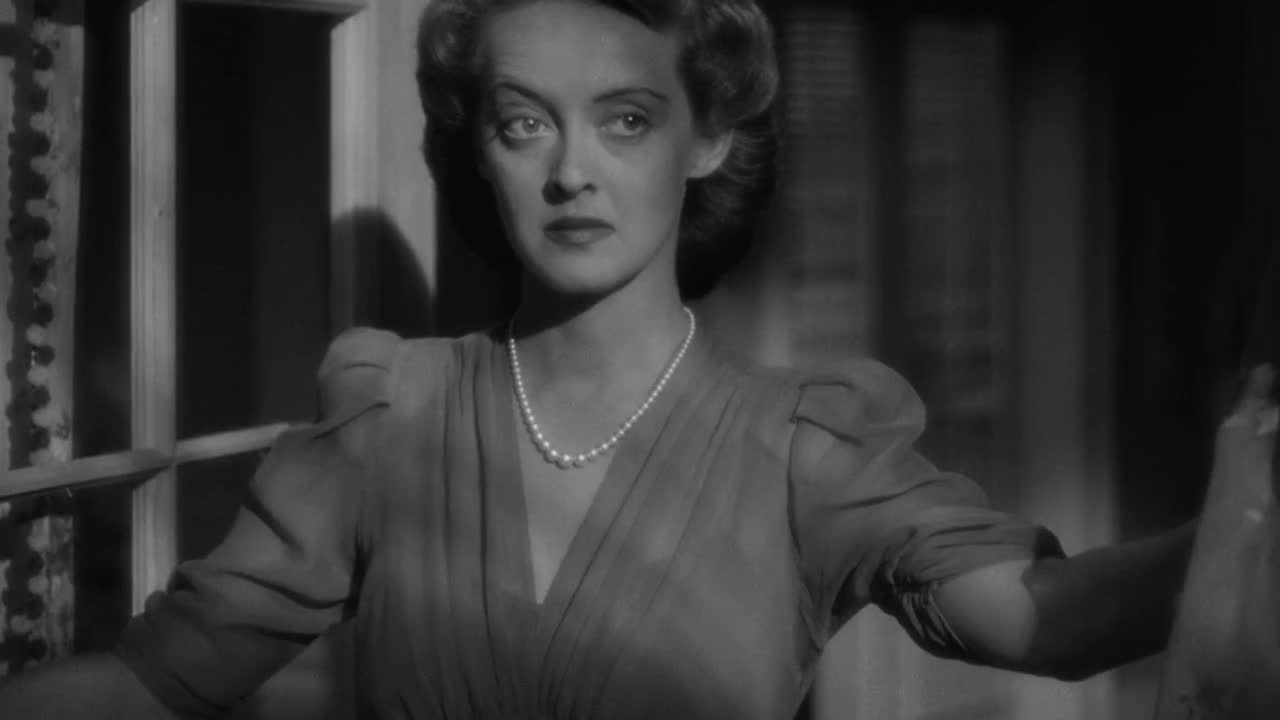
After being acquitted, Leslie Crosbie finally tells her husband Robert the truth about Geoffrey Hammond. She describes years of secret meetings, her jealousy when he turned to another woman, and the night she shot him on the veranda of their Singapore plantation. What follows is less a defense than an unburdening.
The scene turns the trial's verdict inside out. Leslie was acquitted for killing a man she claimed attacked her, but “I was in love with Geoff Hammond” recasts everything: the shooting was jealousy, not self-defense. Her confession is also an accusation — she says she “hated him because he'd made me despise myself,” and that “even my agony was a kind of joy.” She isn't asking forgiveness; “There's no excuse for me” is closer to a verdict on herself. The real tension is between a woman just found innocent and a marriage just found false. Robert can only answer, “I don't believe it.”
A1–C2 is the CEFR scale. Cards above the level you pick fade, and playback will not auto-pause on them.
“It means that I was in love with Geoff Hammond.”
The plainest possible sentence delivers the reveal that undoes the whole defence.
literary
“I was like a person who is sick with some loathsome disease and doesn't want to get well.”
The metaphor of an illness she refuses to cure captures a love she knows is destroying her.
literary
“Even my agony was a kind of joy.”
It holds pain and pleasure in one breath, which is exactly the trap she describes.
literary
“I hated him because he'd made me despise myself.”
It locates the hatred in her own lost self-respect, not in anything he did to her body.
Neutral
“There's no excuse for me.”
She refuses every defence in five words, which makes the confession complete.
Formal
We used to meet each other constantly once or twice a week. Not a soul had the smallest suspicion. Every time I met him, I hated myself, and yet I lived for the moment when I'd see him again. It was horrible. There was never an hour when I was at peace, when I wasn't reproaching myself. I was like a person who is sick with some loathsome disease and doesn't want to get well. Even my agony was a kind of joy.
Then he got up to go, and I knew if he left, I'd never see him again, so I seized the revolver and fired, heard a cry, and I knew I'd hit him. He staggered toward the veranda, and I ran after him and fired and fired and fired. There's no excuse for me. I don't deserve to live.
 Up next · 15good sportThe scene: Leslie's Party After the Trial
Robert has already read the letter and the lies are exposed. With the trial over, Leslie chooses to tell him the truth rather than keep performing a story he no longer believes.
No. Her confession makes clear the shooting came out of jealousy and a quarrel, not self-defense, even though the jury accepted her version.
She still loves Hammond, even after he rejects her, and admits she cannot give him up. Her devotion to Robert has been a performance through the marriage.
It means she was completely out of control, overwhelmed by emotion — not literally standing next to herself.
She goes out to the veranda, where Hammond's widow is waiting, and is stabbed; Leslie dies shortly afterward.