
“Well, that was the last straw.”
Why it's great
One idiom marks the exact moment patience snaps and the night turns.
Register
Neutral
Use it yourself
His third excuse was the last straw.
Chapter 3 of 15 · 3'58"
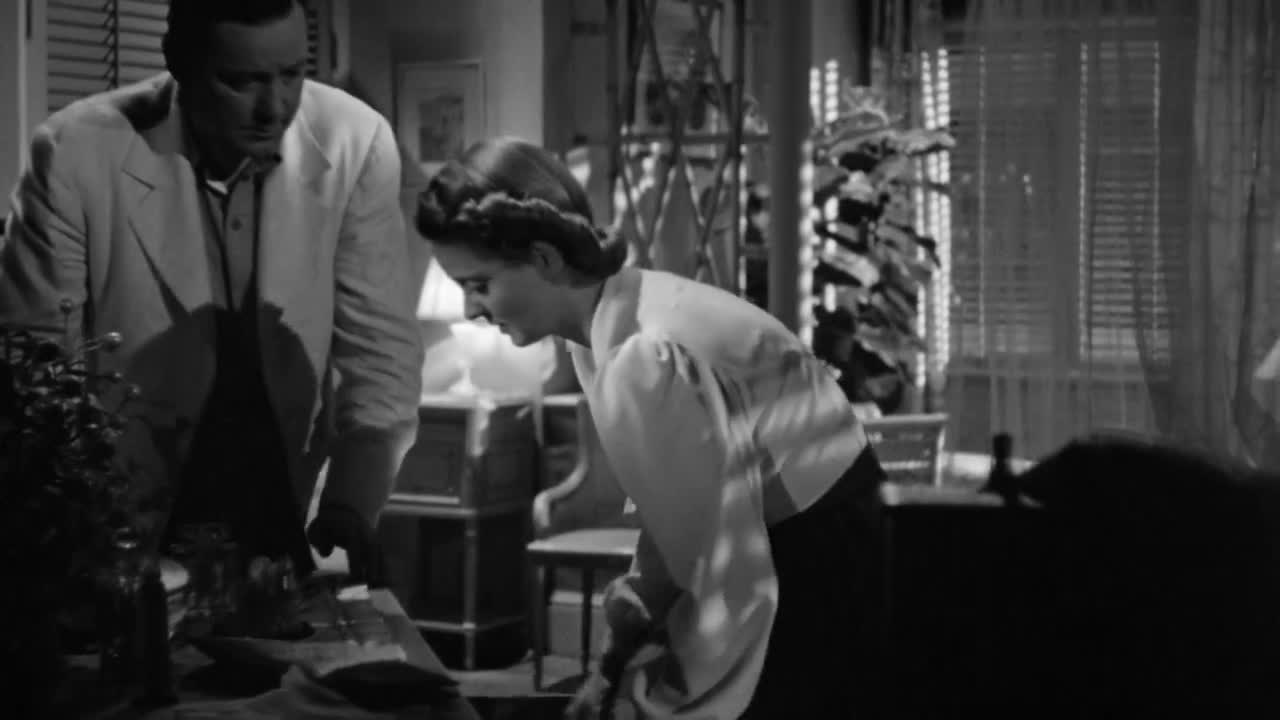
Leslie finally says what happened: Hammond grabbed her, she broke free, seized the revolver, and fired. "It was all instinctive. I didn't even know I'd fired." Her listeners accept it at once — "the man only got what he deserved" — and Robert comforts her as a victim, not a killer.
❝ Monologue · 33 lines Leslie Recounts the Struggle and the Shot
Robert Comforts Leslie After the Killing
Leslie finishes her account of the night. She says Hammond refused to leave, that his remark about Robert being away was the last straw, and that she lost her temper. When he grabbed and kissed her, they fell; she grabbed Robert's revolver and fired. Withers asks why the gun was there, and the group accepts her story.
Leslie's story is the strongest test of her performance, and it is built to be believed. She supplies exactly the details that support self-defense: no fear early on — "I was quite friendly, not the least bit frightened" — a temper that finally snaps because of the last straw, and a shooting she did not consciously intend: "It was all instinctive. I didn't even know I'd fired." That single line does the heaviest work, converting killing into reflex and keeping her hands clean. The people around her complete the performance for her, supplying the moral verdict — "the man only got what he deserved" — before any evidence is weighed. Robert, calling her "my poor darling," frames her as a victim while the weapon was in fact his own. What is never asked is the question that matters: why she kept firing until the revolver was empty.
A1–C2 is the CEFR scale. Cards above the level you pick fade, and playback will not auto-pause on them.
“Well, that was the last straw.”
One idiom marks the exact moment patience snaps and the night turns.
Neutral
“It was all instinctive. I didn't even know I'd fired.”
Two calm statements of not knowing make the killing feel more accidental than any plea.
Neutral
“It was only then I knew what I'd done.”
The delayed realization lands harder than any outburst; she understands it only afterwards.
literary
“You did what every woman would have done in your place.”
He turns a killing into something any woman would do; the comfort is also a defence.
Neutral
“And yet I'd give almost anything in the world to bring him back to life.”
The quiet wish to trade almost anything for his life carries the guilt she cannot voice.
Neutral
“I wish there were some way we could spare you, Mrs. Crosbie.”
The subjunctive makes the sympathy formal and careful, fitting the man who must press her.
Formal
I got up from that chair there... And I stood in front of the table here. He Rose and came around the table and stood in front of me. I held out my hand. "Good night," I said... But he didn't move. He just stood there looking at me, and his eyes were all funny. "I'm not going," he said. Then I began to lose my temper. "Poor fool, don't you know "I've never loved anyone but Robert? "And even if I didn't love him, you'd be the last man in the world I should care for." "Robert's away," he said. Well, that was the last straw. I wasn't in the least bit frightened, just angry. "If you don't leave immediately," I said, "I shall call the boys and have you thrown out." But I walked past him toward the veranda to call the boys, but he took hold of my arm and swung me back. Well, I tried to scream, but he flung his arms about me and began to kiss me. I struggled to tear myself away from him. He seemed like a madman. He kept talking and talking and saying he loved me and... it's horrible. I can't go on. I'm sorry, Leslie, but we have to know the rest. He lifted me in his arms and started carrying me. Somehow he stumbled on those steps. We fell, and I got away from him. Suddenly I remembered Robert's revolver in the drawer of that chest. He got up and ran after me, but I reached it before he could catch me. I seized the gun as he came toward me. I heard a report and saw him lurch toward the door. It was all instinctive. I didn't even know I'd fired. Then I followed him out to the veranda. He staggered across the porch, grabbed the railing, but it slipped through his hand, and he fell down the steps. I don't remember anything more, just the reports one after another till there was a funny little click, and the revolver was empty. It was only then I knew what I'd done.
 Up next · 04like grim deathThe scene: Joyce Questions Leslie About the Body
To deny intent. 'It was all instinctive' turns the killing into reflex rather than deliberate murder, which supports her claim that she acted in self-defense.
It explains her anger. Saying Hammond's remark about Robert was the last straw lets her admit rage while still presenting herself as patient and provoked, not willing.
Robert says he left a loaded weapon for Leslie since he was often away at night. That detail makes the gun's presence look ordinary rather than planned.
They already frame Hammond as the aggressor. One of them says 'the man only got what he deserved,' so they judge the killing before weighing any evidence.
Withers asks how the gun came to be there, because the weapon's location matters for the case and he needs an explanation that fits Leslie's account.