
“I don't mind confessing I'm all in.”
Why it's great
A gentle lead-in and a slangy punch line make the admission sound honest, not needy.
Register
Informal
Use it yourself
I don't mind confessing I'm out of ideas.
Chapter 5 of 15 · 3'03"
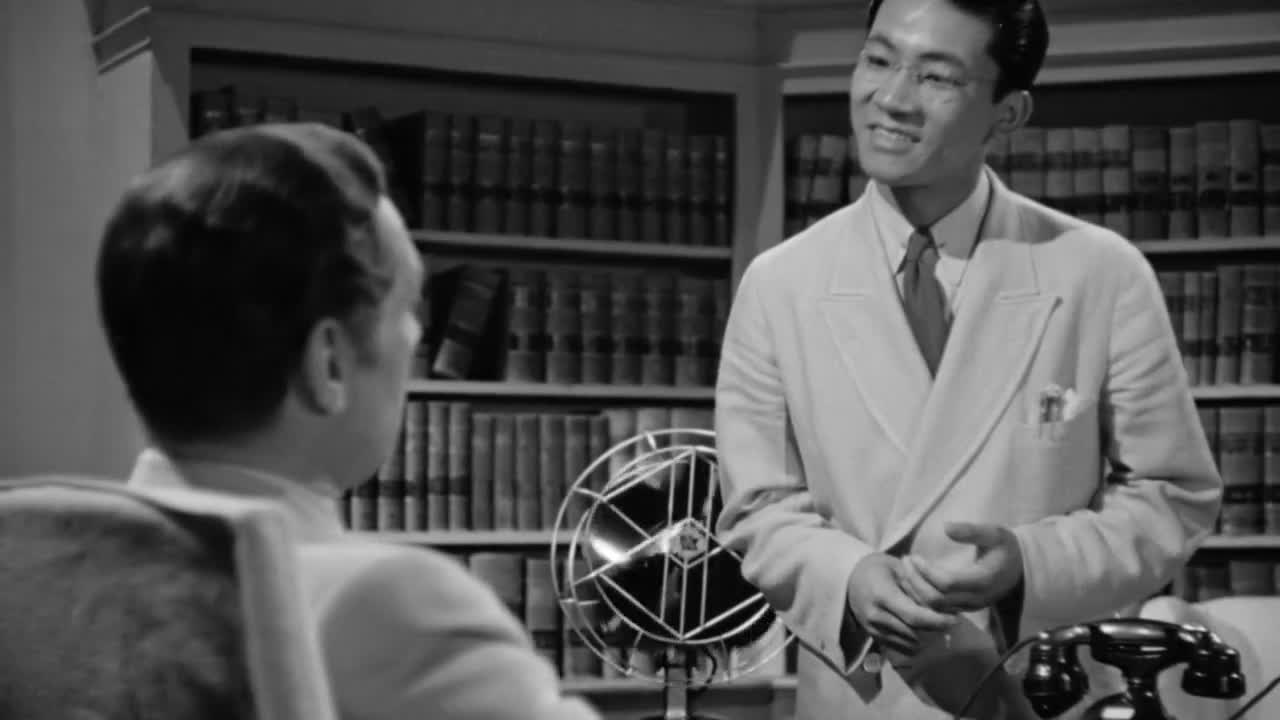
Robert arrives at Howard Joyce's office worn out by his wife's imprisonment, saying 'I'm all in.' Joyce offers him a place to stay in town and calms his anger at the trial. Then the clerk Ong asks for a private word: something 'very delicate and confidential' has surfaced in the Crosbie case.
Robert Breaks Down to His Lawyer
❝ Monologue · 5 lines Ong Asks for a Private Word
Robert visits his lawyer, Howard Joyce, in town. Exhausted and lonely, he says he is 'all in' and would even let the plantation 'go to blazes.' Joyce invites him to stay in the city and reassures him about the upcoming trial. After Robert leaves, Joyce's clerk, Ong, asks to speak privately about a delicate matter connected to the case.
Everything in this scene is polite, and everything matters. Robert can barely hold himself together — 'I don't mind confessing I'm all in' — and Joyce manages him with an invitation and calm: 'Now, stop worrying about the trial. That's your lawyer's job.' The trial is described as an 'ordeal,' and Robert's grief is almost a liability; Joyce even tells him to sleep and change before seeing Leslie. But the real turn comes at the end. Ong, the 'perfect confidential clerk,' waits until Robert has gone, then lowers his voice: 'The matter upon which I desire to speak to you, sir, is very delicate and confidential.' The wording matters because it announces a problem the lawyer will want to handle alone. Joyce's warm, open office is about to become a place of secrets.
A1–C2 is the CEFR scale. Cards above the level you pick fade, and playback will not auto-pause on them.
“I don't mind confessing I'm all in.”
A gentle lead-in and a slangy punch line make the admission sound honest, not needy.
Informal
“I've tried to work. The plantation can go to blazes for all I care. I hate the house and every tree on the place.”
A curse plus hatred down to every tree turns private grief into a bitter, vivid outburst.
Informal
“It's monstrous they should have kept her in that filthy prison all this time.”
Indignation and tenderness share one word, and the filthy prison makes the injustice physical.
Formal
“She shot him as she would have shot a mad dog.”
The mad-dog comparison absolves her in one breath; its casualness is the whole defence.
Neutral
“If you are not too busy, sir, might I trouble you for a few words in private conversation?”
The old-fashioned courtesy shows his rank and his care; every soft word is a social calculation.
Formal
“The matter upon which I desire to speak to you, sir, is very delicate and confidential.”
Two formal adjectives set the stakes and warn of danger, all in one polite sentence.
Formal
If you are not too busy, sir, might I trouble you for a few words in private conversation? No trouble at all, Ong. The matter upon which I desire to speak to you, sir, is very delicate and confidential. Well... what matter is it? It has to do with the case of the crown vs. Crosbie.
 Up next · 06put a different complexion onThe scene: Ong Brings Joyce the Letter
He is lonely and exhausted while Leslie is in prison. Staying near her in the city, with Joyce and Dorothy, keeps him from being alone on the plantation.
She admitted to killing Hammond, so in a civilized community a trial is unavoidable. Until it ends, she is held in jail rather than released.
He treats it as routine. He tells Robert to stop worrying, that the trial is 'your lawyer's job,' and plans to prove Hammond was married to the Eurasian woman.
The news is 'very delicate and confidential.' Ong wants to tell the lawyer alone, showing he understands the matter should not reach the husband yet.
He compares Hammond to a mad dog and says Leslie shot him justly, showing he fully believes her account and feels only contempt for the victim.