
“This is a very serious collection of romance novels.”
Why it's great
The deadpan praise turns a wall of trashy novels into a serious collection.
Register
Neutral
Use it yourself
This is a very serious collection of instant noodles.
Chapter 6 of 18 · 3'47"
What starts as a joke about a mother's stash of romance novels turns into a memory game about the two of them. "Don't pretend you're all above this," one teases, and for a moment the old letters, Wuthering Heights, and the people they used to be are all back on the table.
The Romance Novels That Bring It All Back
Reading the Cheesy Romance Novel Out Loud
❝ Monologue · 6 lines The Math of Eight Hundred Books
In a late mother's house, two people go through a shelf of romance novels and start teasing each other about the past. One of them reads a steamy passage out loud, the joke turns awkward when a mother is mentioned, and the talk drifts from old love letters to how many books a person could ever finish before they die.
The romance novels become a stand-in for everything the two of them left behind. They joke about the books being trashy, but the real subject is their own past, and it surfaces when one of them remembers, "You called me heathcliff and you called your self Catherine." That line is not really about the novel; it is the pet names from their old letters, the doomed couple they once cast themselves as. The comedy keeps slipping into grief and time: the wish not to picture a mother reading these books, the plan to get rid of them, and the mortality math about eight hundred books that nobody could finish before they die. What sounds like a bit lands as a quiet reminder that they are not the kids in those letters anymore.
A1–C2 is the CEFR scale. Cards above the level you pick fade, and playback will not auto-pause on them.
“This is a very serious collection of romance novels.”
The deadpan praise turns a wall of trashy novels into a serious collection.
Neutral
“You called me heathcliff and you called your self Catherine.”
Naming them after Wuthering Heights lovers reveals an old intimacy in one breath.
Neutral
“Don't pretend you're all above this.”
It calls out fake superiority in seven words, teasing rather than cruel.
Informal
“I don't want to think about my mother reading it.”
Putting her mother and the steamy passage together makes the cringe land instantly.
Neutral
“For some reason wanted to read all of these books I wouldn't be able to finish all of these books before I died.”
She measures her remaining life in unread books, which is both funny and bleak.
Neutral
“You know it's all relative, I think.”
The shrug of all relative softens the morbid math without denying it.
Informal
“The minute I got there she sent me right out to get some food.”
Starting with the minute makes her mother's brisk orders land like a reflex.
Informal
I had a very strange mortality moment when I looked at them and I was like this eight hundred books here, and even if I... For some reason wanted to read all of these books I wouldn't be able to finish all of these books before I died. That's a weird thing, you know the math of that. Pretty morbid thought. No just... Not to be morbid but just a thing.
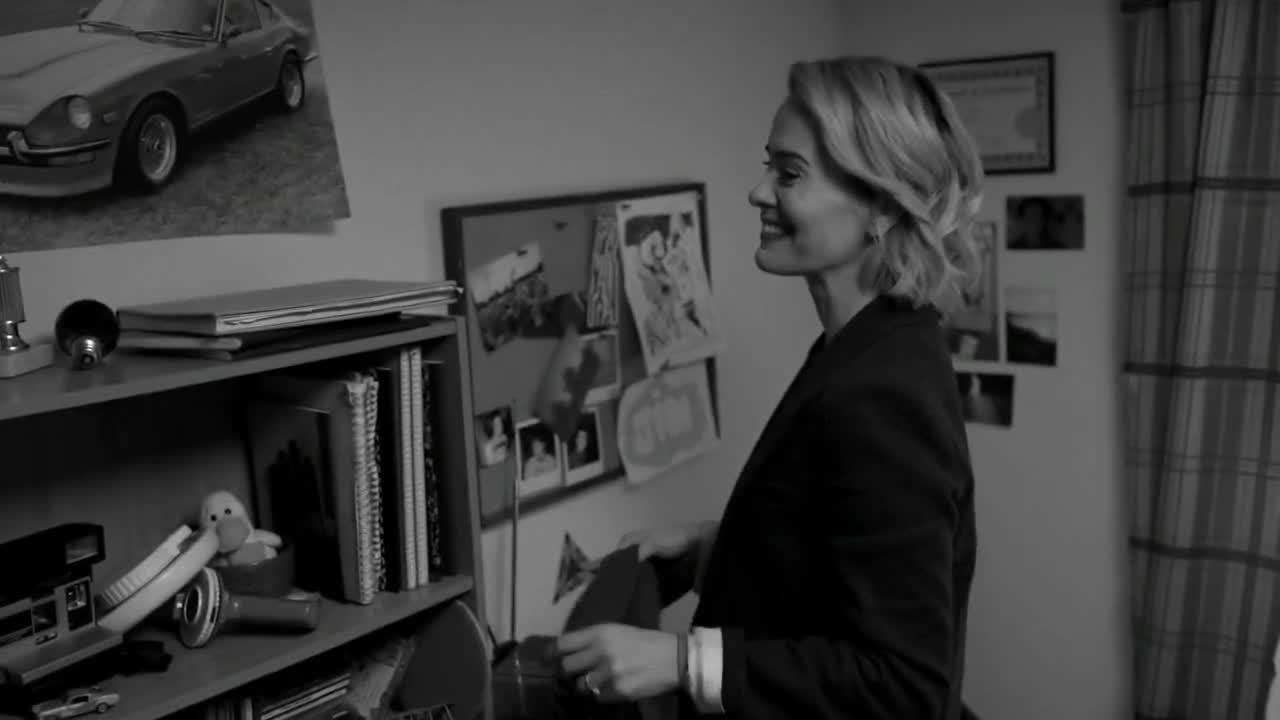 Up next · 07time capsuleThe scene: Jim and Amanda Open a Time Capsule
The books are a mother's, but they're also a doorway into the characters' own past. Mocking the trashy paperbacks lets them talk about the letters, Wuthering Heights, and the people they used to be without saying it directly.
It means to enjoy something thoroughly or make the most of it. They're saying that if their younger selves had this shelf, they would have spent hours joking about it.
The books spark it: staring at hundreds of them, one of them does the math and realizes there aren't enough years left to read them all. The morbid joke is how the scene admits the years that have already passed.
It's a deliberately cheesy romance paperback, the kind with a character named Justin. Reading it aloud is part of the joke: the prose is so bad that it becomes the perfect thing to tease each other with.
Yes. Until then the scene is almost giddy. Once someone steps outside to call home, the reunion starts tilting back toward the real lives waiting outside the house, and the evening begins to close.