
“Pat, the silver lining thing is yours.”
Why it's great
It hands Pat's own philosophy back to him, which lands far harder than advice.
Register
Neutral
Use it yourself
The courage thing is yours, not mine.
Chapter 9 of 23 · 2'37"
Pat owns up to the night before — hurting his mother was a mistake — and admits he hates his illness and wants to control it. Dr. Jones gives him a strategy for handling his feelings, then argues that helping Tiffany would actually be good for him.
❝ Monologue · 4 lines Pat's confession
He owns the mistake, names his self-hatred, then reveals the family violence without flinching.
The Doctor's Strategy
❝ Monologue · 4 lines The doctor's pitch
Instead of lecturing, the doctor hands Pat his own words back and lets the benefits do the arguing.
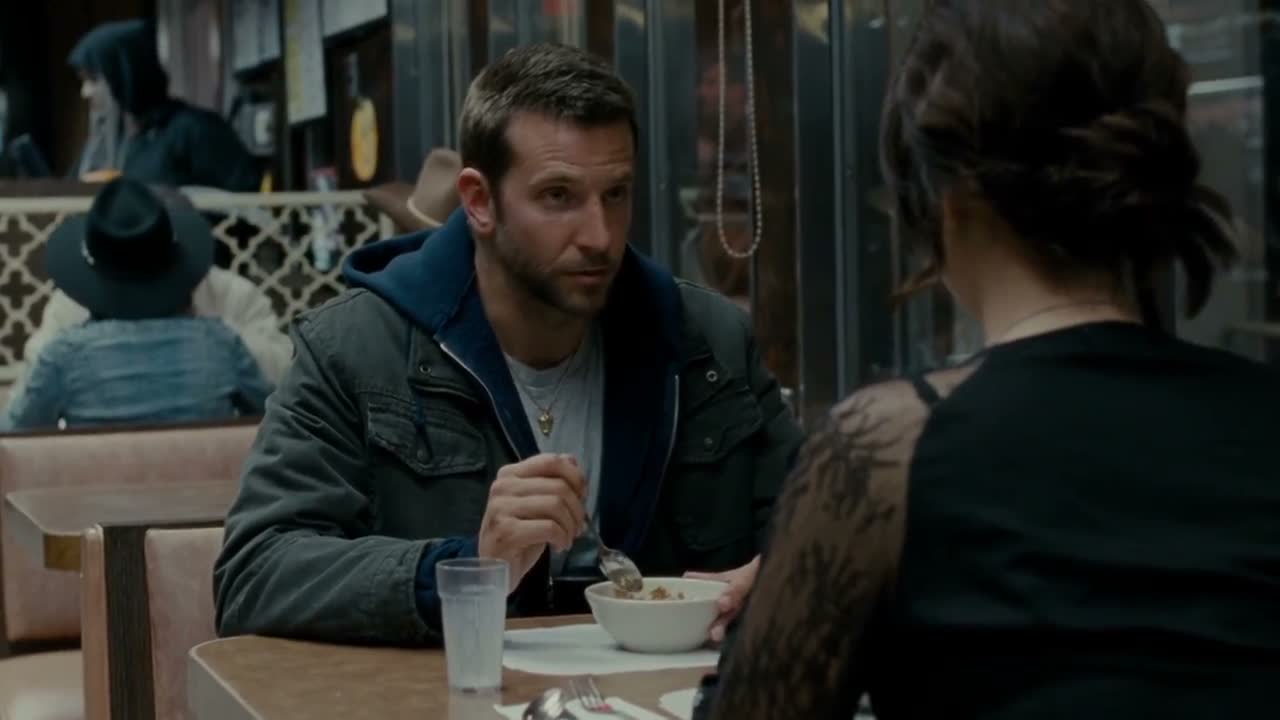
In his therapy session, Pat faces what happened the night before and admits that hurting his mother was a mistake. Dr. Jones gives him a strategy for recognising and managing his feelings, warning that otherwise he will be sent back to Baltimore. Pat says it is easier said than done. The doctor then argues that helping Tiffany would be good for him.
The scene is a therapy session as negotiation. Pat opens by taking responsibility — 'Hurting my mother was a mistake' — and admits he hates his illness and wants to control it, which is as close as he comes to accepting help. Dr. Jones responds with a plan, not sympathy: recognise the feelings, find a quiet place, calm down, or go back to Baltimore. Pat's reply, that it is 'easier said than done,' is the honest core of the film's view of recovery. What makes the session clever is how Dr. Jones reframes the Tiffany problem: instead of forbidding her, he argues that befriending her will make Pat look kind and thriving, which is exactly what he wants Nikki to see. Help becomes strategy, and it is all the more useful for it.
A1–C2 is the CEFR scale. Cards above the level you pick fade, and playback will not auto-pause on them.
“Pat, the silver lining thing is yours.”
It hands Pat's own philosophy back to him, which lands far harder than advice.
Neutral
“So if you help Tiffany, it will be good for you.”
It reframes a favour as self-interest, which is exactly how the doctor gets through.
Neutral
“- Yeah, that's easier said than done. - You have no choice.”
One short idiom deflates every tidy piece of advice without sounding rude.
Informal
“I hate myself for it. I hate my illness, I wanna control it.”
He splits self-hatred in two: the act and the illness, then reaches for control.
Neutral
“Recognise these feelings. Otherwise you will be sent back to Baltimore.”
An imperative plus a threat: notice the feeling or lose your freedom.
Formal
Hurting my mother was a mistake. I hate myself for it. I hate my illness, I wanna control it. My father had no trouble slapping the shit out of me, which I did not return because I could've killed him.
Pat, the silver lining thing is yours. I'm just giving back your words to you. This crazy sad shit, as you call it, made you a happier, calmer person with a beautiful, positive philosophy of going outdoors, working out
 Up next · 10on thin iceThe scene: Tiffany Offers to Deliver Pat's Letter
For hurting his mother during the fight the night before. He says it was a mistake and that he hates himself for it.
He tells Pat to recognise his feelings and get to a quieter place where he can be at peace with himself, or he will be sent back to Baltimore.
Because he suspects Pat is drawn to her, and he wants to reframe it: helping her will make Pat look kind and generous to Nikki.
A letter. He asks Dr. Jones to pass it on, but the doctor refuses because Pat has a restraining order.
He argues that if Pat becomes friends with Tiffany, Nikki will see him as a kind, generous person who helps people in need and is thriving.