00:00 / 02:39
00:00 / 02:39

Popescu Warns Martins at the Lecture, Explained

The Third Man · 1949

Chapter 12 of 17 · 2'39"

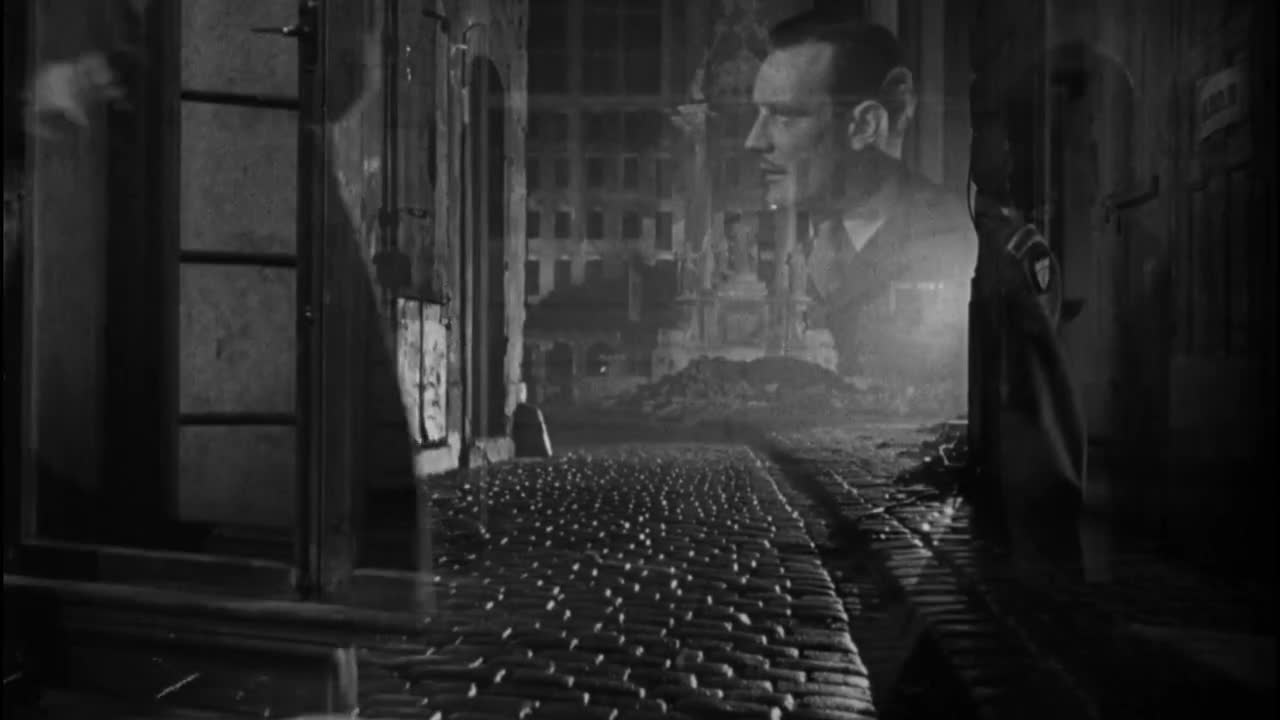
Crabbin's literary evening turns into an ambush: the audience asks Martins about the stream of consciousness and James Joyce, and Popescu slips in a warning under the small talk — "I'd say stick to fiction. Straight fiction." Martins, halfway through a book based on fact, refuses to stop.

SpeechesPartiesWarningAskingStrangersB2mediumamericanClean

Key moments

Start here, then watch the full scene
  1. The Audience Asks About Joyce

    1:02–1:39
    37s
  2. Popescu's Quiet Warning

    1:55–2:30
    35s

Popescu Warns Martins at the Lecture, explained

What happens

At Crabbin's cultural evening, Holly Martins is the guest speaker and the audience questions him about modern literature — the stream of consciousness, James Joyce. Martins answers with Zane Grey and admits his new book, The Third Man, is based on fact. Afterward Popescu appears and quietly warns him against mixing fact and fiction.

What's really going on

The scene works as comedy and as threat at the same time. Crabbin's earnest audience wants a serious novelist and gets a man who writes westerns, and the gap between their questions and his answers — the stream of consciousness meeting Zane Grey — is the film's joke at the expense of cultural pretension. But under the laughter runs the plot. Popescu, the man who helped carry Lime's body, turns up at the lecture and uses the cover of literary advice to deliver a warning: "I'd say you were doing something pretty dangerous this time." He urges Martins to keep his book pure fiction, which is really an instruction to stop digging. Martins refuses with a line of his own — he is too far along with the book — and the refusal is what makes him dangerous to them.

Key lines & what they mean

“Well, here we are, ladies and gentlemen. All's well that ends well.”
Crabbin's cheery opener: he treats the evening as finished business, which is the same self-satisfied tone the film quietly mocks.
“Yeah, well, I... I suppose that is what I meant to say.”
Martins' floundering reply to a literary question, offered with a shrug, which shows how out of place he is among the cultured guests.
“Do you believe, Mr Martins, in the stream of consciousness?”
The question that exposes the gap: the audience expects high modernism, while Martins has come to write and talk about cheap westerns.
“We all know perfectly well Zane Grey wrote what we call "westerns."”
The polite put-down: the speaker names the genre Martins writes and by so doing files it away as something a little beneath them.
“I'd say you were doing something pretty dangerous this time.”
The warning beneath the flattery: Popescu praises Martins' book only to tell him that the research has made him dangerous.
“I'd say stick to fiction. Straight fiction.”
The instruction spelled out: drop the true story and write pure invention, which means stop asking what really happened to Harry.

Theme

  • Deception — Popescu's literary small talk is a cover for a threat, warning Martins to stop mixing fact with fiction before it is too late.
  • Courage — Martins refuses the polite advice to write only fiction, and his stubborn refusal to abandon the book is what makes him a danger.

What this chapter teaches

Teaching points

Review right after watching
My level3/7

A1–C2 is the CEFR scale. Cards above the level you pick fade, and playback will not auto-pause on them.

The Third Man: your progress

Chapter 12 of 17 · about 15 min to go

← Previous
Up next · 13cap and bellsThe scene: Calloway Explains the Penicillin Racket

Takeaways

What you walk away with
  1. A grand question about art can be aimed as a joke.
  2. Warning dressed as advice keeps the room polite.
  3. All set is warmer and faster than plain ready.
  4. Repeating a word turns a suggestion into an order.

People also search

Questions, then the lines
Why does Martins mention Zane Grey?

Because he is asked which author influenced him most. As a writer of westerns, he names Zane Grey, with the result that the cultured audience laughs at him.

What does Popescu warn Martins about?

He warns him that mixing fact and fiction is dangerous. He wants Martins to stop writing a book based on real events and to stick to pure fiction.

What does "stream of consciousness" mean?

It is a literary style that follows the flow of a character's thoughts. The question is meant to sound learned, and Martins has no idea how to answer it.

Why does Martins refuse Popescu's advice?

Because he is too far along with the book to stop. He says he is too deep into it, which shows he will keep investigating rather than be frightened off.

How does the audience react to Martins?

They find him amusing rather than impressive. His joke about Zane Grey and his awkward answers amuse them, and Crabbin treats it all as a successful evening.