
“He was run over by a car. He was dead when I arrived.”
Why it's great
Two flat sentences give the cause and the timing with a doctor's detachment.
Register
Neutral
Use it yourself
The cyclist was run over by a truck at the junction.
Chapter 8 of 17 · 2'25"
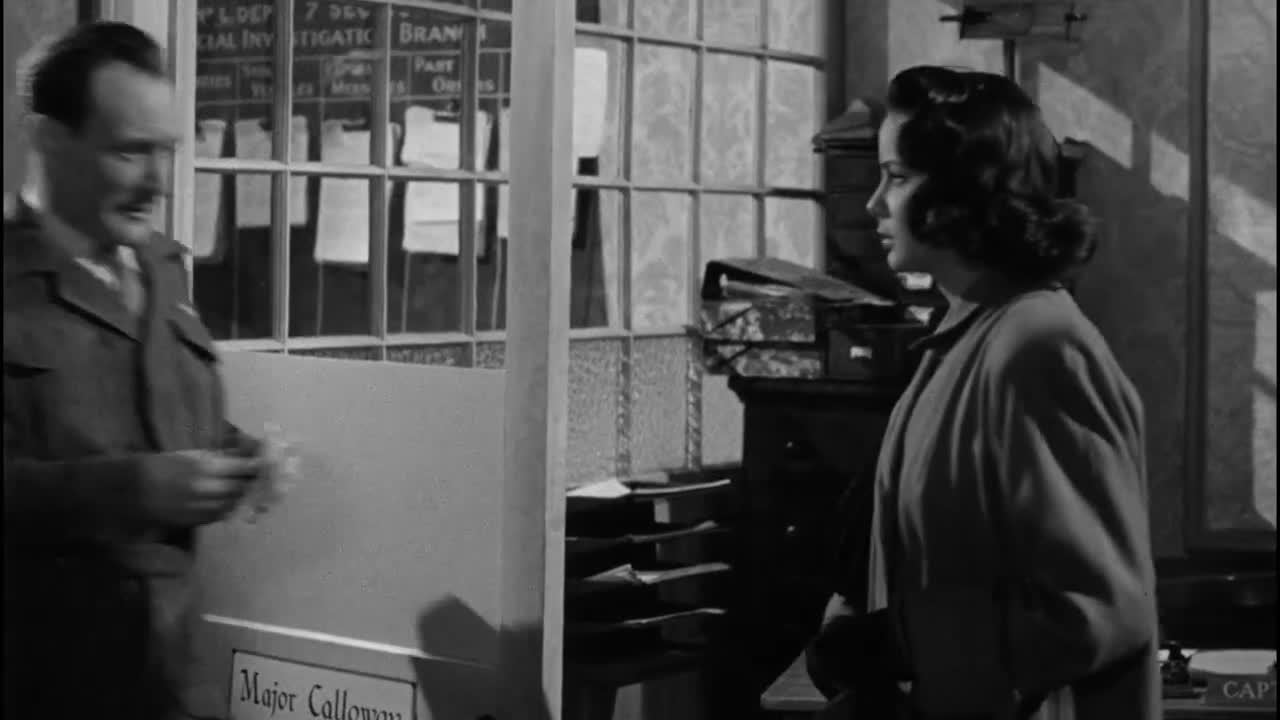
Martins visits Dr Winkel to learn how Harry Lime died, but the doctor will say only what he saw: "He was run over by a car. He was dead when I arrived." When Martins tests the idea that Harry was pushed, Winkel refuses to speculate — "I cannot give an opinion." Outside, Calloway and Brodsky discuss the girl.
How Harry Lime Died
The Doctor Refuses to Speculate
Holly Martins calls on Dr Winkel, Lime's medical adviser, to hear the details of the death. The doctor says Lime was run over and was already dead when he arrived, and firmly refuses to give an opinion about anything else. Martins asks whether Lime could have been pushed; Winkel says the injuries would have been the same. Outside, Calloway and Brodsky discuss the forged passport and the girl.
The scene is a duel of evasion, and the doctor wins it by refusing to say anything he did not see. Martins wants a story that explains the accident — could Lime have spoken, made plans, been conscious? — and Winkel answers each question with the limits of his own knowledge: "I cannot give an opinion. I was not there." That phrase is the whole scene: a professional protecting himself behind exactness. When Martins finally asks whether Lime was pushed, the answer is not a denial but a technical dodge — the injuries would have looked the same either way. The doctor is not lying; he is declining to help, which is more chilling. The real information, meanwhile, comes outside the door, where Calloway and Brodsky quietly agree there is a forgery and a girl to reckon with.
A1–C2 is the CEFR scale. Cards above the level you pick fade, and playback will not auto-pause on them.
“He was run over by a car. He was dead when I arrived.”
Two flat sentences give the cause and the timing with a doctor's detachment.
Neutral
“I understand he was, yes, for a short time, while they carried him across the road.”
Interruptions and hedges pile up, showing a doctor who refuses to commit.
Formal
“Could he have been capable of making plans, for me and others just... Just during those few moments?”
The hesitation marks exactly where the question turns into a hope, not a fact.
Formal
“I cannot give an opinion. I was not there.”
It sounds professional and evasive at once, closing the topic with perfect manners.
Formal
“Was it possible that his death might have been not accidental?”
Layered hedging makes the accusation almost deniable while still landing.
Formal
 Up next · 09upside downThe scene: Calloway Interrogates Anna Schmidt
To learn the details of Lime's death. As Lime's medical adviser, Winkel was at the scene, and Martins hopes the doctor can tell him whether Lime spoke or made any plans.
Because he refuses to go beyond what he saw himself. He says he cannot give an opinion since he was not there, and limits his judgment to the causes of death.
It means to be knocked down and driven across by a vehicle. The doctor uses it to describe how Lime died, presenting it as a simple traffic accident.
He suspects it was not accidental and asks whether Lime might have been pushed. Winkel will not rule it out, saying the injuries would have been the same either way.
A clever forgery connected to the case. Brodsky asks Calloway not to arrest the girl yet and to keep the passport secret until he makes inquiries.