00:00 / 02:38
00:00 / 02:38

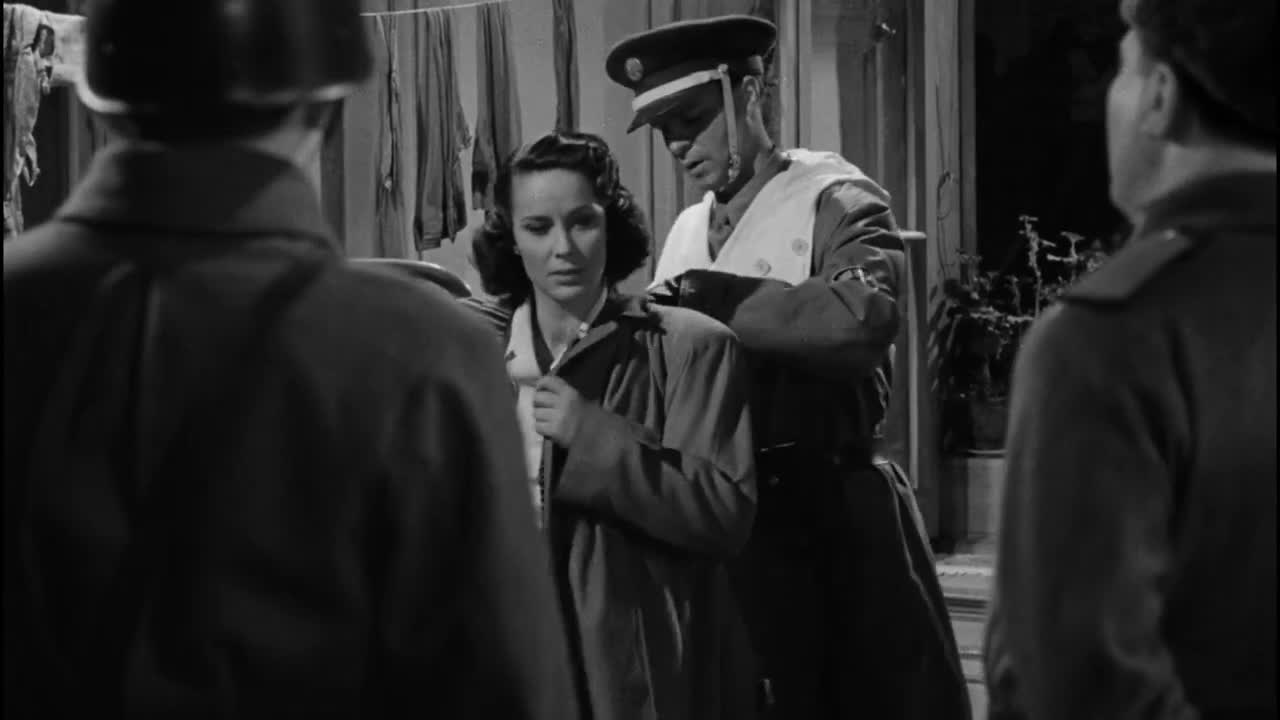
Martins and Anna Argue About Harry, Explained

The Third Man · 1949

Chapter 14 of 17 · 2'38"

After learning what Harry Lime really did, Martins and Anna argue over who he was. She insists "Harry was real," while Martins offers a bleak view of human nature and belittles himself: "I'm just a hack writer who drinks too much and falls in love with girls." Anna says she is leaving Vienna.

ArgumentsConfessing feelingsConfrontingExplainingFriendsB2mediumamericanClean

Key moments

Start here, then watch the full scene
  1. Stop Making Harry in Your Image

    0:02–0:55
    53s
  2. The First Time I Saw You Laugh

    1:30–2:36
    66s

Martins and Anna Argue About Harry, explained

What happens

Martins and Anna Schmidt sit in her flat and quarrel about the dead man they both cared for. Anna will not let Harry be reduced to his crimes, while Martins, who has learned more than he wanted, mocks his own trade — he is just a hack writer. Anna says she is leaving Vienna, and Martins asks, half joking, whether he ever had a chance with her.

What's really going on

The scene is the emotional centre of the film, and it is an argument about how to remember someone who turns out to have been a criminal. Anna refuses to let the investigation define Harry: "A person doesn't change because you find out more." For her he was a person, not a case. Martins, who has just learned the worst, cannot share that comfort — "I knew him for 20 years. At least, I thought I knew him" — and turns his bitterness on himself, calling himself a hack writer who drinks too much. What holds the scene together is that neither of them is simply right. Anna's loyalty is not blindness, and Martins' disillusion is not proof. When she says she is leaving Vienna and he asks whether he would have stood a chance, the film lets the personal and the moral overlap, and the joke they share is the only answer it offers.

Key lines & what they mean

“I knew him for 20 years. At least, I thought I knew him.”
The loss of certainty in one line: twenty years of friendship now seem to have been spent on someone he never really knew.
“Suppose he was laughing at fools like us all the time?”
The thought that stings most: perhaps Harry was always laughing at the decent people who trusted him.
“Oh, please. For heaven's sake, stop making him in your image.”
Anna's exasperated plea: she will not let Harry be remade to fit Martins' ideas of what a person should be.
“Harry was real. He wasn't just your friend and my lover.”
The heart of her defence: Harry existed as a real man with faults and appetites, not as a symbol of anyone else's ideals.
“I'm just a hack writer who drinks too much and falls in love with girls.”
Martins' self-portrait, offered as fatalism: he drinks, he falls in love, and he is not the serious writer everyone wants him to be.
“A person doesn't change because you find out more.”
Anna's moral position: new facts about Harry's crimes do not erase the person she knew and loved.
“Look. I've got a splitting headache, and you stand there and just talk and talk and talk.”
The scene's release valve: Martins, exhausted and hung over, complains that talking about Harry never stops.

Theme

  • Death & grief — Two people who loved the same dead man disagree about whether knowing his crimes should change what they felt for him.
  • Betrayal — Learning what Harry did forces Martins to reconsider twenty years of friendship, and the betrayal is felt as grief rather than anger.

What this chapter teaches

Teaching points

Review right after watching
My level4/8

A1–C2 is the CEFR scale. Cards above the level you pick fade, and playback will not auto-pause on them.

The Third Man: your progress

Chapter 14 of 17 · about 10 min to go

← Previous
Up next · 15a dead man walkingThe scene: Calloway Tells Anna Harry Is Alive

Takeaways

What you walk away with
  1. Self-mockery can be a shield in an argument.
  2. As if with a past tense hints the opposite is true.
  3. Repeating a verb shows patience running out.
  4. Real against just restores a person to full size.

People also search

Questions, then the lines
Why do Martins and Anna argue about Harry?

Because they remember him differently. Anna knew him as a lover with faults, while Martins has just learned about his crimes and cannot reconcile the friend with the criminal.

Why does Anna defend Harry?

Because she knew him as a man, not as his crimes. She refuses to let either of them reshape him into something more respectable, and insists that knowing more does not change who he was.

What does "splitting headache" mean?

It means a headache so bad it feels as if the head is splitting. Martins uses it to complain that the talk is going on and on while he feels terrible.

What does Martins ask Anna at the end?

Whether he would have stood a chance with her. He says she once told him to find himself a girl, and asks half-jokingly whether he ever had any chance.

Why does Martins call himself a hack writer?

Out of self-mockery. He drinks too much and falls in love with girls, and he admits he is not the serious author the lecture audience expects.