
“His whole story from the start was two hours late.”
Why it's great
From the start plus two hours late quietly dismantles the whole testimony.
Register
Neutral
Use it yourself
His whole story from the start was missing key dates.
Chapter 10 of 20 · 4'58"
The film lines up two timelines and lets the gap do the work: meals, a bowling alley, a motel, each remembered two hours apart. "His whole story from the start was two hours late," one voice says. It's less an argument than a demonstration of how a story can drift.
❝ Monologue · 14 lines The Dillinger story
One vivid detail after another turns an old news story into something absurd.
The Witness Who Was Always Two Hours Late
❝ Monologue · 7 lines The Brother Who Recanted the Alibi
Randall Adams's alibi collapses when the brother who first swore they were together all night takes it back. Meanwhile every stop on the day of the killing, from a morning meeting to a bowling alley to a motel, is placed two hours later by the state's witness. An eyewitness's courtroom account and her first statement, taken minutes after the killing, don't match either.
The Dillinger opening sets the tone: a crowd dipping handkerchiefs in a dead man's blood for souvenirs, a woman remembered for a dress that wasn't even red. It's a story about how memory and legend harden around a death — exactly the problem the case runs into. The alibi that might have freed Adams rests on a brother who first says "Randall, my brother, was with me all night long," then decides that testifying would only send him to prison too, and backs off. "and Adams was left without any witnesses." The prosecution's own witness supplies a version two hours later than everyone else's, and even the eyewitness testimony "doesn't match. Doesn't match at all."
A1–C2 is the CEFR scale. Cards above the level you pick fade, and playback will not auto-pause on them.
“His whole story from the start was two hours late.”
From the start plus two hours late quietly dismantles the whole testimony.
Neutral
“Two hours later. Two hours into the night.”
It repeats only the time, and the repetition becomes the accusation.
Informal
“He was trying to cover for his brother.”
Cover for his brother captures the whole pull between family and testimony.
Informal
“and Adams was left without any witnesses.”
The passive voice states the outcome flatly, and the isolation lands hardest.
Neutral
“It doesn't match. Doesn't match at all.”
The echo plus at all nails the contradiction shut.
Neutral
“people were dipping their handkerchiefs in the blood...”
One visceral gesture reveals the crowd's hunger for a souvenir of death.
literary
My father would tell me that when Dillinger was killed... within a matter of two minutes... people were dipping their handkerchiefs in the blood... to get souvenirs. And he vividly remembered one lady... who, all she had was a newspaper, held it up and said: "I bet I'm the only lady from Kansas City with John Dillinger's blood." He told me, the "Woman in Red"... she had on an orange dress. This is trivia, okay? It looked red under the lights. He said it was really orange. So she got to be known as the "Lady in Red" that fingered Dillinger. He said, "It was really the Lady in Orange." As her reward, she got a new fur coat... and a one-way ticket back to her native Romania.
"If I get down there and perjure myself... "there's nothing that they can do because they've got the case." This is the way I think that he thought. "They know that my brother did it. "If I get up there and lie, they are going to have me for perjury. "I'll be in the penitentiary with him, and it ain't going to do any good... "so I just ain't going to testify. I ain't gonna say nothing."
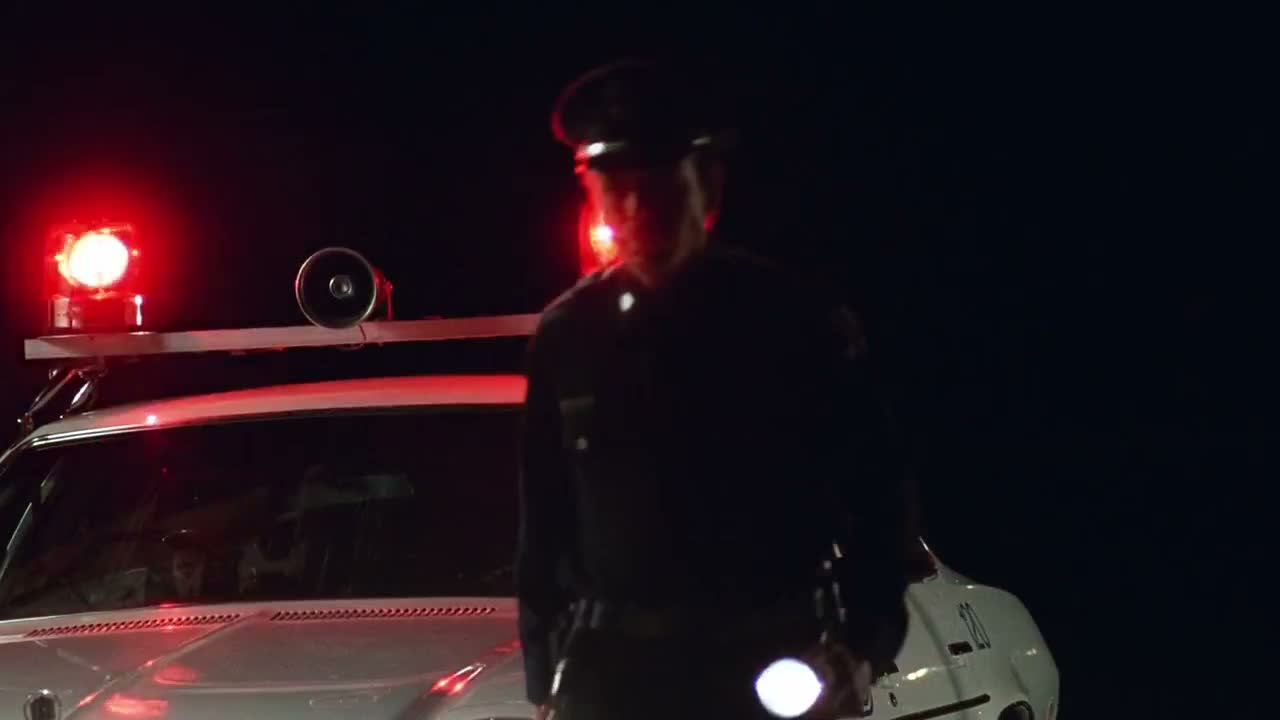 Up next · 11refreshed her memoryThe scene: Mrs. Miller Changes Her Story
At first he swears Randall was with him all night watching wrestling. Then he reasons that if he testifies and is charged with perjury, he'll go to prison too and it won't help — so he backs off and Randall has no alibi witness.
It makes the film's point about memory and myth. A crowd soaks handkerchiefs in Dillinger's blood, a woman is remembered for a red dress that was really orange, and a legend is built from small errors — the same kind of error the case is full of.
It shows how the prosecution's account drifts. Every landmark on the day of the killing is placed two hours later by its witness, which quietly changes when — and whether — Randall could have been at the scene.
Because the clerk couldn't place the customer on any specific night: they came in for cigarettes so often that one night looked like another, so he honestly couldn't say.
No. The film points out that her courtroom account and her first statement, made only fifteen to twenty minutes after the killing, don't match each other at all.