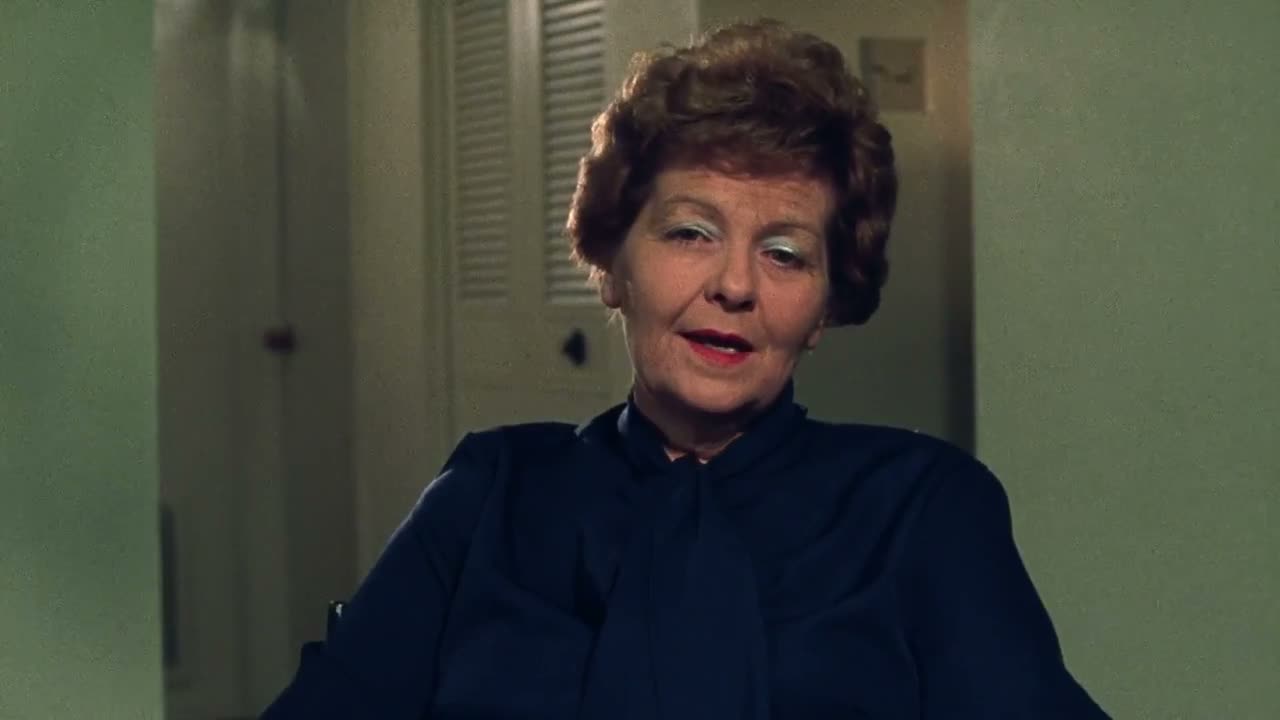
“I had no idea that somebody was gonna get killed or shot.”
The plain 'had no idea' marks the moment an ordinary drive turns into a murder case.
Neutral
Chapter 12 of 20 · 5'03"
A husband and wife are driving home when they hear what sounds like backfire or firecrackers. He wants to keep going — "Come on, we're getting out of here" — but she turns and looks anyway, and later picks Randall Adams out of a courtroom. The film follows the look, and then the doubts cast on it.
❝ Monologue · 11 lines the look that mattered
She moves from her husband's fear to her own stubborn look, ending on the glance that decides everything.
The Witness They Couldn't Believe
A couple driving through West Dallas hear gunshots they take for backfire or firecrackers and keep going. The husband tells his wife to shut up and not look; she looks anyway and gets a clear view of the driver's face and the dark-blue car. At trial she identifies Randall Adams from that passing glance. Later testimony questions her job history and her honesty.
The scene is about a glance that could decide the case, and how little everyone involved wanted to give it. The husband's instinct is to keep moving: "You're too nosy. You don't even know what's going on." Within a neighborhood described as a high-crime area, the film notes, "nobody wants to see nothing or hear nothing." Then it turns on the witness herself. She was fired two weeks before the trial for till-tapping, and a caller tells the defense that "this woman had never told the truth in her life." "If their case hinged on this testimony, this was not believable testimony." The conviction may rest on the eyes of someone the film is about to discredit.
A1–C2 is the CEFR scale. Cards above the level you pick fade, and playback will not auto-pause on them.
“I had no idea that somebody was gonna get killed or shot.”
The plain 'had no idea' marks the moment an ordinary drive turns into a murder case.
Neutral
“So we heard something, like backfire or firecrackers.”
Naming everyday noises instead of gunfire captures how easy it is to misread a scene.
Neutral
“This is how I got such a good look.”
One summary line turns a lucky glance into the reason her testimony exists.
Neutral
“Like here, nobody wants to see nothing or hear nothing.”
The double negative makes a whole neighborhood's silence sound blunt and real.
Informal
“This woman had never told the truth in her life.”
A sweeping claim delivered flat; it ends a witness's credibility in one stroke.
Neutral
“If their case hinged on this testimony, this was not believable testimony.”
It removes the whole case with one conditional: if this is the evidence, the evidence fails.
Formal
He was one of these kind that didn't like getting involved. He wanted to go on. He told me to shut up and turn around. Don't look. I turned around and looked anyway. So we heard something, like backfire or firecrackers. And so we drove over the bridge, and I got to thinking. I said: "Em, there're no firecrackers this time of the year." I was thinking to myself: "That couldn't be somebody shooting." It was real dark, and it was cold. It was hard to see in that car. But his window was down. The driver's window was down. This is how I got such a good look.
Up next · 13wheels start rollingThe scene: Witnesses Testify for MoneyHer testimony is what puts Randall Adams in the car. To undermine it, the film notes she was fired two weeks earlier for stealing from the till and that a caller said she 'had never told the truth in her life.'
It's an old term for stealing money out of a cash register. The film uses it to explain why the gas-station worker had actually lost her job, contrary to what she told the court.
He didn't want to get involved and was, she says, more scared than she was. He told her to shut up, turn around, and not look, because the neighborhood was known for crime.
The film never proves it. It just stacks up reasons to doubt her: a disputed job history, a neighbor's claim that she lied constantly, and testimony that didn't match her first statement.
It happened in West Dallas, described in the film as a high-crime neighborhood, in a mostly Black area where residents were reluctant to come forward.