
“I took that to heart. I thought I was going to get my chance.”
Why it's great
Hope is stated plainly, which is exactly what makes the coming defeat hurt.
Register
Neutral
Use it yourself
I took that to heart. I thought I was going to get the job.
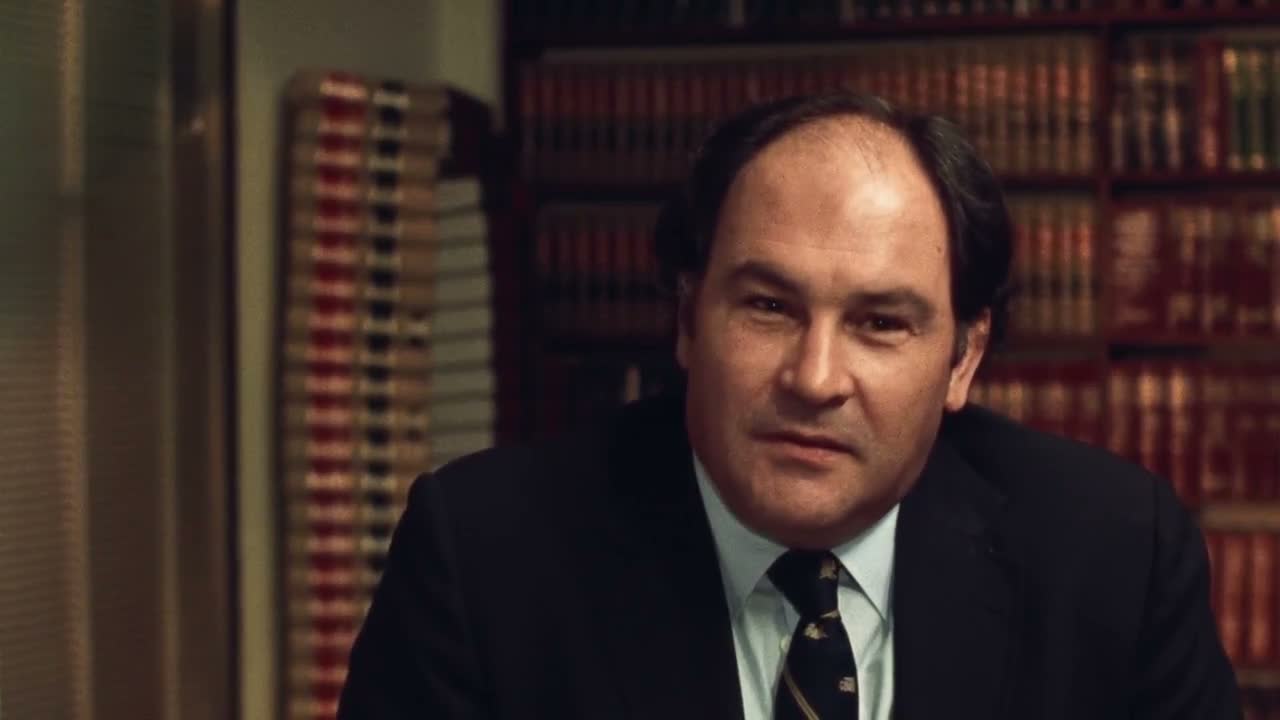
Chapter 17 of 20 · 4'18"
A defense lawyer walks through the appeals: the Texas Court of Criminal Appeals affirms the conviction 9-0, then the U.S. Supreme Court reverses it 8-1, giving new hope. But the district attorney's move to commute the sentence to life kills the retrial, and the lawyer admits, "I was absolutely shocked."
❝ Monologue · 5 lines A jab over ice cream
The insult lands in the most ordinary setting, which makes it colder.
❝ Monologue · 10 lines Reversed 8-1, Then Taken Away
The Lawyer Who Gave Up Criminal Law
The chapter follows a case through two courts and then out of reach. The Texas Court of Criminal Appeals declines to overturn the conviction, 9-0; the U.S. Supreme Court later reverses, 8-1. Before a retrial can happen, the district attorney asks the governor to commute the death sentence to life, removing the chance to try the case again.
This is the part of the story where the law works and still fails. The state's highest criminal court affirms the conviction 9-0; the U.S. Supreme Court later reverses 8-1, which should mean a second trial. Then the case is taken off the table: the district attorney asks the governor to commute the death sentence to life, which, as the lawyer explains, 'eliminated the possibility of a retrial based on the reversal.' The lawyer is left counting votes — 9-0 one way, 1-8 the other, 'if you tally all those votes, I come out 10-8' — and still the case was reversed. What stays with him is not the score but the machinery: someone 'set the wheels of justice in motion' in the wrong direction, and it went 'so fast no one could stop them.' He says he has since 'given up my practice of criminal law.' The chapter is about a system that can be right on paper and still leave a man in prison.
A1–C2 is the CEFR scale. Cards above the level you pick fade, and playback will not auto-pause on them.
“I took that to heart. I thought I was going to get my chance.”
Hope is stated plainly, which is exactly what makes the coming defeat hurt.
Neutral
“So I felt it was up to me to stop them and I didn't.”
He claims the duty as his own, then admits the failure in four plain words.
Neutral
“Since his trial, I have given up my practice of criminal law.”
A quiet career decision becomes the strongest verdict on the whole system.
Neutral
“They are saying they disagree with the judge.”
It cuts through the jargon: a reversal is simply a disagreement with the judge.
Neutral
“it's all gotten messed up and derailed again.”
Two verbs stack up to show a process spun out of anyone's control.
Informal
“Yet the case was reversed.”
A five-word turn cancels every careful argument that came before it.
Neutral
I was with my family in an ice-cream parlor... and the judge and his family happened to come at the same time. And he came over to me and made the comment... "I see where the Court of Criminal Appeals gave me an 'A'... "in the Adams case."
When the Appellate Court reverses a case... they are never saying the trial judge was right or wrong. They are saying they disagree with the judge. You can't, for instance, in the Adams appeals... say the appellate courts were saying I was right or I was wrong. After all, if in Austin... in our state appeals court, I was 9-0 correct... and in Washington, I was 1-8 incorrect. If you tally all those votes, I come out 10-8. Yet the case was reversed.
 Up next · 18came over meThe scene: David Harris's Same M.O.
It affirmed Randall Adams's conviction 9-0, a unanimous decision against his lawyers. The state's highest criminal court, in Austin, refused to overturn the case.
It reversed the conviction 8-1. That reversal gave the defense new hope and, legally, opened the door to a retrial.
The district attorney asked the governor to commute Adams's death sentence to life. As the lawyer says, that 'eliminated the possibility of a retrial based on the reversal.'
He says he gave up his criminal practice after this trial. The case left him feeling that justice had miscarried so badly — and that he had failed to stop it — that he preferred to do something else.