00:00 / 02:29
00:00 / 02:29

No Way to Disprove John's Story, Explained

Friends press an unbelievable story and ask why it is being told. One line says it would vanish in disbelief, and that belief would fade within a month. Later someone says "there's absolutely no way to disprove it." Training cannot close the case, so the last question is whose reality.

ArgumentsPersuasionExplainingPersuadingFriendsC1fastamerican

Key moments

Start here, then watch the full scene
  1. ❝ Monologue · 5 lines The Story Vanishes in Disbelief

    0:02–0:41
    40s
  2. ❝ Monologue · 7 lines No Way to Disprove the Story

    1:38–2:27
    49s
  1. ❝ MonologueDisbelief kills the story5 linesPractice page ↗
  2. ❝ MonologueNo way to disprove it7 linesPractice page ↗

No Way to Disprove John's Story, explained

What happens

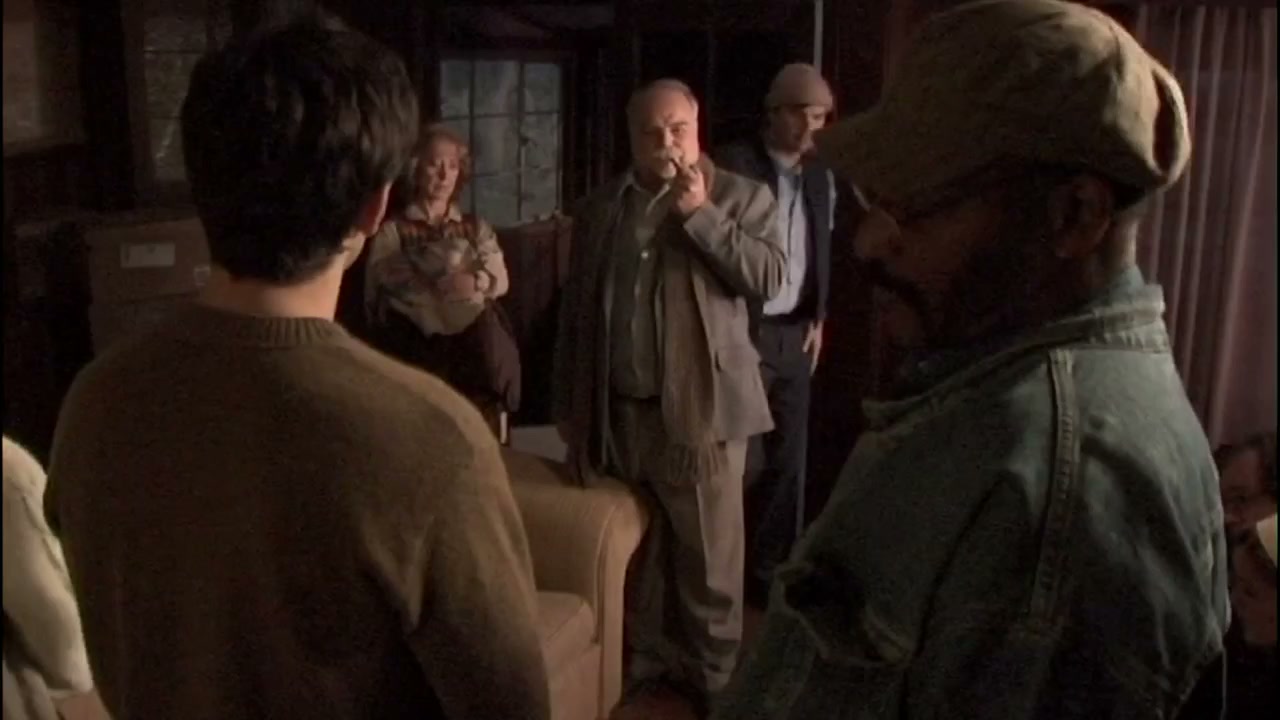
In one room, friends ask why an unbelievable story is being told at all. The next line says it would vanish in disbelief, and a later line says even belief would not last a month. Someone then says there is no way for John to prove it and no way for the others to disprove it, so they might as well go with it. What follows is "Believing? Whose reality?"

What's really going on

What to do with a story that will not settle is the whole argument. Someone says, "It would vanish in disbelief." A goodbye shows up in the words "As yourself." One line expects anger at a pointless joke, and the next says some people are angry now. After "Easy, Edith" and grading homework, Dan is named: "You're playing the good cop." Concern is said outright, and the answer is "Yes, I'm cutting out paper dinosaurs," which does not pick up the story. A longer speech says there is no way for John to prove it, "just like there's no way for us to disprove it," however outrageous it seems. Three labels follow: a caveman, a liar, or a nut. Then comes the suggestion to go with it, in case the room is jolted into belief or he is jolted back. The last line asks, "Whose reality?"

Key lines & what they mean

“Even if I could make you believe me, in a month, you wouldn't.”
Belief is only temporary. The line says that even if the room believes today, it still would not believe in a month.
“'Cause I wanted to say good-bye- As yourself.”
The line links a goodbye to the words As yourself. It does not say which self, only that the leaving is put that way.
“I think you've done that, whoever that self is.”
The goodbye is treated as already given. The self is left open: whoever that is, the leaving itself has been said.
“Yes, I'm cutting out paper dinosaurs.”
Concern gets a yes, then a paper craft. The line meets the worry with an absurd agreement and does not take up the story or admit that anything is wrong.
“No matter how outrageous we think it is, no matter how highly trained some of us think we are, there's absolutely no way to disprove it.”
Neither shock nor credentials help. However outrageous the story feels, and however trained the listeners are, it still cannot be disproved.
“I mean, hell, who knows, he might jolt us into believing him, or we might jolt him back to reality.”
Both endings stay open. He might jolt the room into belief, or the room might jolt him back to reality. The line does not choose which.

Theme

  • Philosophy — An outrageous story is called impossible to prove or disprove, and the room is asked whose reality counts.
  • Identity — Goodbye is tied to "As yourself," three labels get offered, and the last word is whose reality.

What this chapter teaches

Teaching points

Review right after watching
My level0/8

A1–C2 is the CEFR scale. Cards above the level you pick fade, and playback will not auto-pause on them.

the-man-from-earth-2007: your progress

Chapter 5 of 10 · about 18 min to go

← Previous
Up next · 06survivor's guiltThe scene: John on Dying and Survivor's Guilt

People also search

Questions, then the lines
Why would the story vanish outside the room?

A line says they might leave and tell everybody. The next line is "It would vanish in disbelief." After that, it is "A story that goes around the room," then "No credibility." The vanish line itself does not say the story dies only outside the door.

Why can't the group disprove the story?

The speech says there is no way in the whole world for John to prove it, and no way for the others to disprove it. Outrage and training do not change that. What remains is three labels: a caveman, a liar, or a nut.

Why does someone say to go with it?

While they are still thinking, the speech says they might as well go with it. He might jolt them into believing him, or they might jolt him back to reality.

What is the paper dinosaurs line answering?

It answers the concern just before it: "these people are all very concerned for you." The next line is "Yes, I'm cutting out paper dinosaurs." It meets that line with a silly craft and does not take up the story.