
“Obviously, you have something you'd like to say. Say it!”
Why it's great
It names the stall, then cuts the demand down to two hard words.
Register
Informal
Use it yourself
You keep hinting about the rent. Tell me plainly.
Chapter 2 of 10 · 3'58"
Friends press someone to explain himself and get a thought experiment instead. A line asks what a man from the upper Paleolithic would be like if he survived to the present. What comes back is jokes, anatomy, and cell renewal. The unease sits in the setup: "I've never done this before, and I wonder how it'll pan out."
Friends Demand He Say It
❝ Monologue · 5 lines The Body Dies of Slow Poisoning
❝ Monologue · 5 lines Renewal that falters
The organ countdown makes a miracle sound like one flaw avoided.
A Chance to Sail with Columbus
Among friends, people push one man to explain himself. One line says this has never been done before. A later line asks what a man from the upper Paleolithic would be like if he had survived until now. Jokes follow, then talk of height, intelligence, cell renewal, and 14,000 years. The stretch ends on Columbus and falling off an edge.
The pressure comes first. Lines tease with America's most wanted, say "We won't turn you in," and charge him with "creating the mystery." What follows is not a straight confession. It arrives as "a silly question," and when a line asks if this is a science fiction story, the reply is "Say I am." The room then takes up the work: a survivor from the upper Paleolithic would not remain a caveman, would have learned as the race learned, and might know an astonishing amount. Biology supplies the mechanism on offer, perfect cell renewal, a body "designed to live about 190 years," and the verdict "Most of us just die of slow poisoning." Near the end a first-person line says, "I had a chance to sail with Columbus, Only I'm not the adventurous type," and goes on to the fear that he might "fall off an edge."
A1–C2 is the CEFR scale. Cards above the level you pick fade, and playback will not auto-pause on them.
“Obviously, you have something you'd like to say. Say it!”
It names the stall, then cuts the demand down to two hard words.
Informal
“What if a man from the upper Paleolithic survived until the present day?”
A what-if lets him put an impossible life on the table without owning it.
Neutral
“Most of us just die of slow poisoning.”
A short verdict turns lifespan chat into something cold enough to repeat.
Informal
“Maybe he did something right, something everybody else in history had done wrong.”
Repeating one act, right against wrong, makes the guess feel dangerous.
Neutral
“After all, one century's magic, another century's science.”
The pair lets an old absurdity and a later fact trade places.
literary
“I had a chance to sail with Columbus, Only I'm not the adventurous type.”
The tense slips into a private memory while the voice still sounds like a joke.
Informal
All right, all right, I'll play. All right, um, in science fiction terms, I would say... Perfect regeneration of the body's cells, especially in the vital organs. Actually, the human body appears designed to live about 190 years. Most of us just die of slow poisoning.
The pancreas turns over cells every 24 hours, the stomach lining in three days, the entire body in seven years, but the process falters. Waste accumulates, eventually proves fatal to function. Now if a quirk in his immune system led to perfect detox, perfect renewal, then yeah. He could duck decay.
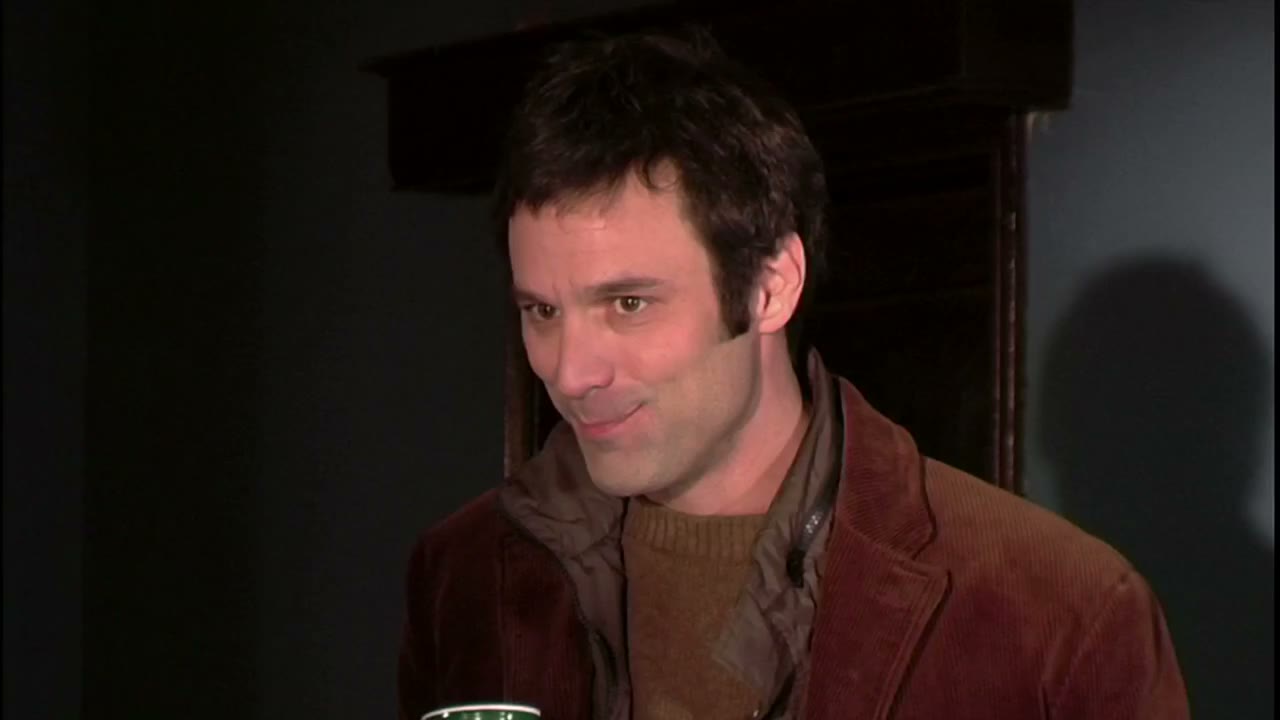 Up next · 03a day overThe scene: Not a Day Over 900
The lines just before the question hesitate: someone is tempted to tell, something has never been done, and there is a worry about how it will pan out. A line then asks to pose "a silly question." When a line guesses this is science fiction, the reply is "Say I am," which lets the idea continue without a flat yes.
Short lines offer "Cigarettes" and "And ice cream." Then a line says "I'll play." The serious account is perfect regeneration of cells, especially in vital organs, plus an immune-system quirk that gives perfect detox and renewal, so he could "duck decay." Next to that is "Most of us just die of slow poisoning."
The question is "Would you really want to do that?" followed by "Live 14,000 years?" A reply accepts on conditions, stay healthy and not age, and asks "why not?" A following line calls it "What a chance to learn." Earlier, a line says ducking decay is a secret "we'd all love to have."
No. Someone objects, "But he'd be a caveman," and the reply is "No, he wouldn't." John's hypothetical man would have lived through about 140 centuries "and changed with every one of them," assuming normal intelligence. They are called as intelligent as people now; "They just didn't know as much," so he would have learned as the race learned.
They are examples that a wild idea can be right. "They thought Columbus was a nut job," then Pasteur, Copernicus, and Aristarchus are named the same way. The point just stated is "one century's magic, another century's science." Right after that list, someone says, "I had a chance to sail with Columbus, Only I'm not the adventurous type."