00:00 / 03:47
00:00 / 03:47

Never Told the Buddha, Explained

A hunt comes back empty and a chief stomps out a man's teeth. The talk then walks east through myths, cities, and the Buddha. What stays back is one admission, "I never told him," and the answer "I almost wish it were true" leaves the tale standing without granting it.

StorytellingExplainingSaying noC1mediumamericanClean

Key moments

Start here, then watch the full scene
  1. Chief Stomps a Man's Teeth

    0:34–1:29
    55s
  2. ❝ Monologue · 6 lines Faking Death to Move On

    1:56–3:11
    75s
  3. Never Told the Buddha

    3:13–3:46
    33s
  1. ❝ MonologueHarder each time he left6 linesPractice page ↗

Never Told the Buddha, explained

What happens

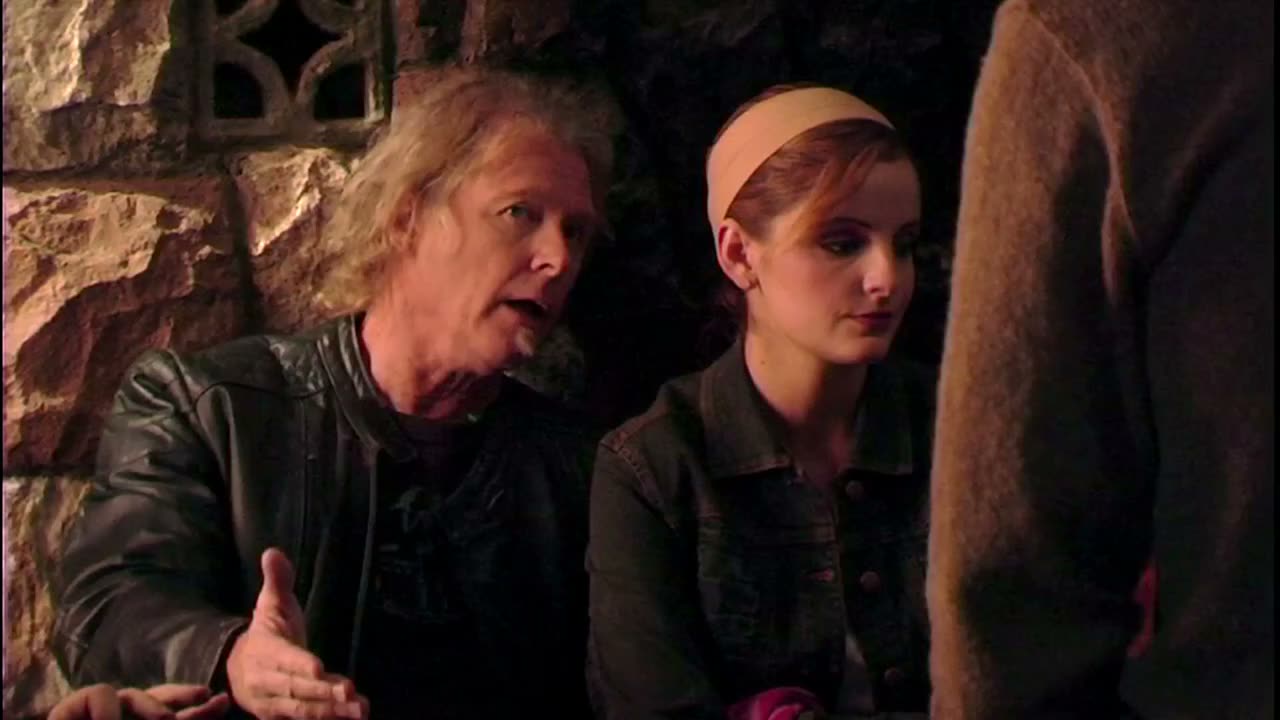
Questions push past prehistory. Someone recalls the rock art at Les Eyzies, a man named Giraud, and a chief who stomps the man's teeth out after a fruitless hunt. Later the talk moves east, through trade routes and new gods, and ends with study alongside the Buddha until the death, the difference never told. One last line almost wishes the story were true.

What's really going on

After a fruitless hunt, a chief stomps a man's teeth out because "his magic had failed him." "That's awful" is followed by "You have to know what to kill." Praise for amazing historical knowledge is answered with study, then cut down to "one man, one place at a time." A few thousand warmer years are called guessing and blocked by "You can't get there from here, Art." "Well then, pray, continue" sends the talk on without agreement. Farming and lakeside life are called textbook, then mostly granted. What comes next is narrower: going it alone, languages on the road, creation myths as "probably all hogwash," and long years as a Sumerian, a Babylonian under Hammurabi, and a Phoenician. "Strangers were suspect," and death is faked a couple of times. In India, during the Buddha's life, study lasts until the death, and "I never told him." After "This is fascinating," "I almost wish it were true" keeps the appeal and withholds belief.

Key lines & what they mean

“One day after a fruitless hunt, our chief stomped his teeth out because his magic had failed him.”
A hunt brings nothing, so the chief stomps a man's teeth out because the magic failed. The line states the cause and does not say the chief lost his own teeth.
“I'd gotten the hang of going it alone, Learning how to fit in when I wanted to.”
Going it alone and fitting in only when he chooses are the two skills placed side by side before the journey east.
“I learned some new tricks- even faked my death a couple of times.”
After leaving has grown harder and strangers are called suspect, the new tricks include staging death more than once.
“It seemed as though I was always moving on.”
From hunter bands to villages to city states, staying becomes harder, and the life being told is one long departure.
“I never told him.”
The line before says the Buddha knew something was different. This one says that difference was never told.
“I almost wish it were true.”
It follows "This is fascinating." The wish keeps the appeal and does not say the story happened.

Theme

  • Secrets — The Buddha knew something was different about him, and the next line stops at "I never told him."
  • Identity — The account names Sumerian, Babylonian, and Phoenician in that order, then says it seemed he was always moving on.

What this chapter teaches

Teaching points

Review right after watching
My level1/8

A1–C2 is the CEFR scale. Cards above the level you pick fade, and playback will not auto-pause on them.

the-man-from-earth-2007: your progress

Chapter 4 of 10 · about 21 min to go

← Previous
Up next · 05no way to disproveThe scene: No Way to Disprove John's Story

People also search

Questions, then the lines
Why did the chief stomp the man's teeth out?

The same line gives the reason. After a fruitless hunt, "his magic had failed him." The next lines add the aftermath: someone had to chew his food, and an infected jaw is only a suspicion, followed by abandonment. They do not add another motive.

What does hogwash refer to in this scene?

It follows "Everywhere, creation myths, new gods, so many, so different," and the realization that it was "probably all hogwash." The word lands on those myths and gods. Hammurabi, named beside it, is called a great man instead.

Did he tell the Buddha what was different about him?

No. The lines say the Buddha knew there was something different, and the next line is "I never told him." They never say what the difference was.

Does "I almost wish it were true" mean the story is accepted?

No. It comes right after "This is fascinating." The wish keeps the attraction and does not say the story happened. Nothing here shows anyone agreeing that it is true.