
“Have you ever in your life thought "It should have been me"?”
Why it's great
It makes survivor guilt a question that cannot be stepped around politely.
Register
Neutral
Use it yourself
Have you ever thought "I should have braked"?
Chapter 7 of 10 · 4'49"
On the surface they keep testing a man who may not die: wives who died, a funeral, even a vampire. Underneath, "Will you come to my funeral, John?" lands before the room hears the fact that makes it cruel. His wife died yesterday.
❝ Monologue · 5 lines It Should Have Been Me
❝ Monologue · 5 lines invitation to the funeral
Belief is set aside, and a polite funeral question becomes the verdict.
His Wife Died Yesterday
A small group cannot leave the subject of dying. Questions to John move from a father, to wives and children, and to whether he has been stealing lives. They reach a funeral, a vampire, and a gun. One person leaves to grade papers rather than stay. After the gun questions, someone tells John he was on the ropes. Then Mary passed away yesterday: his wife, pancreatic cancer.
The talk opens with a plea to change the subject and stop the dying. It continues anyway: people who age and die, then "Have you ever in your life thought 'It should have been me'?" "I'm not saying you would do such a thing deliberately" denies only that it was deliberate, after talk of stealing lives and a creature that takes the life force. "Would you?" comes later. Belief is brushed aside: "Whether I believe it or not is of no importance." The split is stated, "We will die. You will live," and then made personal, "Will you come to my funeral, John?" Others say it has gone too far. A gun appears. One person leaves, calling grading papers preferable to staying. After "Where'd he get a gun?" someone says, "He had you on the ropes, John." Then Mary passed away yesterday, his wife, pancreatic cancer. The apology meets "Please, permit me to be infantile by myself." The harshest questions came before anyone explained the death from yesterday.
A1–C2 is the CEFR scale. Cards above the level you pick fade, and playback will not auto-pause on them.
“Have you ever in your life thought "It should have been me"?”
It makes survivor guilt a question that cannot be stepped around politely.
Neutral
“Do you stand alive and tall in a graveyard that you helped to fill?”
One upright body over graves he helped fill makes the envy visible.
literary
“Will you come to my funeral, John?”
The invitation is a verdict: he will still be alive when the speaker is not.
Neutral
“Whether I believe it or not is of no importance.”
It refuses the yes-or-no and treats belief itself as beside the point.
Formal
“Please, permit me to be infantile by myself.”
Courtly manners ask to be childish alone, which makes the door colder.
Formal
“As much as I dislike that job, it'll be preferable to this.”
Grading papers beats a gun, and the understatement makes the exit colder.
Formal
Unconsciously, perhaps, by some biological or psychic mechanism that we can only guess at. I'm not saying you would do such a thing deliberately. I'm not saying that you would even know how to... Would you? But would such a thing be fair?
I'm only exploring what you have said. Whether I believe it or not is of no importance. We will die. You will live. Will you come to my funeral, John?
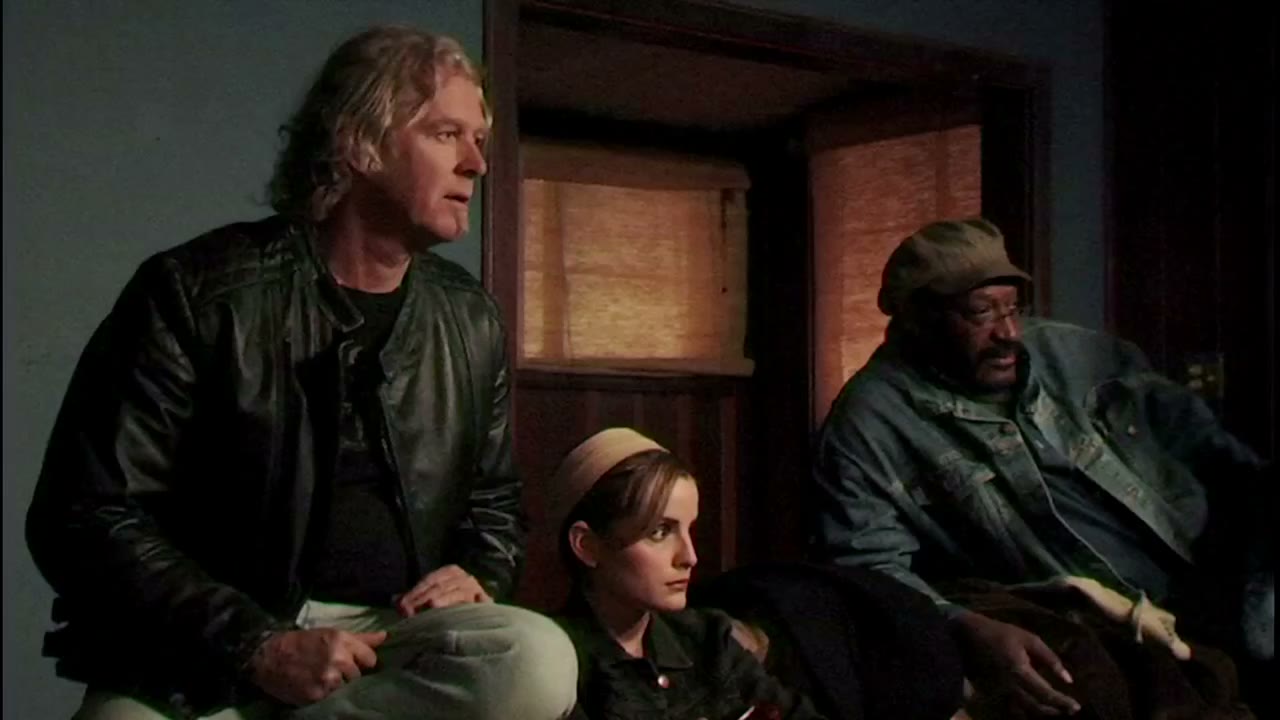 Up next · 08no need of that hypothesisThe scene: Pressing John About the Bible
It comes after the funeral question and the vampire question. Someone is told to hand the gun over or have an arm broken. The person holding it asks John about a shot to the arm, "Perhaps we could watch it heal," and about a bullet in the head. Afterwards the others ask where he got a gun and say it is not like Will.
Mary passed away yesterday. Asked who she was, someone answers "His wife." She had pancreatic cancer. Someone then says they did not know about Mary, and that they can see how this might have hit him. That is the whole account.
No. Asked "So you believe me now?" the reply is "I'm only exploring what you have said," then "Whether I believe it or not is of no importance." The scene never gives a yes or a no.
The apology is "I'm sorry. I can see how this might have hit you." What comes back is "Please, permit me to be infantile by myself." It asks to be left alone rather than comforted. The next line is "Will, please."