
“You must come to your uncle. Yonder's old coil at home.”
Why it's great
Two urgent sentences: come at once, and there is a mess waiting at home.
Register
Neutral
Use it yourself
You must come to your parents. There is trouble at home.
Chapter 23 of 24 · 2'05"
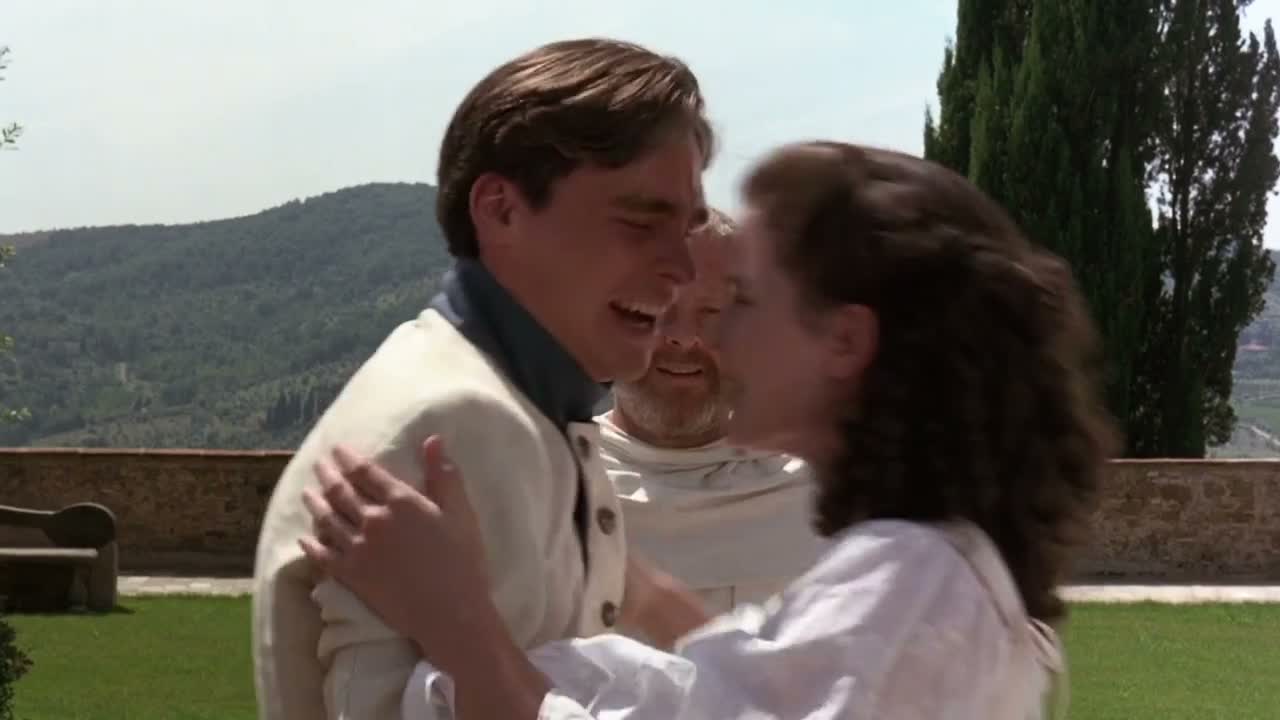
The messenger's news changes everything: Hero was falsely accused, Don John is the author of it all, and he has fled. Benedick, meanwhile, wastes no time: "I will live in thy heart, die in thy lap and be buried in thy eyes," he tells Beatrice, then asks Leonato for her hand in marriage.
Good News Reaches Beatrice
Leonato Sets Tomorrow's Wedding
❝ Monologue · 5 lines Benedick Asks for Beatrice's Hand
A messenger arrives with the truth: Hero was falsely accused, Don Pedro and Claudio were deceived, and Don John, the author of the plot, has fled. Benedick seizes the moment to declare his love for Beatrice. Then Leonato sets up the next day's wedding, arranging for Antonio to give Hero to Claudio, and Benedick asks for Beatrice's hand.
The plot's loose ends get tied in a single rush. The accusations that drove the tragedy are reversed, and the two men who trusted them are cleared of malice even as they're made to grieve. Benedick's speech is the comedy's reward: the man who swore he'd never marry turns his wit into a love speech — "I will live in thy heart, die in thy lap and be buried in thy eyes" — and then, straight-faced, turns around and negotiates the wedding with Leonato. His plea that he saw "an eye of favour" is the same confident Benedick, just aimed at marriage instead of mockery. Even the messenger's line, "Yonder's old coil at home," has it both ways: the household is in chaos and in celebration at once.
A1–C2 is the CEFR scale. Cards above the level you pick fade, and playback will not auto-pause on them.
“You must come to your uncle. Yonder's old coil at home.”
Two urgent sentences: come at once, and there is a mess waiting at home.
Neutral
“I will live in thy heart, die in thy lap and be buried in thy eyes, and moreover, I will go with thee to thy uncle's.”
A three-step crescendo of devotion, then a plain offer to walk with her, romantic and comic at once.
literary
“I am glad that all things sort so well.”
A quiet line that settles a whole tangle of trouble in one breath.
Neutral
“You must be father to your brother's daughter, and give her to young Claudio.”
It frames the wedding as duty and gift: be her father, then give her away.
Formal
“To bind me or undo me, one of them.”
Marriage framed as an all-or-nothing choice, spoken in nine blunt words.
Formal
“Signior Leonato, truth it is, good signior, your niece regards me with an eye of favour.”
A courtly way to announce love: her eyes, he says, look on him with favour.
Formal
Signior Leonato, truth it is, good signior, your niece regards me with an eye of favour. The sight whereof you had from me, Claudio and the prince. - What's your will? - Your answer is enigmatical... but my will is your good will may stand with ours this day to be conjoined in the state of honourable marriage, in which, good Friar, I shall desire your help.
 Up next · 24hands against our heartsThe scene: Benedick and Beatrice Deny Their Love
Borachio's confession is passed on: a messenger reports that Hero was falsely accused, that Don Pedro and Claudio were deceived, and that Don John, the plot's author, has fled.
Because the truth has cleared Hero's name, and she was never really dead — the friar's plan worked. Leonato now arranges for Antonio to give the disguised Hero to Claudio the next morning.
Beatrice's hand in marriage. He says her niece "regards me with an eye of favour," and asks that their wills be joined "in the state of honourable marriage," with the friar's help.
The play leaves both readings open. They were gulled into noticing each other, but once the truth comes out they choose each other freely, and Benedick's speech here is entirely his own.
An Elizabethan phrase for a commotion or fuss. Here it describes the uproar at Leonato's house, which turns out to be the good news arriving all at once.