00:00 / 03:01
00:00 / 03:01

Beatrice Refuses to Marry, Explained

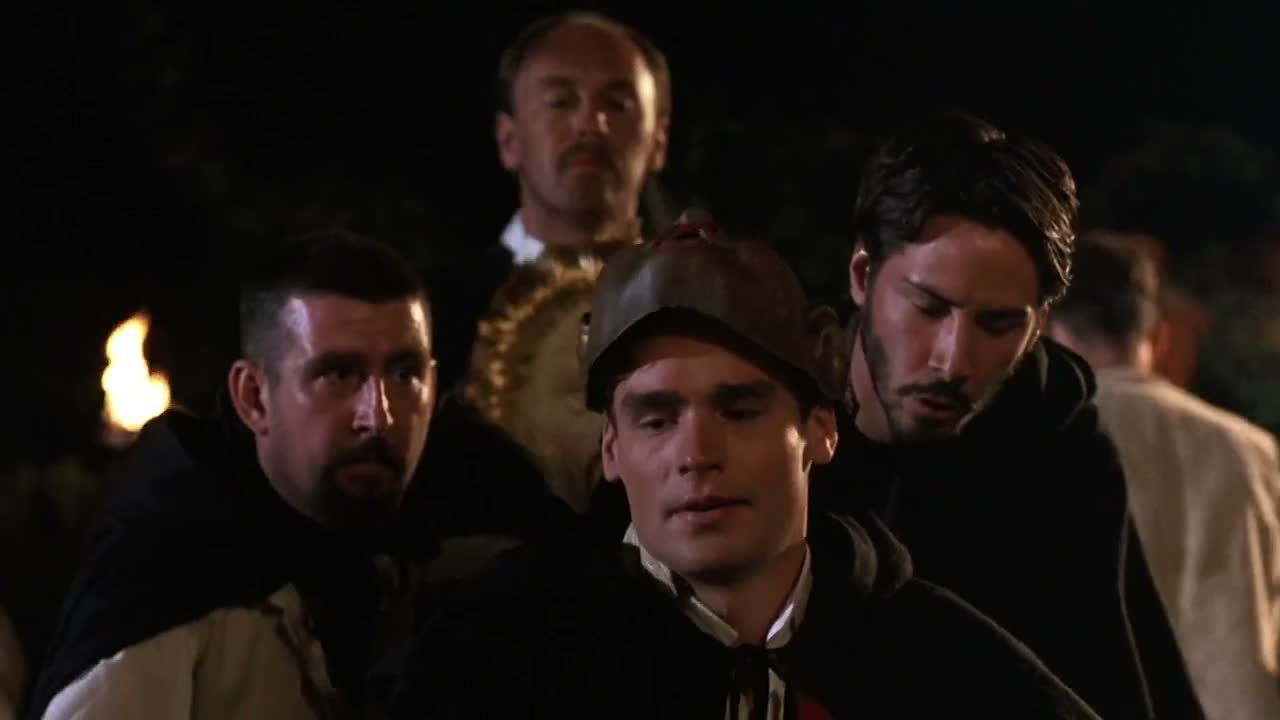
The masked revellers are about to arrive, and the talk at Leonato's turns to husbands. Beatrice will have none of it: bearded men are unbearable, and she would rather 'lie in the woollen' than marry one. Even her uncle's hopes meet a joke, since 'I can see a church by daylight.'

TeasingPartiesTeasingSaying noC1mediumbritishClean

Key moments

Start here, then watch the full scene
  1. Beatrice Would Rather Not Marry

    0:40–1:14
    34s
  2. Beatrice's Joke About Bachelors in Heaven

    1:34–2:39
    64s

Beatrice Refuses to Marry, explained

What happens

Before the masked dance, Beatrice and the others trade jokes about what makes a husband. One man is deemed too silent, another too talkative, and Beatrice declares she could not stand a bearded husband. Leonato reminds Hero to obey her father, while Beatrice insists she will never be fitted with a husband.

What's really going on

Everyone is talking about marriage, and Beatrice is the one person determined not to. The scene opens with a description of a man stitched together from two others, as if a husband were simply a matter of correct ingredients — 'a good leg,' 'a good foot,' and 'money enough in his purse.' Beatrice answers in the opposite direction: a husband with a beard is unbearable, and she would rather 'lie in the woollen.' Her joke about the devil who sends maids away — 'Here's no place for you maids' — turns cleanness into comedy, and her picture of the bachelors sitting in heaven is a cheerful defence of the single life. When Leonato urges Hero to obey her father, Beatrice undercuts the whole business with a clever refusal to be fooled: 'I have a good eye, Uncle. I can see a church by daylight.' The wit keeps marriage at arm's length, but it also keeps it the only subject in the room.

Key lines & what they mean

“He were an excellent man that were made in the midway between him and Benedick.”
Beatrice's verdict that the ideal man would be a compromise between the silent man and the talkative Benedick, a witty way of saying neither will do.
“Thou wilt never get thee a husband if thou be so shrewd of thy tongue.”
A warning that her sharp, cutting way of speaking will scare off any suitor.
“I could not endure a husband with a beard. I had rather lie in the woollen.”
Her declaration that she would sooner put up with rough, comfortless bedding than marry a bearded man.
“and there live we as merry as the day is long.”
Her picture of the bachelors in heaven, cheerful and carefree, offered as better than married life.
“I have a good eye, Uncle. I can see a church by daylight.”
Her retort to her uncle: she is not foolish, and she can see exactly what is being suggested to her.

Theme

  • Marriage — Beatrice refuses every version of a husband, turning the wedding talk around her into material for jokes.
  • Identity — She defines herself by refusing marriage, making her sharp tongue a statement about who she is.

What this chapter teaches

Teaching points

Review right after watching
My level0/5

A1–C2 is the CEFR scale. Cards above the level you pick fade, and playback will not auto-pause on them.

Much Ado About Nothing: your progress

Chapter 6 of 24 · about 56 min to go

← Previous
Up next · 07wish someone joyThe scene: Don John Deceives Claudio

Takeaways

What you walk away with
  1. Good will means favor, not mere kindness.
  2. A sharp tongue is the subject of the family's joke.
  3. The church line turns a compliment back on the speaker.
  4. Old forms like thou wilt still shape the scene's humor.

People also search

Questions, then the lines
Why does Beatrice refuse to marry?

She treats marriage and husbands as a joke throughout the scene, preferring comfort and freedom. Her banter protects her independence and keeps suitors at arm's length.

Why does Beatrice joke about a husband with a beard?

It is her way of ruling out every kind of suitor. A bearded man is too much the grown man, and a man without one is too little, so no husband will do.

What does Leonato tell Hero before the dance?

He reminds her of what he has said before and tells her that if the prince makes her an offer, she will know how to answer.

Which two men does Beatrice compare?

The too-silent man and the ever-talking Benedick. She jokes that an ideal man would be stitched together from both of them.

Why does Beatrice say she can see a church by daylight?

It is a refusal to be fooled. When her uncle praises her sharp understanding, she answers that her eyes are good and she can see plainly what is going on.