
“All right, fellas. The game's over.”
Why it's great
A closing line that ends the chase cleanly, like a referee blowing the whistle.
Register
Informal
Use it yourself
All right, folks, the meeting's over.
Chapter 16 of 22 · 4'02"
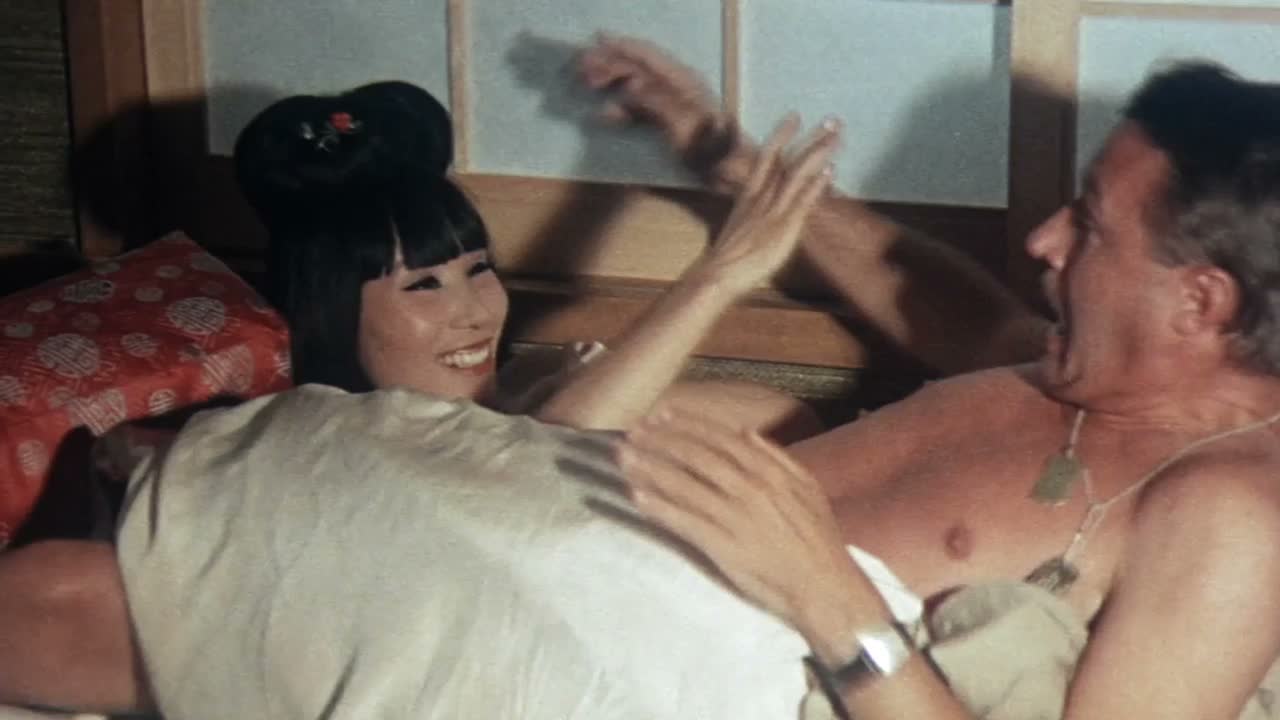
Two men are placed under arrest, then turn the tables with a threat of their own. "You won't have us. We have you," one says, and the arrest becomes a negotiation over golf and a congressman's son. The deal is blunt: let them stay a day, or both sides call Washington.
❝ Monologue · 9 lines The Arrest Turns Into a Deal
They Take Over the Army Hospital
In Tokyo, a colonel has two men arrested and threatens a court-martial. They answer with leverage instead of apology: the army's own case was botched, and they say they bailed it out. The standoff turns into a deal — one more day in Tokyo, a look at a congressman's son, and a round of golf. Then they take over an army O.R. to treat a sick baby.
The scene is a lesson in leverage: whoever knows the other side's embarrassment wins. The colonel thinks he is charging two men; they calmly point out that his own house is not clean — "You won't have us. We have you." From there the arrest is renegotiated like a business deal, complete with terms, a deadline, and the implied threat of a phone call to Washington. What makes it funny is the total absence of shame on either side: they are haggling over golf while supposedly under arrest. The second half applies the same nerve to a different problem: a mixed-race baby is dying and the army hospital is the only place with the equipment, so they simply announce themselves as "the pros from Dover" with an emergency. Rules are treated as obstacles to be worked around, and the film admires the men who do the working around.
A1–C2 is the CEFR scale. Cards above the level you pick fade, and playback will not auto-pause on them.
“All right, fellas. The game's over.”
A closing line that ends the chase cleanly, like a referee blowing the whistle.
Informal
“Something tells me I've seen her someplace before.”
It turns a hunch into a hook, planting doubt in just one line.
Neutral
“You won't have us. We have you.”
A two-beat reversal that flips hunter and hunted in six words.
Informal
“Your boys blew this case, and we... bailed you out.”
It assigns the blame and the rescue in one breath, so the debt is plain.
Informal
“If that's okay with you, then we got a deal.”
It sounds polite but closes the deal, leaving the other side little room.
Neutral
“We don't want him, but we don't feel we can back away from him.”
It admits reluctance and responsibility at once, and that is what makes it human.
Neutral
“On this point, I stand as firm as the Rock of Gibraltar. Me Lay.”
It makes stubbornness almost physical by borrowing a famous landmark.
Formal
Now, we are going to stay here for one more day... and check out the congressman's kid... and— [ Groans ] get in some golf for ourselves. If that's okay with you, then we got a deal. And if it isn't, then we can always call Washington... and you tell them your story, and we'll tell them ours. It's simple as that. In the meantime, we are going to be... at the pro shop, where we are going to have a shower and a shave. If you want to get in touch with us, that is where we will be. [ Pops Lips ]
 Up next · 17tell it to the marinesThe scene: Hawkeye Pitches a Football Team
Because they have something on him. Their line "We have you" means the army's own case was mishandled and they covered for it, so charging them would expose the colonel instead. That is the leverage the deal rests on.
They stay one more day in Tokyo, look in on a congressman's son, and fit in a round of golf. If the colonel agrees, it's settled; if not, both sides can take their stories to Washington.
A local family brings a mixed-race infant who can't keep food down. Treating him needs equipment only the army hospital has, but the colonel has "a thing about" letting civilians in, so the men improvise a way around him.
He calls the use of army facilities illegal and improper and orders it stopped, insisting he won't be intimidated. The scene treats his authority as something to be brushed aside for the sake of the patient.
It's how they announce themselves when they take over the hospital, implying they are elite specialists arriving for an emergency. The phrase is a bluff dressed up as credentials, and it works.