
“We'll get through this, all right.”
Why it's great
The child comforts the parent at her breaking point, and the roles quietly reverse.
Register
Neutral
Use it yourself
We'll get through this, one day at a time.
Chapter 4 of 17 · 5'04"
His mother finds a medical book, reads the name aloud, and a doctor confirms it: Tourette's syndrome. "It's like a sneeze. It's irrepressible," Brad will later explain, but for now the family has to absorb a condition with no cure — and a father who believes the diagnosis but not in his son.
The Family Learns the Name of Brad's Condition
❝ Monologue · 6 lines Brad Explains Tourette's in a Job Interview
After years of being told his noises are misbehavior, Brad's mother discovers a medical book and the family learns the truth: Tourette's syndrome. A doctor confirms it and admits there is no cure. Brad later begins interviewing for teaching jobs, holding in his tics as long as he can and explaining his condition honestly.
The scene hands the family two different kinds of news. The first is relief: the noises have a name, Tourette's syndrome, and a name means Brad is not badly behaved — he has a neurological condition. "It's like a sneeze. It's irrepressible," he will explain, and that comparison does the work of years of misunderstanding. The second is harder: the doctor says plainly that this has not changed and there is no cure, so the family has to accept not a fix but a way of living. The chapter keeps that tension in view by cutting from the diagnosis to Brad's job interviews, where he must decide how much to tell strangers about the sounds his body makes. The line that carries the theme is the quiet one: his constant companion finally had a name, and now the task is to live with it.
A1–C2 is the CEFR scale. Cards above the level you pick fade, and playback will not auto-pause on them.
“We'll get through this, all right.”
The child comforts the parent at her breaking point, and the roles quietly reverse.
Neutral
“Finally, my dad believed me, but he never believed in me: that I would succeed; that I could teach.”
The gap between believed me and believed in me is one small word and one whole lifetime.
literary
“Is this what I looked like to other people?”
Seeing himself from the outside for the first time, the question lands with shock and grief.
Neutral
“It's like a sneeze. It's irrepressible.”
One everyday comparison makes an invisible condition instantly understandable.
Neutral
I want to make teaching my life. [barking] I, uh... I make these noises because I have Tourette's syndrome. I'd like to tell you about it. It's a neurological disorder where my brain sends mixed signals to my body. It's like a sneeze. It's irrepressible.
 Up next · 05face something head-onThe scene: Brad Refuses to Hide
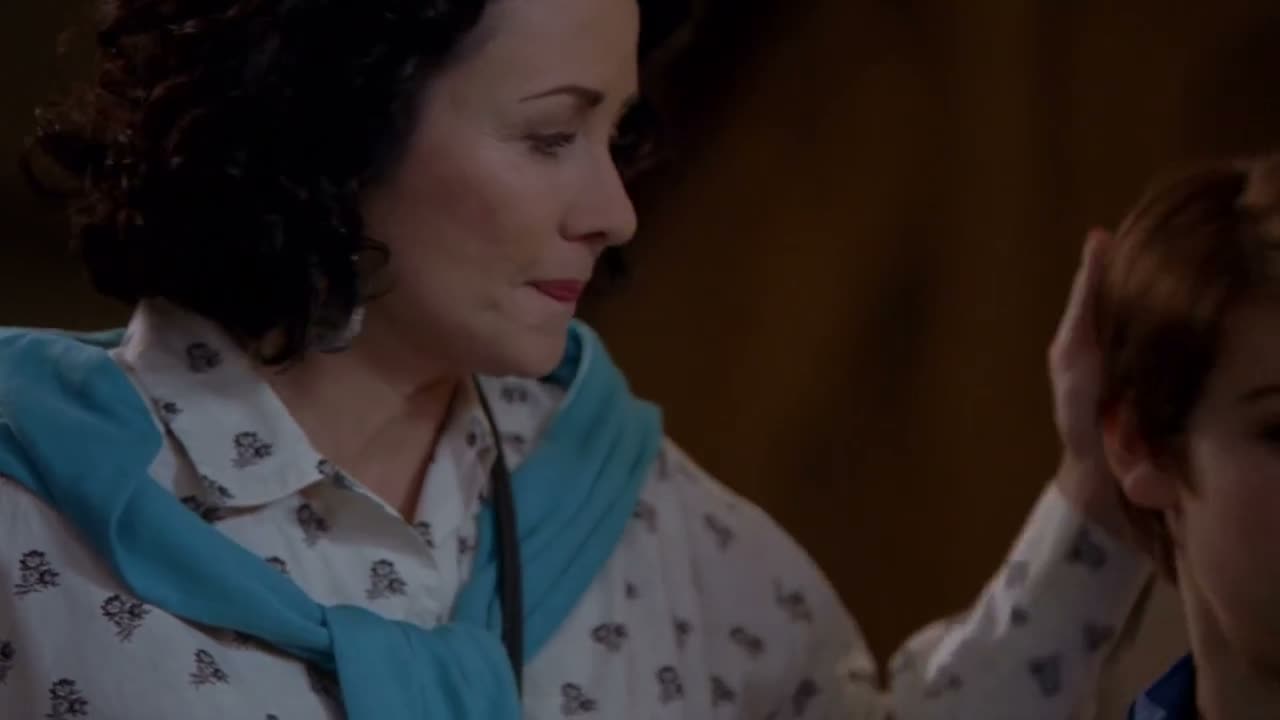
His mother finds a medical book that describes his noises and twitches, and a doctor confirms the diagnosis. Brad calls it his constant companion finally having a name.
His father accepted that the diagnosis was real, but he never trusted that Brad could succeed or become a teacher, so being believed was not the same as being supported.
His mother wants him to meet other people with Tourette's and see how they live with it. Seeing them makes him wonder how his own tics look to others.
It comes from baseball, where a strike is a failed swing. After his first rejection, Brad says "strike one," treating the setback as just the first miss, not the end.